Brouwer Harm, Delogu Francesca, Venhuizen Noortje J, Crocker Matthew W
Department of Language Science and Technology, Saarland University, Saarbrücken, Germany.
Front Psychol. 2021 Feb 11;12:615538. doi: 10.3389/fpsyg.2021.615538. eCollection 2021.
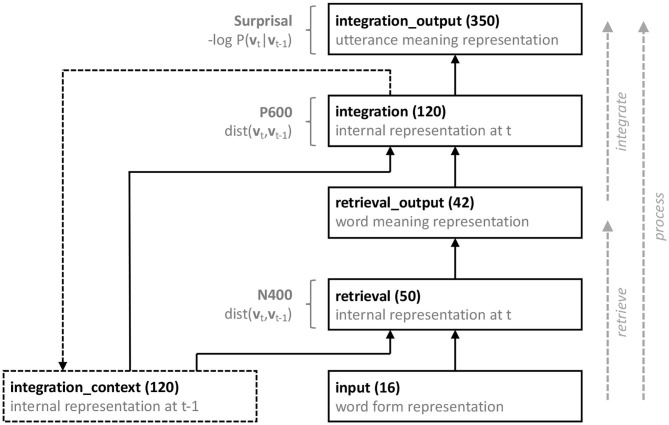
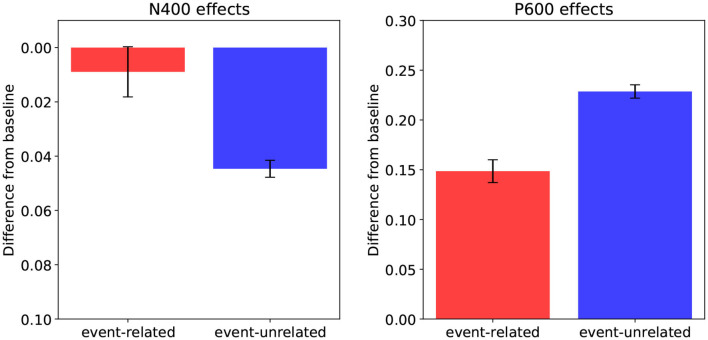
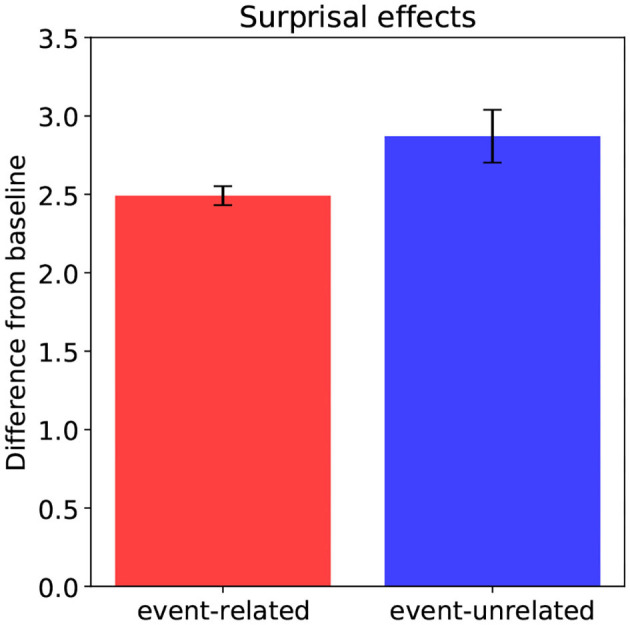
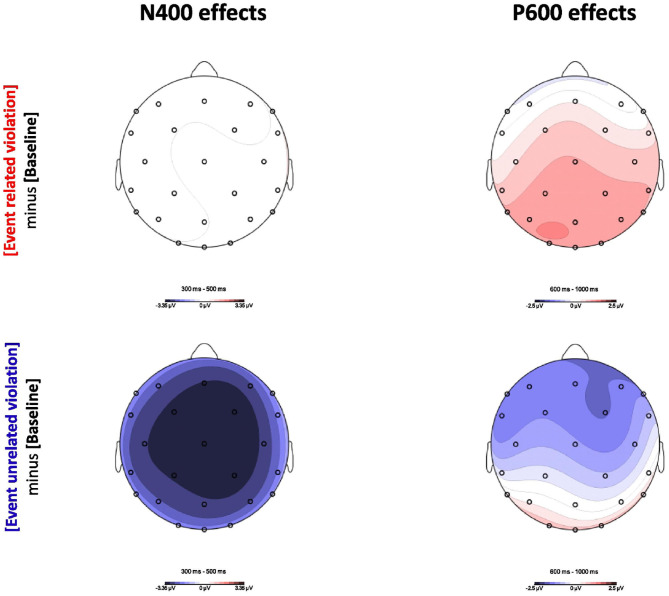
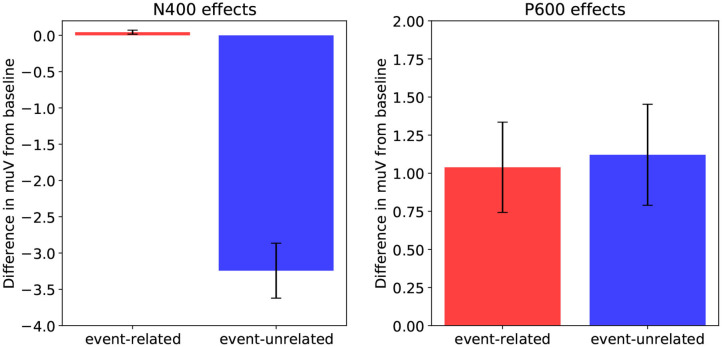
Expectation-based theories of language comprehension, in particular Surprisal Theory, go a long way in accounting for the behavioral correlates of word-by-word processing difficulty, such as reading times. An open question, however, is in which component(s) of the Event-Related brain Potential (ERP) signal Surprisal is reflected, and how these electrophysiological correlates relate to behavioral processing indices. Here, we address this question by instantiating an explicit neurocomputational model of incremental, word-by-word language comprehension that produces estimates of the N400 and the P600-the two most salient ERP components for language processing-as well as estimates of "comprehension-centric" Surprisal for each word in a sentence. We derive model predictions for a recent experimental design that directly investigates "world-knowledge"-induced Surprisal. By relating these predictions to both empirical electrophysiological and behavioral results, we establish a close link between Surprisal, as indexed by reading times, and the P600 component of the ERP signal. The resultant model thus offers an integrated neurobehavioral account of processing difficulty in language comprehension.
基于期望的语言理解理论,尤其是意外值理论,在解释逐词处理难度的行为相关性(如阅读时间)方面有很大作用。然而,一个悬而未决的问题是,意外值在事件相关脑电位(ERP)信号的哪个成分中得到反映,以及这些电生理相关性如何与行为处理指标相关联。在这里,我们通过实例化一个明确的神经计算模型来解决这个问题,该模型用于增量式逐词语言理解,它能生成N400和P600(语言处理中两个最突出的ERP成分)的估计值,以及句子中每个单词的“以理解为中心”的意外值估计。我们为最近一项直接研究“世界知识”引发的意外值的实验设计推导模型预测。通过将这些预测与实证电生理和行为结果相关联,我们在以阅读时间为指标的意外值与ERP信号的P600成分之间建立了紧密联系。由此产生的模型因此提供了一个关于语言理解中处理难度的综合神经行为解释。