Diaz-Garcia Luis, Garcia-Ortega Luis Fernando, González-Rodríguez Maria, Delaye Luis, Iorizzo Massimo, Zalapa Juan
Instituto Nacional de Investigaciones Forestales, Agrícolas y Pecuarias, Campo Experimental Pabellón, Aguascalientes, Mexico.
Department of Genetic Engineering, Cinvestav Unidad Irapuato, Irapuato, Guanajuato, Mexico.
Front Plant Sci. 2021 Feb 10;12:633310. doi: 10.3389/fpls.2021.633310. eCollection 2021.
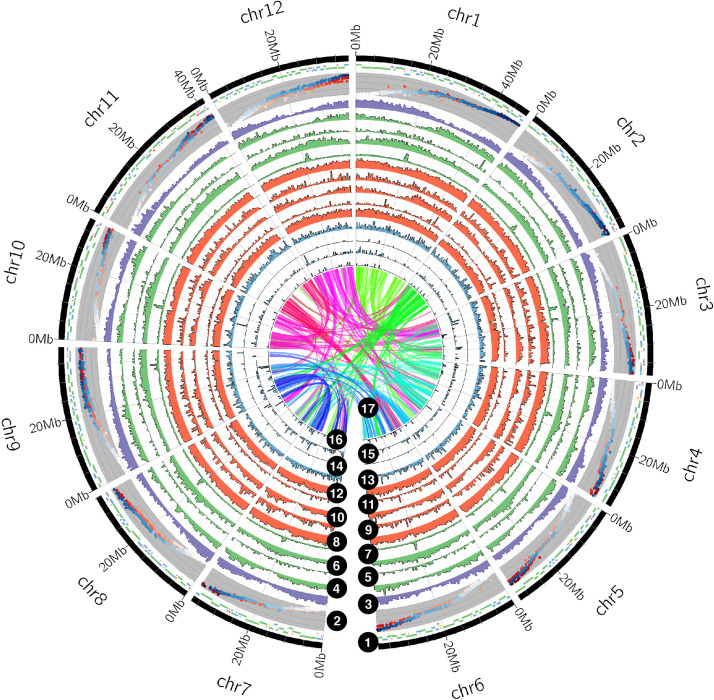
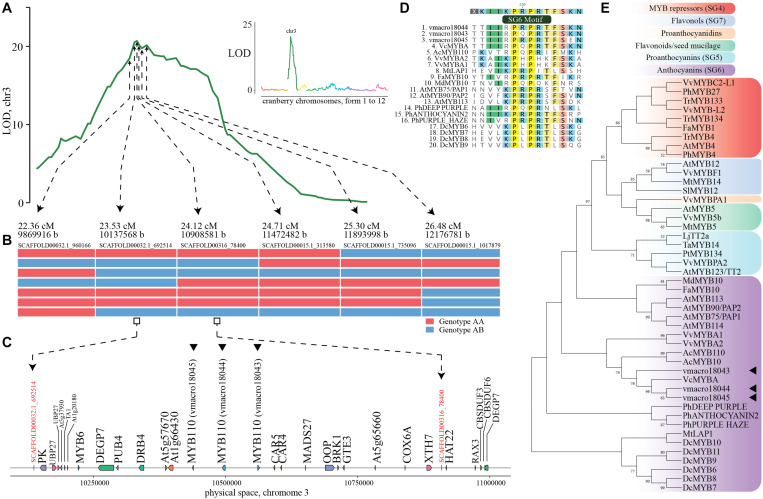
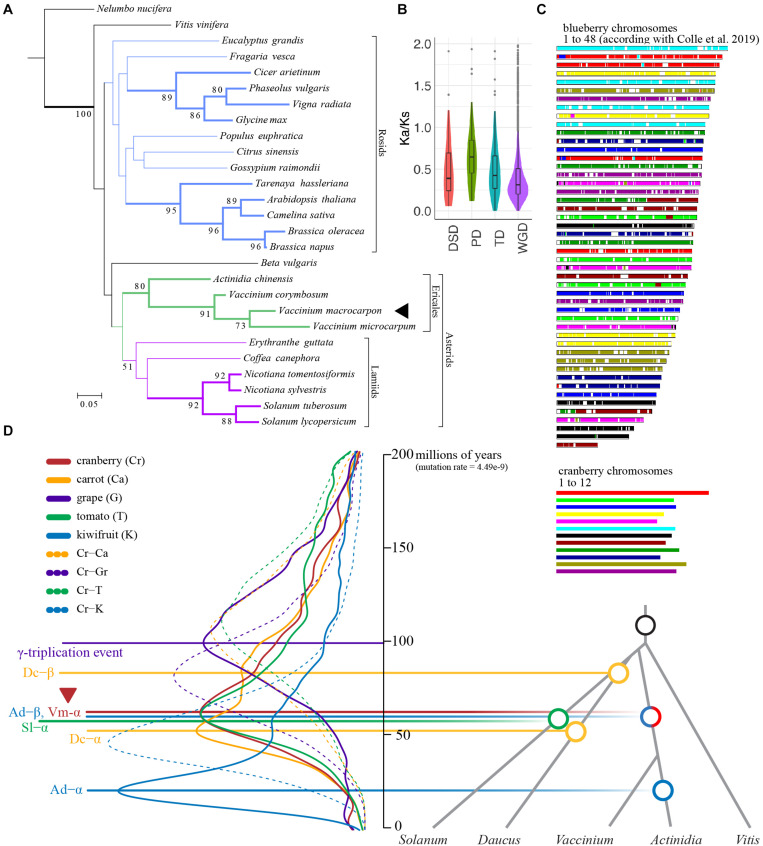
The American cranberry ( Ait.) is an iconic North American fruit crop of great cultural and economic importance. Cranberry can be considered a fruit crop model due to its unique fruit nutrient composition, overlapping generations, recent domestication, both sexual and asexual reproduction modes, and the existence of cross-compatible wild species. Development of cranberry molecular resources started very recently; however, further genetic studies are now being limited by the lack of a high-quality genome assembly. Here, we report the first chromosome-scale genome assembly of cranberry, cultivar Stevens, and a draft genome of its close wild relative species . More than 92% of the estimated cranberry genome size (492 Mb) was assembled into 12 chromosomes, which enabled gene model prediction and chromosome-level comparative genomics. Our analysis revealed two polyploidization events, the ancient γ-triplication, and a more recent whole genome duplication shared with other members of the Ericaeae, Theaceae and Actinidiaceae families approximately 61 Mya. Furthermore, comparative genomics within the genus suggested cranberry- divergence occurred 4.5 Mya, following their divergence from blueberry 10.4 Mya, which agrees with morphological differences between these species and previously identified duplication events. Finally, we identified a cluster of subgroup-6 R2R3 MYB transcription factors within a genomic region spanning a large QTL for anthocyanin variation in cranberry fruit. Phylogenetic analysis suggested these genes likely act as anthocyanin biosynthesis regulators in cranberry. Undoubtedly, these new cranberry genomic resources will facilitate the dissection of the genetic mechanisms governing agronomic traits and further breeding efforts at the molecular level.
美国蔓越莓(Vaccinium macrocarpon Ait.)是北美具有重要文化和经济意义的标志性水果作物。由于其独特的果实营养成分、世代重叠、近期驯化、有性和无性繁殖方式以及存在可杂交的野生种,蔓越莓可被视为水果作物模型。蔓越莓分子资源的开发起步较晚;然而,目前进一步的遗传研究受到缺乏高质量基因组组装的限制。在此,我们报告了蔓越莓品种史蒂文斯的首个染色体水平基因组组装以及其近缘野生种的基因组草图。估计的蔓越莓基因组大小(492 Mb)的92%以上被组装成12条染色体,这使得基因模型预测和染色体水平的比较基因组学成为可能。我们的分析揭示了两次多倍体化事件,即古老的γ-三倍化,以及大约6100万年前与杜鹃花科、茶科和猕猴桃科其他成员共有的一次更近的全基因组复制。此外,该属内的比较基因组学表明,蔓越莓在与蓝莓于1040万年前分化后,于450万年前发生了分化,这与这些物种之间的形态差异以及先前确定的复制事件一致。最后,我们在一个跨越蔓越莓果实花青素变异大数量性状位点的基因组区域内鉴定出一组6亚组R2R3 MYB转录因子。系统发育分析表明,这些基因可能在蔓越莓中作为花青素生物合成调节因子发挥作用。毫无疑问,这些新的蔓越莓基因组资源将有助于剖析控制农艺性状的遗传机制,并在分子水平上推动进一步的育种工作。