Guo Yan, Hui Chang-Ye, Zhang Nai-Xing, Liu Lisa, Li Hui, Zheng Hong-Ju
National Key Clinical Specialty of Occupational Diseases, Shenzhen Prevention and Treatment Center for Occupational Diseases, Shenzhen, China.
Department of Pathology and Toxicology, Shenzhen Prevention and Treatment Center for Occupational Diseases, Shenzhen, China.
Front Bioeng Biotechnol. 2021 Feb 10;9:585617. doi: 10.3389/fbioe.2021.585617. eCollection 2021.
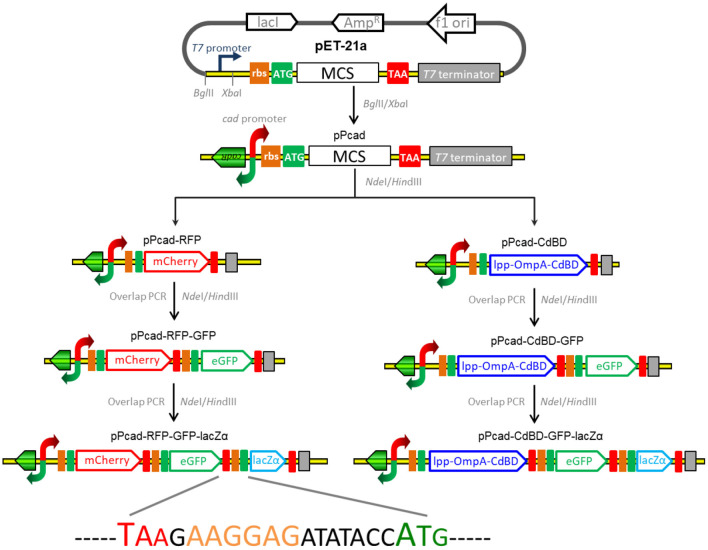
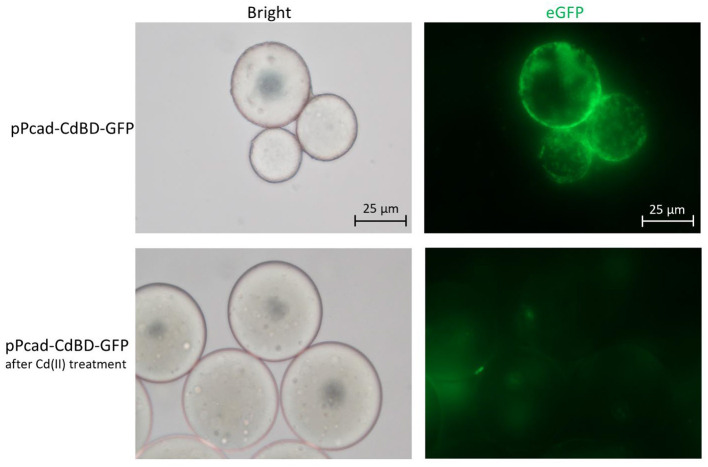
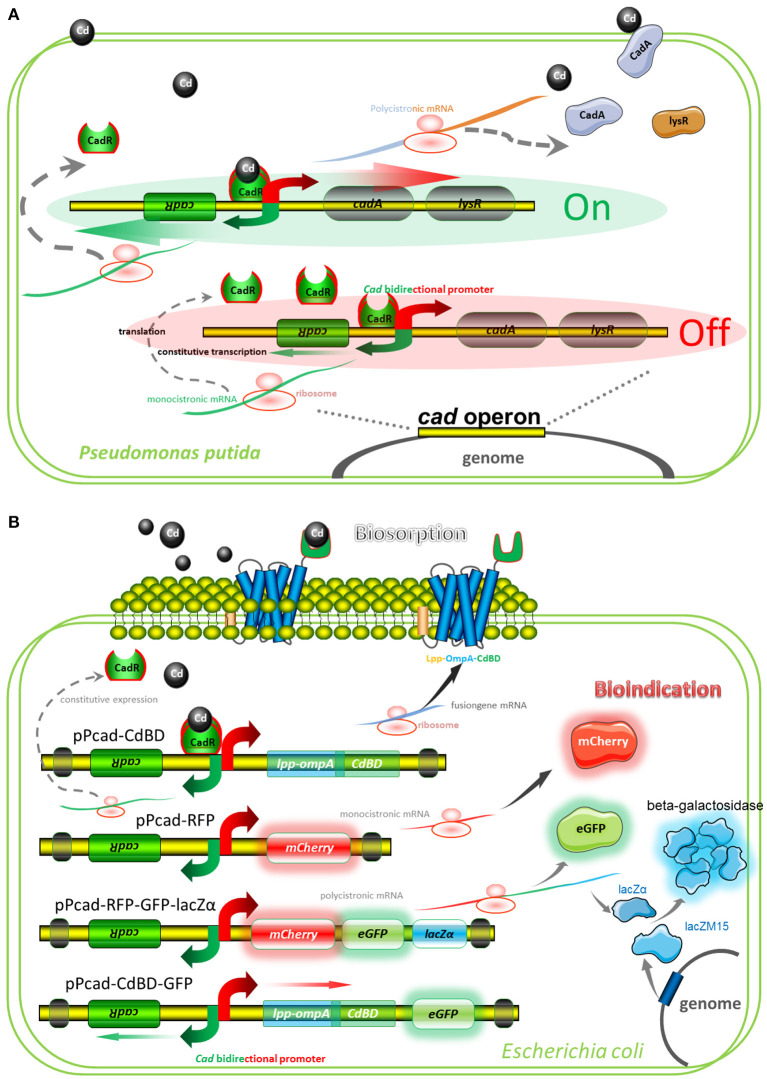
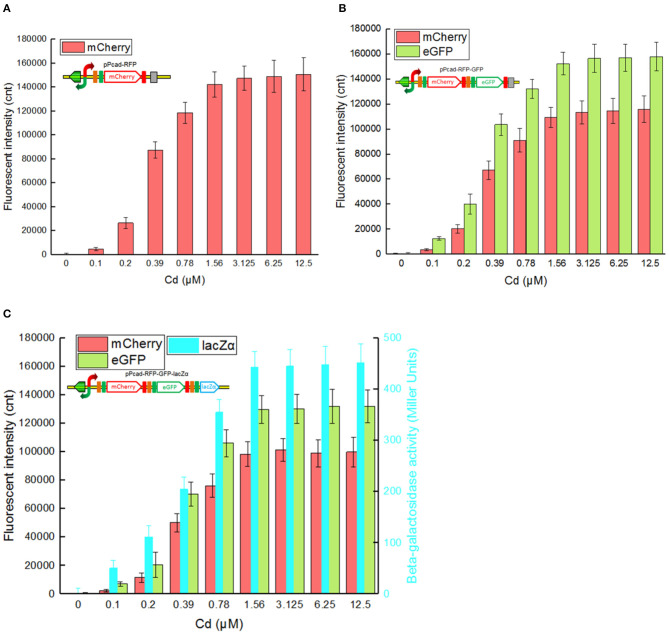
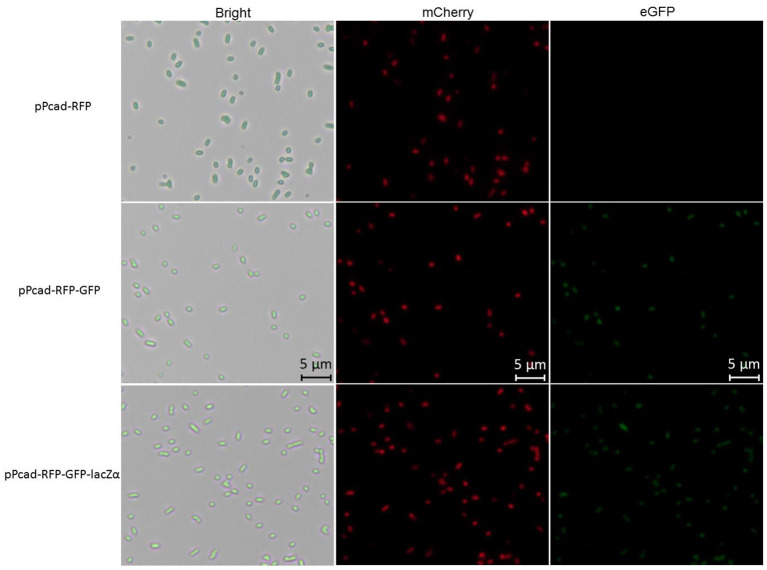
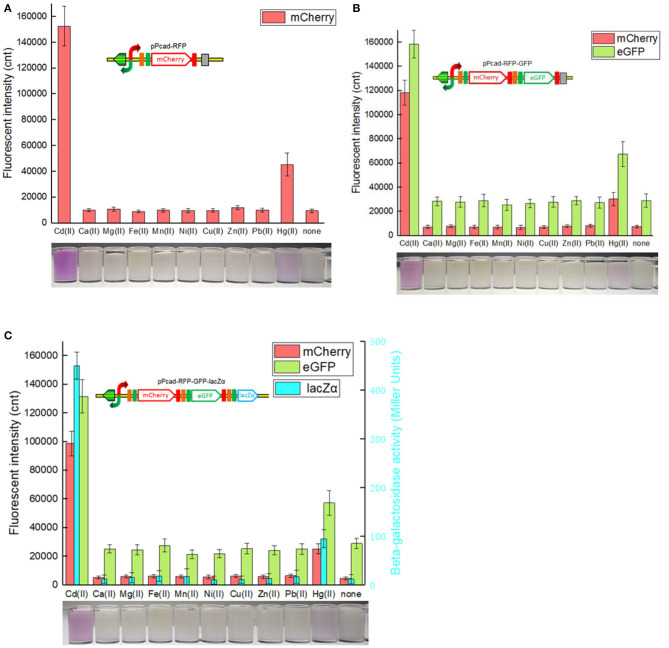
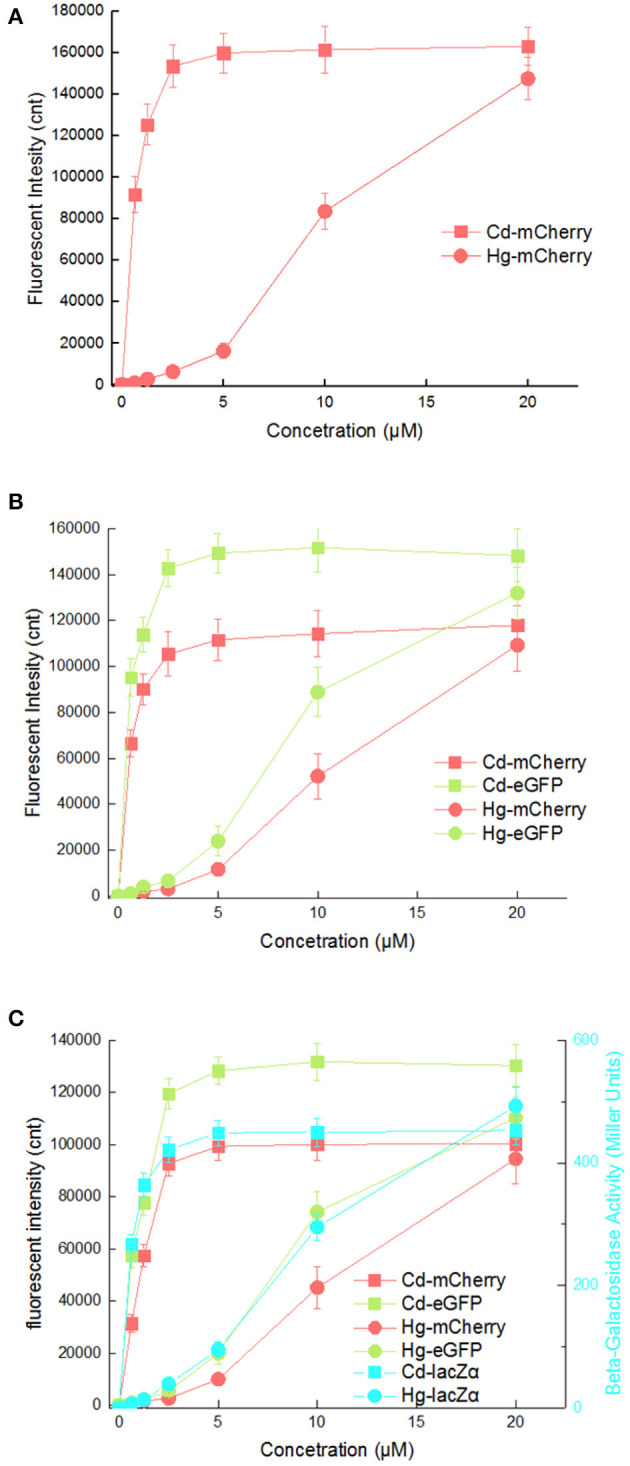
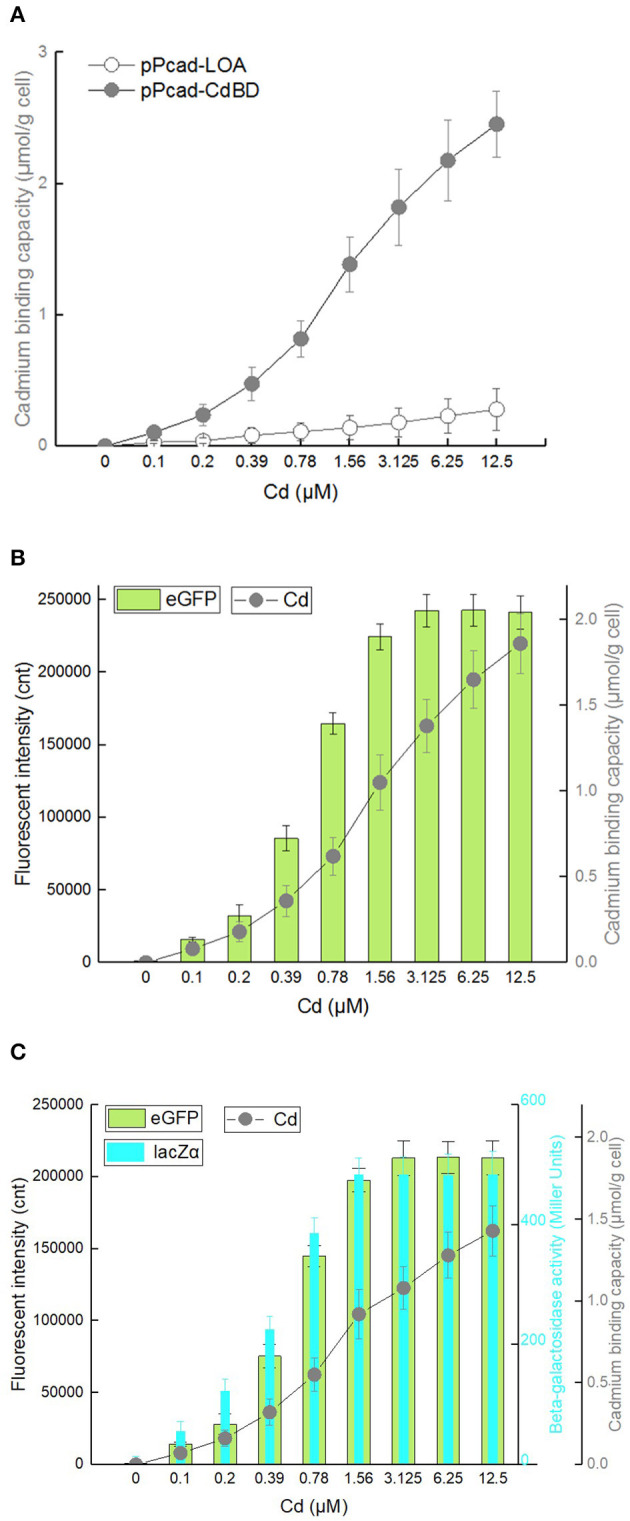
The development of genetic engineering, especially synthetic biology, greatly contributes to the development of novel metal biosensors. The operon encoding cadmium resistance was previously characterized from . In this study, single-, dual-, and triple-signal output Cd(II) biosensors were successfully developed using artificial translationally coupled operons. Sensitivity, selectivity, and response toward Cd(II) and Hg(II), of three biosensors were all determined. Reporter signals of three biosensors all increased within the range 0.1-3.125 μM Cd(II). Three biosensors responded strongly to Cd(II), and weakly to Hg(II). However, the detection ranges of Cd(II) and Hg(II) do not overlap in all three biosensors. Next, novel Cd(II) biosensing coupled with bioadsorptive artificial operons were assembled for the first time. Cd(II)-induced fluorescence emission, enzymatic indication, and Cd(II) binding protein surface display can be achieved simultaneously. This study provides an example of one way to realize multiple signal outputs and bioadsorption based on the redesigned heavy metal resistance operons, which may be a potential strategy for biodetection and removal of toxic metal in the environment, facilitating the study of the mechanism and dynamics of bioremediation.
基因工程,尤其是合成生物学的发展,极大地推动了新型金属生物传感器的发展。先前已从……中鉴定出编码镉抗性的操纵子。在本研究中,利用人工翻译偶联操纵子成功开发了单信号、双信号和三信号输出的Cd(II)生物传感器。测定了三种生物传感器对Cd(II)和Hg(II)的灵敏度、选择性和响应情况。三种生物传感器的报告信号在0.1 - 3.125 μM Cd(II)范围内均增加。三种生物传感器对Cd(II)反应强烈,对Hg(II)反应较弱。然而,在所有三种生物传感器中,Cd(II)和Hg(II)的检测范围并不重叠。接下来,首次组装了结合生物吸附人工操纵子的新型Cd(II)生物传感系统。可以同时实现Cd(II)诱导的荧光发射、酶促指示和Cd(II)结合蛋白的表面展示。本研究提供了一个基于重新设计的重金属抗性操纵子实现多信号输出和生物吸附的方法示例,这可能是生物检测和去除环境中有毒金属的潜在策略,有助于生物修复机制和动力学的研究。