Levy Bruce A, Piepenbrink Marina, Stuart Michael J, Wijdicks Coen A
Department of Orthopedic Surgery, Mayo Clinic, Rochester, Minnesota, USA.
Department of Orthopedic Research, Arthrex GmbH, Munich, Germany.
Orthop J Sports Med. 2021 Feb 16;9(2):2325967120981875. doi: 10.1177/2325967120981875. eCollection 2021 Feb.
Posterior cruciate ligament (PCL) reconstruction is commonly performed to restore joint stability and prevent posterior tibial translation at higher flexion angles. However, persistent knee laxity after reconstruction is often reported.
To biomechanically evaluate the effect of independent suture tape (ST) reinforcement on different PCL reconstruction techniques.
Controlled laboratory study.
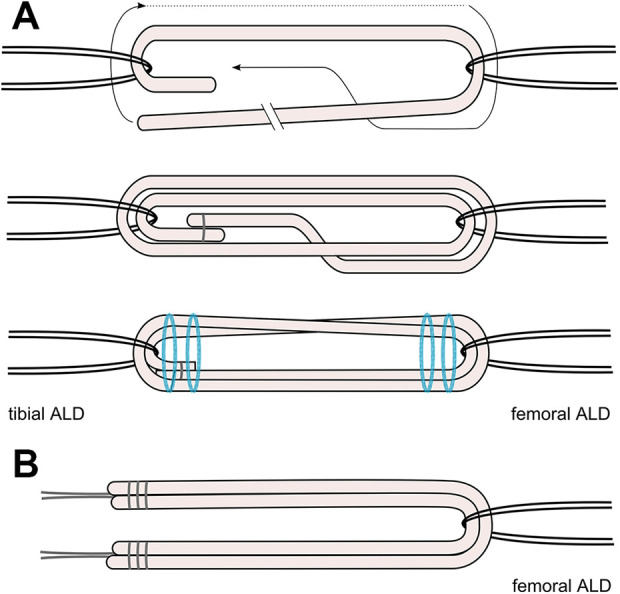
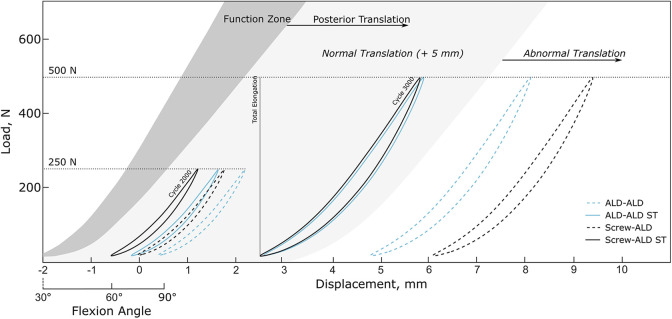
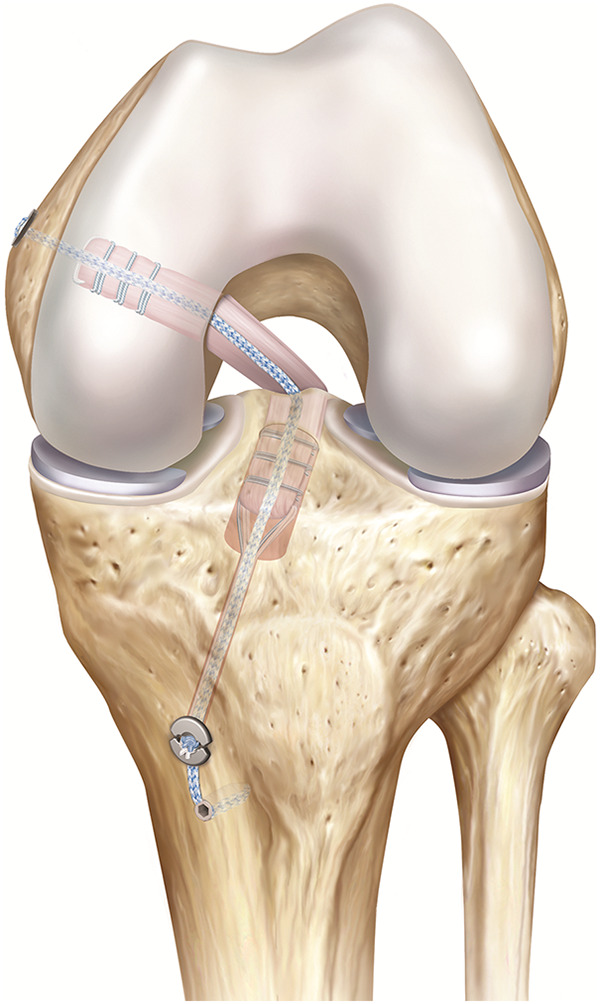
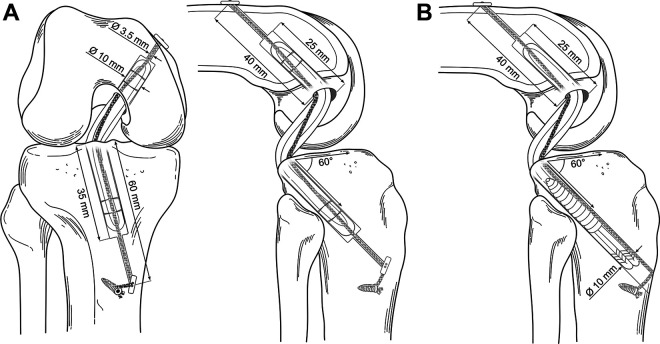
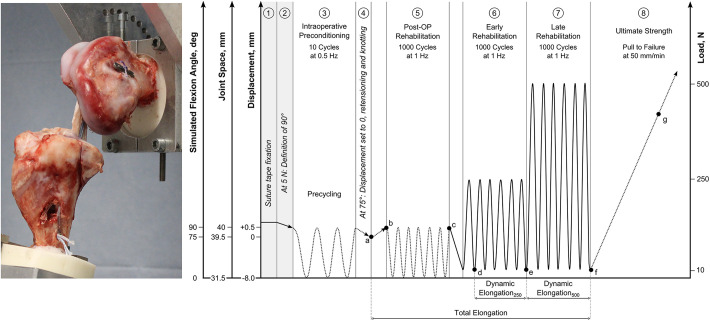
PCL reconstruction using porcine bones and quadrupled bovine tendons was performed using 2 techniques: (1) an all-inside method using suspensory adjustable loop devices (ALDs) in the tibia and femur and (2) a method using an interference screw on the tibial and an ALD on the femoral site. Both were tested with and without an additional ST for 4 groups (n = 8 per group). Each construct underwent biomechanical testing involving 3000 loading cycles in 3 stages. After position-controlled cycles simulating full range of motion, force-controlled loading from 10 to 250 N and then from 10 to 500 N were performed before pull-to-failure testing. Elongation, stiffness, and ultimate strength were evaluated.
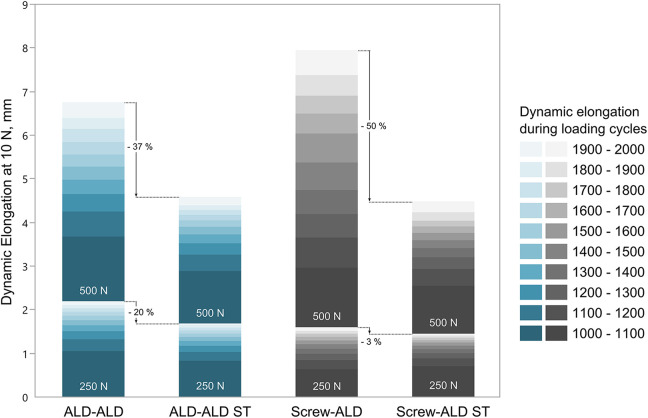
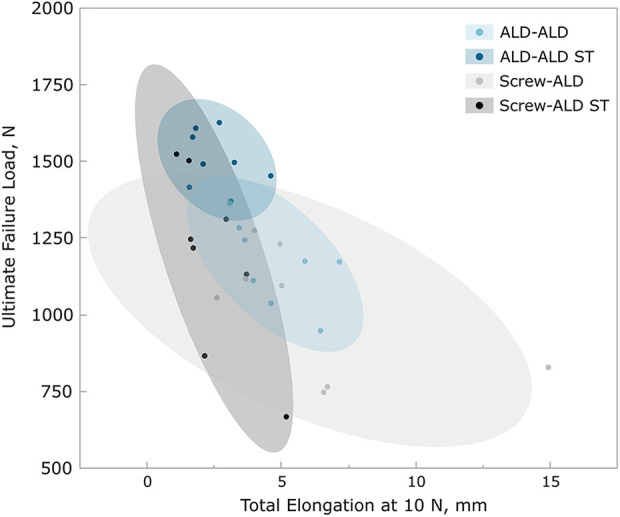
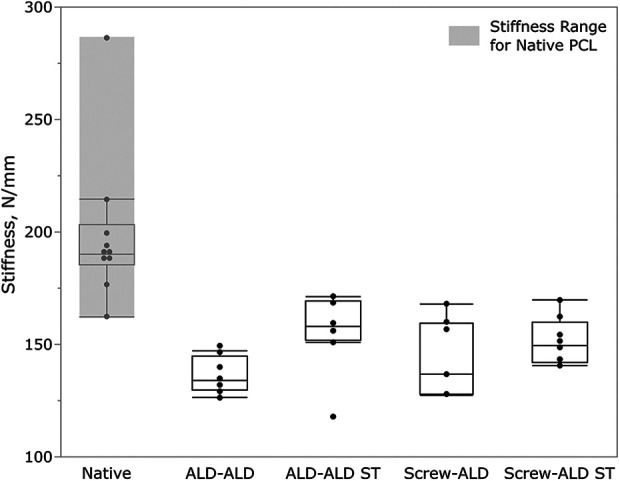
The highest ultimate load (1505 ± 87 N), a small total elongation (2.60 ± 0.97 mm), and stiffness closest to the native human ligament (156.3 ± 16.1 compared with 198.9 ± 33.5 N/mm; = .192) was seen in the all-inside technique using ST. Intragroup comparison revealed that reinforcement with ST produced a smaller total elongation for the screw fixation (Screw-ALD, 6.06 ± 3.60 vs Screw-ALD ST, 2.50 ± 1.28 mm; = .018) and all-inside techniques (ALD-ALD, 4.77 ± 1.43 vs ALD-ALD ST, 2.60 ± 0.97 mm; = .077), albeit the latter was not significantly different. Elongation for constructs without ST increased more rapidly at higher loads compared with elongation for ST constructs. The ultimate strength was significantly increased only for constructs using the all-inside technique using ST (ALD-ALD, 1167 ± 125 vs ALD-ALD ST, 1505 ± 87 N; = .010).
Adding an independent ST to PCL reconstruction led to improvement in the studied metrics by reducing the total elongation and increasing the ultimate strength, independent of the technique used.
PCL reconstruction using additional ST reinforcement was biomechanically favorable in this study. ST reinforcement in the clinical setting could decrease knee laxity after PCL reconstruction, providing better joint stability and improved functional outcomes.
后交叉韧带(PCL)重建常用于恢复关节稳定性并防止胫骨在高屈曲角度时向后移位。然而,重建后膝关节持续松弛的情况屡有报道。
生物力学评估独立缝线带(ST)加强对不同PCL重建技术的影响。
对照实验室研究。
使用猪骨和四倍体牛肌腱进行PCL重建,采用两种技术:(1)全内技术,在胫骨和股骨使用悬吊可调环装置(ALD);(2)一种在胫骨使用干涉螺钉、在股骨部位使用ALD的方法。两种技术均在有和没有额外ST的情况下进行测试,共4组(每组n = 8)。每个构建体进行生物力学测试,分三个阶段进行3000次加载循环。在模拟全范围运动的位置控制循环后,在拉伸至破坏测试前,先进行10至250 N的力控制加载,然后进行10至500 N的力控制加载。评估伸长率、刚度和极限强度。
在使用ST的全内技术中观察到最高极限载荷(1505 ± 87 N)、较小的总伸长率(2.60 ± 0.97 mm)以及最接近天然人韧带的刚度(156.3 ± 16.1与198.9 ± 33.5 N/mm相比;P = 0.192)。组内比较显示,ST加强使螺钉固定技术(螺钉 - ALD,6.06 ± 3.60 vs螺钉 - ALD ST,2.50 ± 1.28 mm;P = 0.018)和全内技术(ALD - ALD,4.77 ± 1.43 vs ALD - ALD ST,2.60 ± 0.97 mm;P = 0.077)的总伸长率更小,尽管后者差异不显著。与使用ST的构建体相比,未使用ST的构建体在较高载荷下伸长率增加得更快。仅使用ST的全内技术构建体的极限强度显著增加(ALD - ALD,1167 ± 125 vs ALD - ALD ST,1505 ± 87 N;P = 0.010)。
在PCL重建中添加独立的ST可通过减少总伸长率和增加极限强度来改善所研究的指标,与所使用的技术无关。
在本研究中,使用额外ST加强的PCL重建在生物力学上具有优势。临床环境中使用ST加强可减少PCL重建后膝关节的松弛,提供更好的关节稳定性并改善功能结果。