Fraunhofer Institute for Molecular Biology and Applied Ecology IME, Forckenbeckstrasse 6, 52074, Aachen, Germany.
Institute for Molecular Biotechnology, RWTH Aachen University, Worringerweg 1, 52074, Aachen, Germany.
Transgenic Res. 2021 Aug;30(4):401-426. doi: 10.1007/s11248-021-00236-z. Epub 2021 Mar 1.
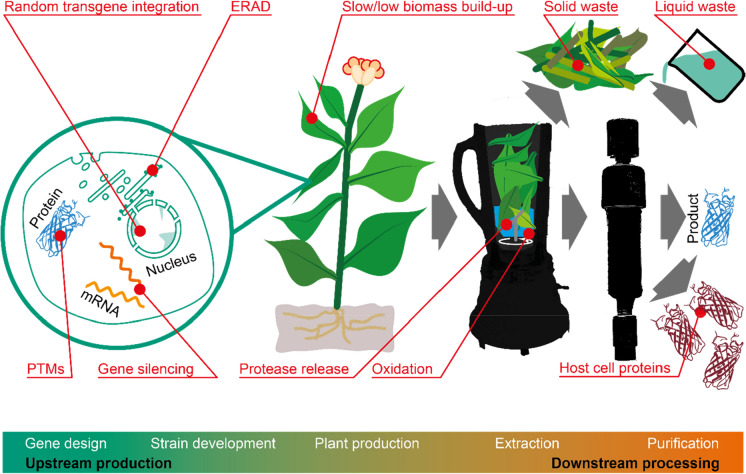
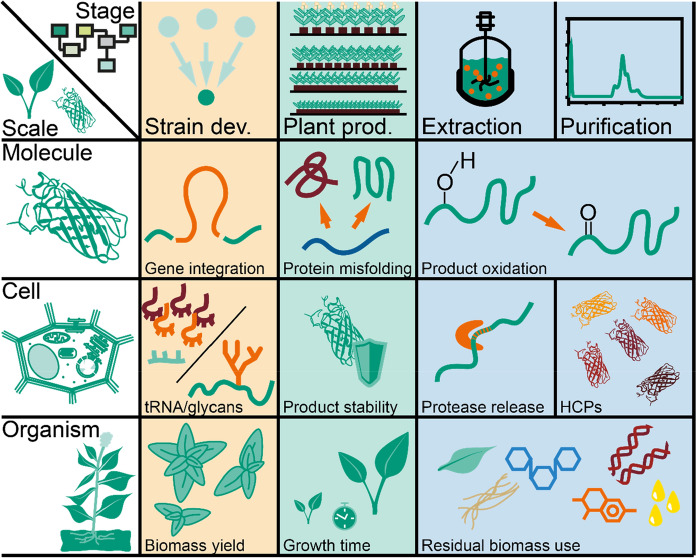
Plants have provided humans with useful products since antiquity, but in the last 30 years they have also been developed as production platforms for small molecules and recombinant proteins. This initially niche area has blossomed with the growth of the global bioeconomy, and now includes chemical building blocks, polymers and renewable energy. All these applications can be described as "plant molecular farming" (PMF). Despite its potential to increase the sustainability of biologics manufacturing, PMF has yet to be embraced broadly by industry. This reflects a combination of regulatory uncertainty, limited information on process cost structures, and the absence of trained staff and suitable manufacturing capacity. However, the limited adaptation of plants and plant cells to the requirements of industry-scale manufacturing is an equally important hurdle. For example, the targeted genetic manipulation of yeast has been common practice since the 1980s, whereas reliable site-directed mutagenesis in most plants has only become available with the advent of CRISPR/Cas9 and similar genome editing technologies since around 2010. Here we summarize the applications of new genetic engineering technologies to improve plants as biomanufacturing platforms. We start by identifying current bottlenecks in manufacturing, then illustrate the progress that has already been made and discuss the potential for improvement at the molecular, cellular and organism levels. We discuss the effects of metabolic optimization, adaptation of the endomembrane system, modified glycosylation profiles, programmable growth and senescence, protease inactivation, and the expression of enzymes that promote biodegradation. We outline strategies to achieve these modifications by targeted gene modification, considering case-by-case examples of individual improvements and the combined modifications needed to generate a new general-purpose "chassis" for PMF.
自古以来,植物就为人类提供了有用的产品,但在过去的 30 年里,它们也被开发为生产小分子和重组蛋白的平台。这个最初的小众领域随着全球生物经济的发展而蓬勃发展,现在包括化学建筑模块、聚合物和可再生能源。所有这些应用都可以被描述为“植物分子农业”(PMF)。尽管 PMF 有可能提高生物制品制造的可持续性,但它尚未被广泛接受。这反映了监管不确定性、关于工艺成本结构的信息有限以及缺乏经过培训的人员和合适的制造能力等因素的综合影响。然而,植物和植物细胞对工业规模制造要求的适应性有限,也是一个同样重要的障碍。例如,自 20 世纪 80 年代以来,酵母的靶向基因操纵已经是常见做法,而在大多数植物中,只有在 CRISPR/Cas9 及类似的基因组编辑技术出现后,才能够实现可靠的定点诱变,大约是在 2010 年前后。在这里,我们总结了新的基因工程技术在改善植物作为生物制造平台方面的应用。我们首先确定了制造过程中的当前瓶颈,然后说明了已经取得的进展,并讨论了在分子、细胞和生物体水平上改进的潜力。我们讨论了代谢优化、内膜系统的适应、修饰的糖基化谱、可编程生长和衰老、蛋白酶失活以及促进生物降解的酶的表达的影响。我们通过靶向基因修饰来概述实现这些修饰的策略,考虑了个别改进的案例以及产生新的通用“底盘”PMF 所需的组合修饰。