Keerqin C, Rhayat L, Zhang Z-H, Gharib-Naseri K, Kheravii S K, Devillard E, Crowley T M, Wu S-B
School of Environmental and Rural Science, University of New England, Armidale, Australia.
Center of Expertise and Research in Nutrition, Adisseo France S.A.S. CERN, Commentry, France.
Poult Sci. 2021 Apr;100(4):100981. doi: 10.1016/j.psj.2021.01.004. Epub 2021 Jan 15.
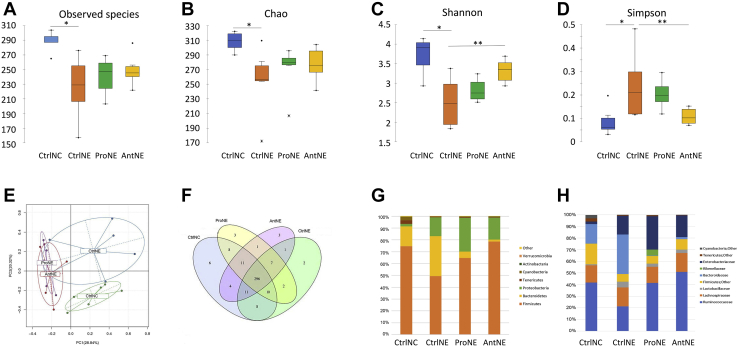
The study investigated the benefit of a Bacillus subtilis probiotic (Bs 29,784) in necrotic enteritis (NE)-challenged broilers. Four treatments were performed with 312 male day-old Ross 308 reared in floor pens from day 0 to day 35: 2 groups fed control diet without or with NE challenge (CtrlNC and CtrlNE); 2 groups fed probiotic and antibiotic supplements in the control diet with NE challenge (ProNE and AntNE). Necrotic enteritis challenge procedures commenced with inoculation of Eimeria spp 1 mL/bird per os at day 9 and Clostridium perfringens EHE-NE18 (approximately 10 cfu/mL) 1 mL/bird per os at day 14 and day 15. Performance parameters were measured on day 16 and day 35. Lesion, cecal microbiota, and jejunal gene expression were analyzed on day 16. Necrotic enteritis challenge significantly suppressed the performance parameters compared with CtrlNC: 27% weight gain reduction, 11 points feed conversion ratio (FCR) increase at day 16, and 12% weight gain reduction, 5-point FCR increase at day 35. By day 35, ProNE and AntNE treatments enabled significantly higher weight gain (4 and 9%, respectively) than CtrlNE. Compared with CtlrNE and contrary to AntNE, ProNE treatment exhibited upregulation of genes coding for tight junctions proteins (CLDN1, JAM2, TJP1), cytokines (IL12, interferon gamma, TGFβ), and Toll-like receptors (TLR5, TLR21) suggesting enhanced immunity and intestinal integrity. 16S NGS analysis of cecal microbiota at day 16 showed a decreased alpha diversity in challenged groups. Principal component analysis of operational taxonomic unit (OTU) abundance revealed that ProNE and AntNE grouped closely while both distantly from CtrlNC and CtrlNE, which were separately grouped, indicating the similar effects of ProNE and AntNE on the OTU diversity that were however different from both CtrlNC and CtrlNE. Microbiota analysis revealed an increase of genera Faecalibacterium, Oscillospira, and Butyricicoccus; and a decrease of genera Ruminococcus, Lactobacillus, and Bacteroides; and an increase of the Firmicutes-to-Bacteroidetes ratio in ProNE and AntNE groups compared with the CtlrNE group. It is concluded that Bs 29,784 may enable improved health of broiler chickens under NE conditions thus performance implications.
该研究调查了枯草芽孢杆菌益生菌(Bs 29,784)对坏死性肠炎(NE)攻毒肉鸡的益处。从第0天到第35天,在地面平养的312只1日龄雄性罗斯308肉鸡上进行了四种处理:2组饲喂不含或含NE攻毒的对照日粮(CtrlNC和CtrlNE);2组在含NE攻毒的对照日粮中添加益生菌和抗生素补充剂(ProNE和AntNE)。坏死性肠炎攻毒程序从第9天每只鸡口服接种1 mL艾美耳球虫开始,在第14天和第15天每只鸡口服接种1 mL产气荚膜梭菌EHE-NE18(约10 cfu/mL)。在第16天和第35天测量生产性能参数。在第16天分析病变、盲肠微生物群和空肠基因表达。与CtrlNC相比,坏死性肠炎攻毒显著抑制了生产性能参数:第16天体重增加减少27%,饲料转化率(FCR)增加11个点,第35天体重增加减少12%,FCR增加5个点。到第35天,ProNE和AntNE处理组的体重增加显著高于CtrlNE组(分别为4%和9%)。与CtrlNE相比,与AntNE相反,ProNE处理显示编码紧密连接蛋白(CLDN1、JAM2、TJP1)、细胞因子(IL12、干扰素γ、TGFβ)和Toll样受体(TLR5、TLR21)的基因上调,表明免疫力和肠道完整性增强。第16天盲肠微生物群的16S NGS分析显示攻毒组的α多样性降低。对操作分类单元(OTU)丰度的主成分分析表明,ProNE和AntNE紧密聚集在一起,而与分别聚集的CtrlNC和CtrlNE距离较远,这表明ProNE和AntNE对OTU多样性的影响相似,但与CtrlNC和CtrlNE不同。微生物群分析显示,与CtrlNE组相比,ProNE和AntNE组中粪杆菌属、颤螺菌属和丁酸球菌属增加;瘤胃球菌属、乳酸杆菌属和拟杆菌属减少;厚壁菌门与拟杆菌门的比例增加。得出的结论是,Bs 29,784可能有助于改善NE条件下肉鸡的健康状况,从而对生产性能产生影响。