Huo Yi, Sheng Zhen, Lu Daniel R, Ellwanger Daniel C, Li Chi-Ming, Homann Oliver, Wang Songli, Yin Hong, Ren Ruibao
Shanghai Institute of Hematology, State Key Laboratory for Medical Genomics, National Research Center for Translational Medicine, Collaborative Innovation Center of Hematology, RuiJin Hospital affiliated to Shanghai Jiao Tong University School of Medicine, Building 11, No. 197, Ruijin No.2 Rd, Shanghai, 200025, P.R. China.
Amgen Asia R&D Center, Amgen Biopharmaceutical R&D (Shanghai) Co., Ltd., 13F, Building 2, No. 4560, Jinke Rd, Shanghai, 201210, P.R. China.
BMC Genomics. 2021 Mar 1;22(1):145. doi: 10.1186/s12864-021-07435-2.
Bi-specific T-cell engager (BiTE) antibody is a class of bispecific antibodies designed for cancer immunotherapy. Blinatumomab is the first approved BiTE to treat acute B cell lymphoblastic leukemia (B-ALL). It brings killer T and target B cells into close proximity, activating patient's autologous T cells to kill malignant B cells via mechanisms such as cytolytic immune synapse formation and inflammatory cytokine production. However, the activated T-cell subtypes and the target cell-dependent T cell responses induced by blinatumomab, as well as the mechanisms of resistance to blinatumomab therapy are largely unknown.
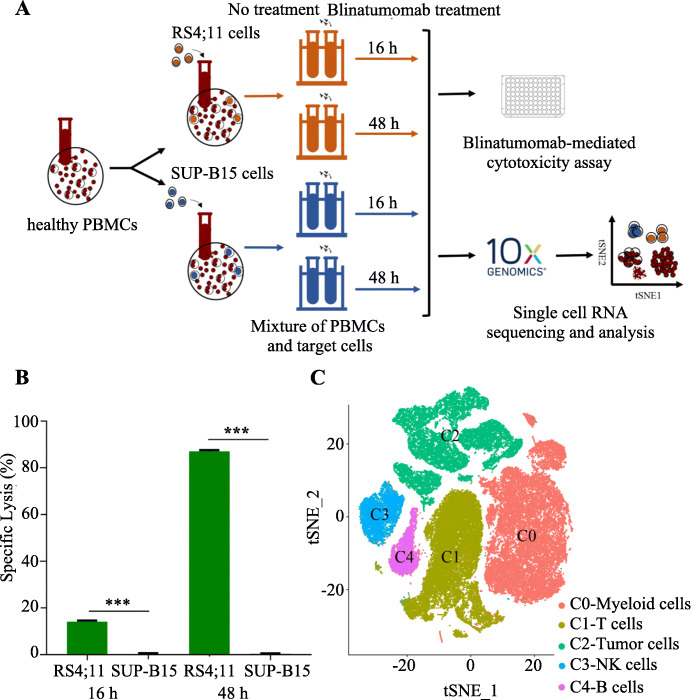
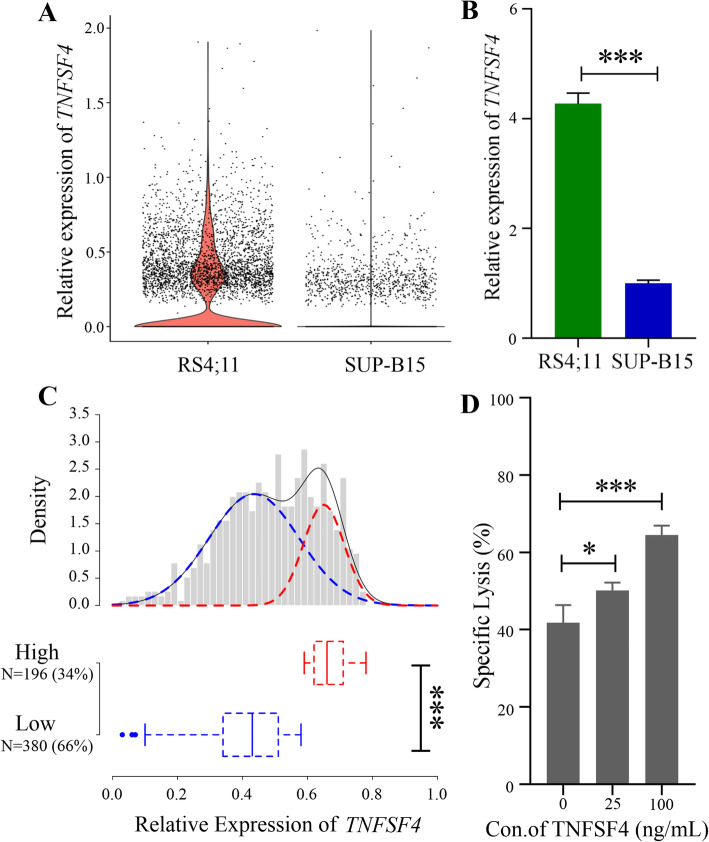
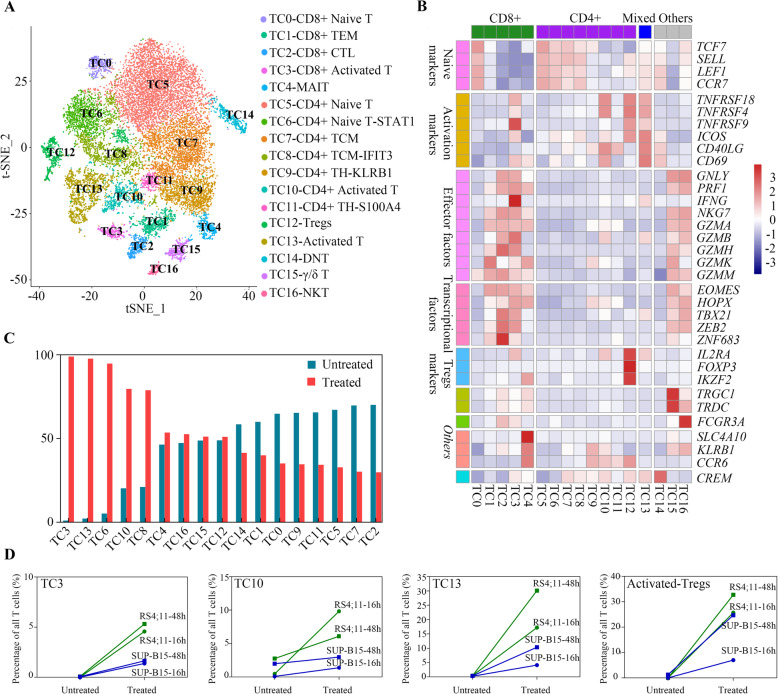
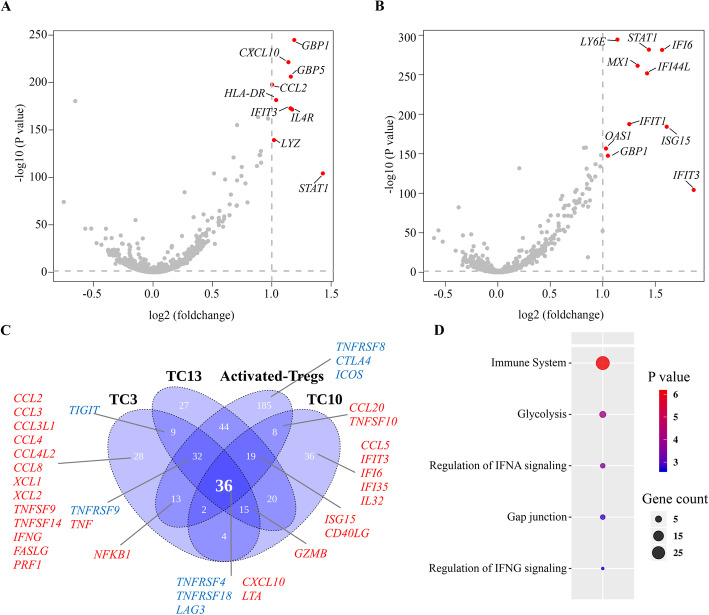
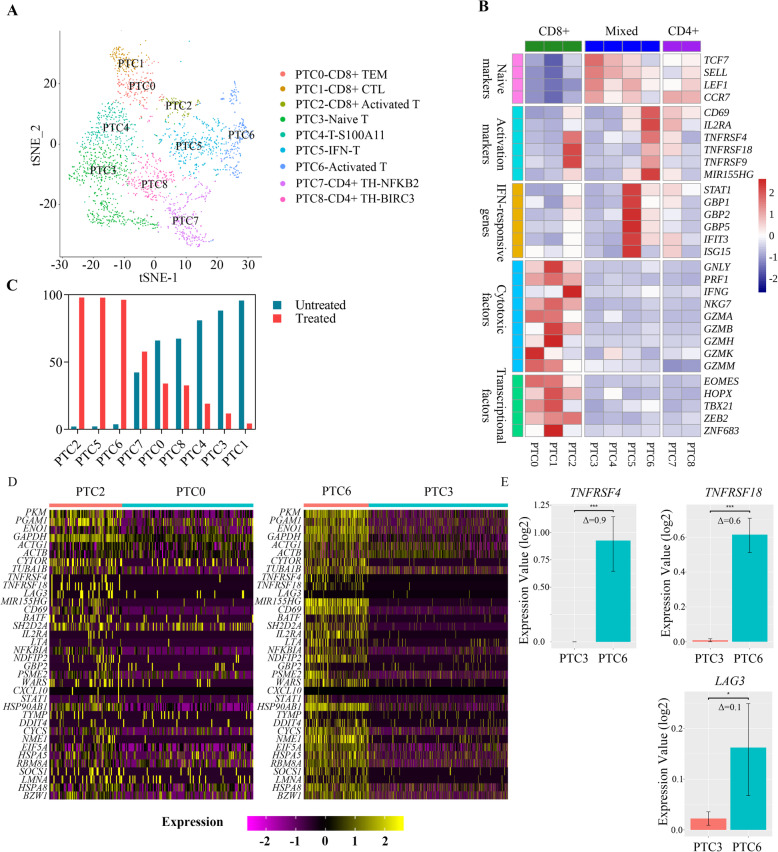
In this study, we performed single-cell sequencing analysis to identify transcriptional changes in T cells following blinatumomab-induced T cell activation using single cells from both, a human cell line model and a patient-derived model of blinatumomab-mediated cytotoxicity. In total, the transcriptome of 17,920 single T cells from the cell line model and 2271 single T cells from patient samples were analyzed. We found that CD8+ effector memory T cells, CD4+ central memory T cells, naïve T cells, and regulatory T cells were activated after blinatumomab treatment. Here, blinatumomab-induced transcriptional changes reflected the functional immune activity of the blinatumomab-activated T cells, including the upregulation of pathways such as the immune system, glycolysis, IFNA signaling, gap junctions, and IFNG signaling. Co-stimulatory (TNFRSF4 and TNFRSF18) and co-inhibitory (LAG3) receptors were similarly upregulated in blinatumomab-activated T cells, indicating ligand-dependent T cell functions. Particularly, B-ALL cell expression of TNFSF4, which encodes the ligand of T cell co-stimulatory receptor TNFRSF4, was found positively correlated with the response to blinatumomab treatment. Furthermore, recombinant human TNFSF4 protein enhanced the cytotoxic activity of blinatumomab against B-ALL cells.
These results reveal a target cell-dependent mechanism of T-cell activation by blinatumomab and suggest that TNFSF4 may be responsible for the resistant mechanism and a potential target for combination therapy with blinatumomab, to treat B-ALL or other B-cell malignancies.
双特异性T细胞衔接器(BiTE)抗体是一类用于癌症免疫治疗的双特异性抗体。博纳吐单抗是首个被批准用于治疗急性B淋巴细胞白血病(B-ALL)的BiTE。它使杀伤性T细胞和靶B细胞紧密靠近,通过细胞溶解性免疫突触形成和炎性细胞因子产生等机制激活患者的自体T细胞来杀伤恶性B细胞。然而,博纳吐单抗诱导的活化T细胞亚型、靶细胞依赖性T细胞反应以及对博纳吐单抗治疗的耐药机制在很大程度上尚不清楚。
在本研究中,我们进行了单细胞测序分析,以确定使用来自人类细胞系模型和博纳吐单抗介导的细胞毒性患者来源模型的单细胞,在博纳吐单抗诱导T细胞活化后T细胞中的转录变化。总共分析了来自细胞系模型的17920个单个T细胞和来自患者样本的2271个单个T细胞的转录组。我们发现博纳吐单抗治疗后CD8+效应记忆T细胞、CD4+中央记忆T细胞、幼稚T细胞和调节性T细胞被激活。在此,博纳吐单抗诱导的转录变化反映了博纳吐单抗活化T细胞的功能性免疫活性,包括免疫系统、糖酵解、IFNA信号传导、间隙连接和IFNG信号传导等途径的上调。共刺激(TNFRSF4和TNFRSF18)和共抑制(LAG3)受体在博纳吐单抗活化的T细胞中同样上调,表明配体依赖性T细胞功能。特别地,发现编码T细胞共刺激受体TNFRSF4配体的TNFSF4在B-ALL细胞中的表达与对博纳吐单抗治疗的反应呈正相关。此外,重组人TNFSF4蛋白增强了博纳吐单抗对B-ALL细胞的细胞毒性活性。
这些结果揭示了博纳吐单抗激活T细胞的靶细胞依赖性机制,并表明TNFSF4可能是耐药机制的原因以及与博纳吐单抗联合治疗B-ALL或其他B细胞恶性肿瘤的潜在靶点。