Peng Grace E, Pessino Veronica, Huang Bo, von Zastrow Mark
Program in Cell Biology, University of California, San Francisco, San Francisco, CA, USA.
Department of Psychiatry and Behavioral Sciences, University of California, San Francisco, San Francisco, CA, USA.
Nat Chem Biol. 2021 May;17(5):558-566. doi: 10.1038/s41589-021-00747-0. Epub 2021 Mar 1.
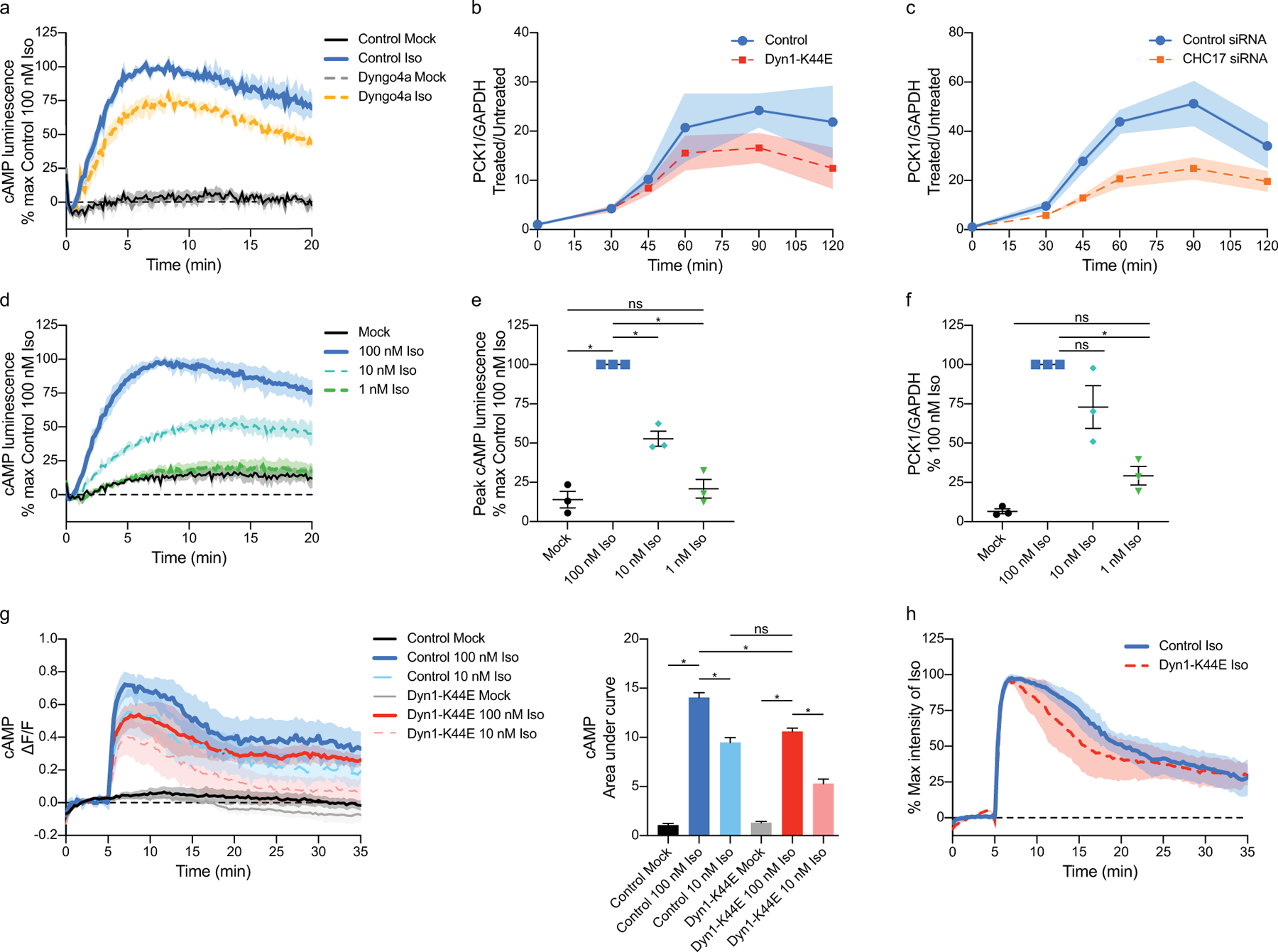
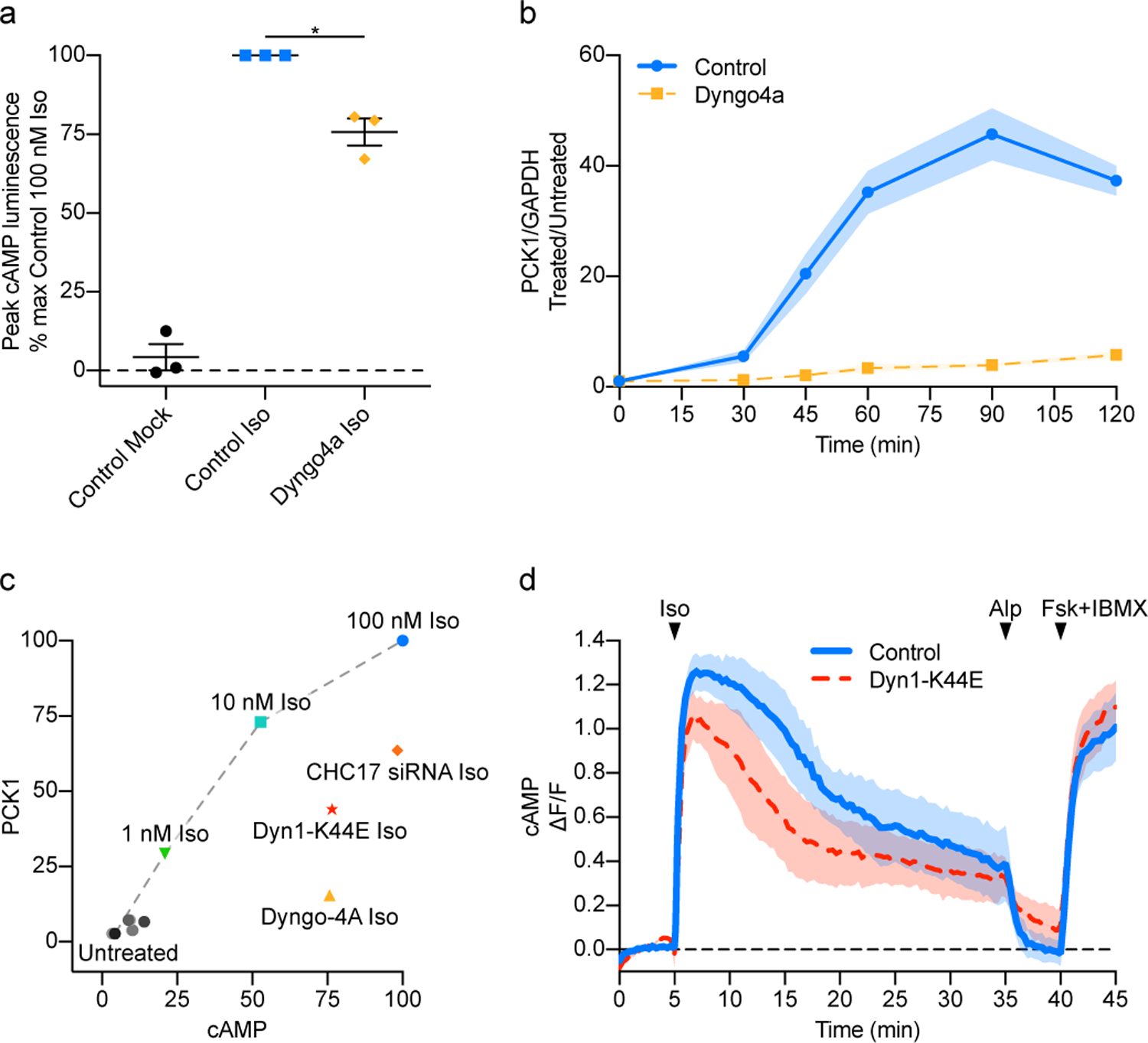
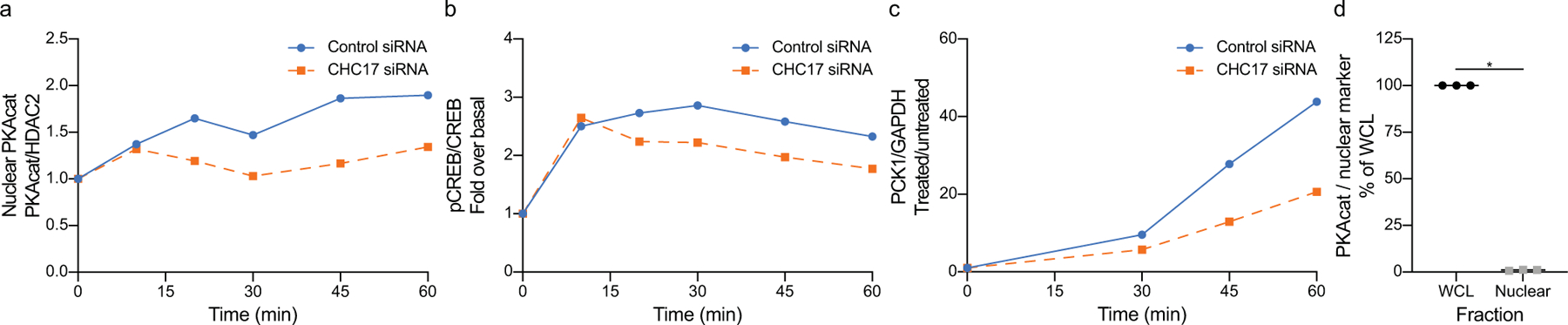
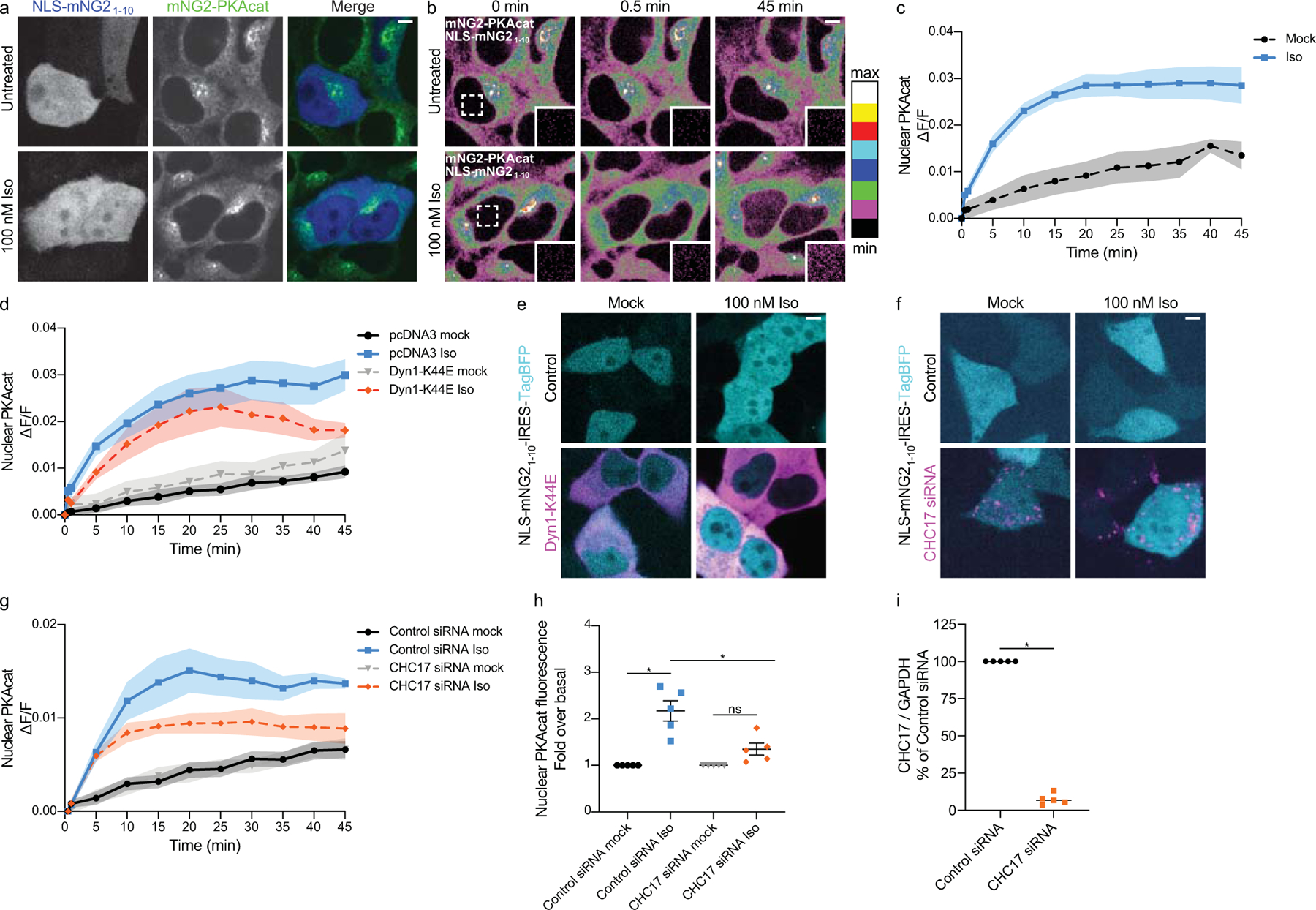
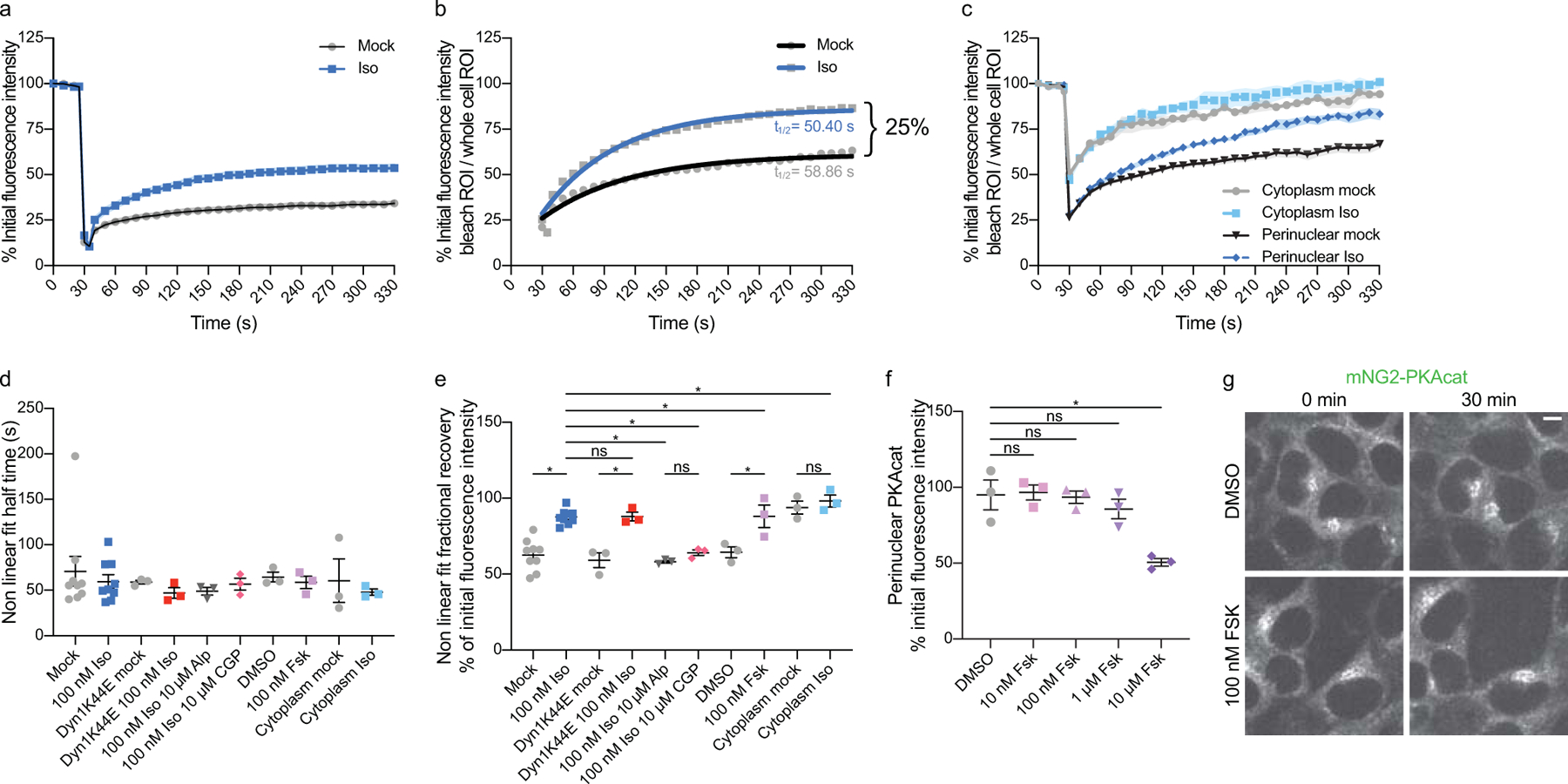
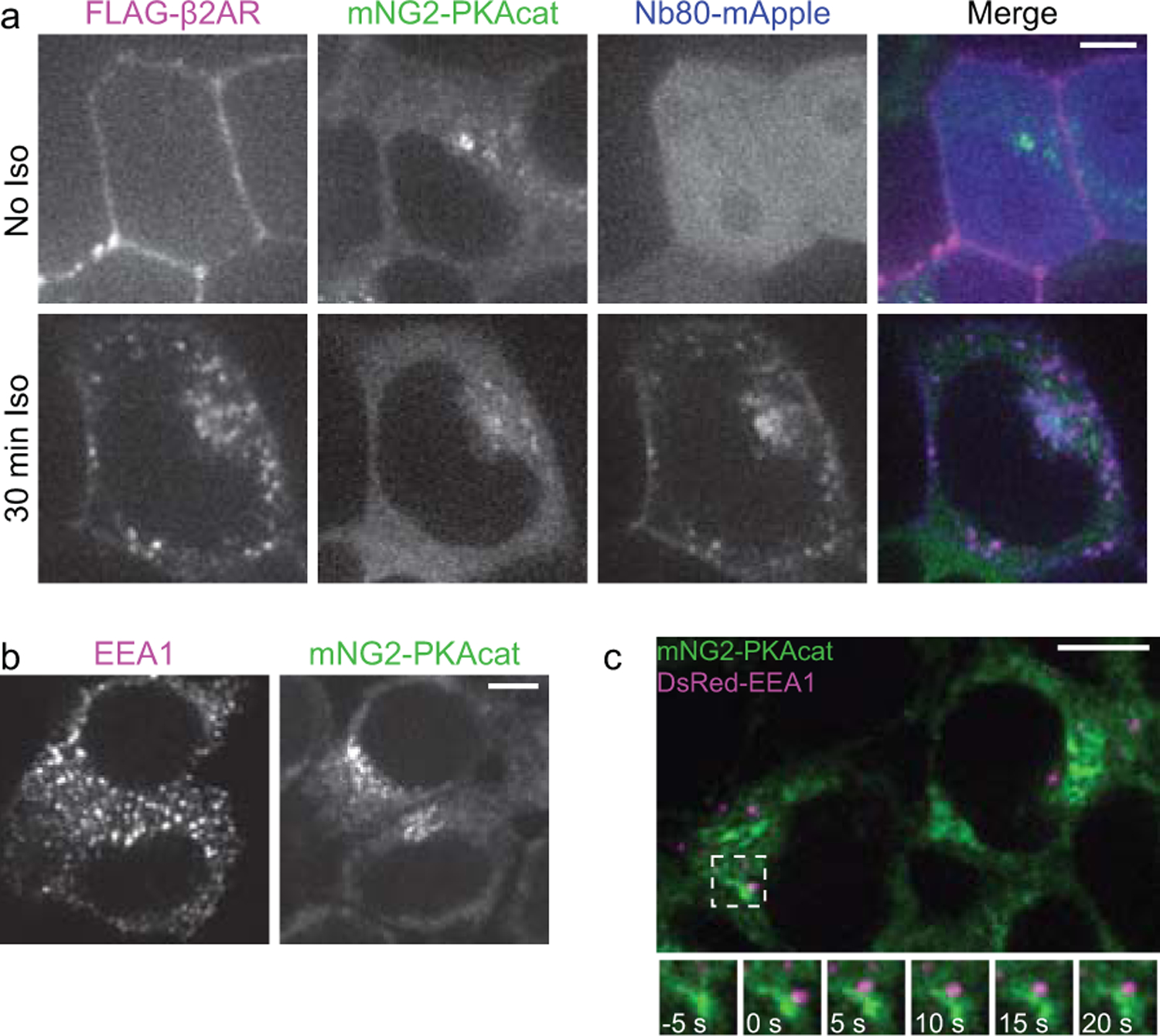
G-protein-coupled receptor-regulated cAMP production from endosomes can specify signaling to the nucleus by moving the source of cAMP without changing its overall amount. How this is possible remains unknown because cAMP gradients dissipate over the nanoscale, whereas endosomes typically localize micrometers from the nucleus. We show that the key location-dependent step for endosome-encoded transcriptional control is nuclear entry of cAMP-dependent protein kinase (PKA) catalytic subunits. These are sourced from punctate accumulations of PKA holoenzyme that are densely distributed in the cytoplasm and titrated by global cAMP into a discrete metastable state, in which catalytic subunits are bound but dynamically exchange. Mobile endosomes containing activated receptors collide with the metastable PKA puncta and pause in close contact. We propose that these properties enable cytoplasmic PKA to act collectively like a semiconductor, converting nanoscale cAMP gradients generated from endosomes into microscale elevations of free catalytic subunits to direct downstream signaling.
G蛋白偶联受体调控的内体cAMP产生可通过移动cAMP来源而不改变其总量来指定向细胞核的信号传导。这是如何实现的仍然未知,因为cAMP梯度在纳米尺度上会消散,而内体通常定位于距离细胞核微米级的位置。我们发现,内体编码转录控制的关键位置依赖性步骤是cAMP依赖性蛋白激酶(PKA)催化亚基进入细胞核。这些亚基来源于密集分布在细胞质中的PKA全酶点状聚集物,并通过全局cAMP滴定到离散的亚稳态,其中催化亚基结合但动态交换。含有活化受体的移动内体与亚稳态PKA点状物碰撞并在紧密接触中暂停。我们提出,这些特性使细胞质PKA能够像半导体一样共同发挥作用,将内体产生的纳米级cAMP梯度转化为游离催化亚基的微米级升高,以指导下游信号传导。