Kobayashi Ryan, Dionne Audrey, Ferraro Alessandra, Harrild David, Newburger Jane, VanderPluym Christina, Gauvreau Kim, Son Mary Beth, Lee Pui, Baker Annette, de Ferranti Sarah, Friedman Kevin G
Department of Cardiology, Boston Children's Hospital, Boston, Massachusetts, USA.
Department of Pediatrics, Harvard Medical School, Boston, Massachusetts, USA.
CJC Open. 2021 Jul;3(7):880-887. doi: 10.1016/j.cjco.2021.02.012. Epub 2021 Feb 25.
Cardiac manifestations in multisystem inflammatory syndrome in children (MIS-C) occur in ∼80% of patients. Left ventricular (LV) systolic dysfunction is the most frequent cardiac finding.
In this single-centre, retrospective cohort study, we report on detailed assessment of LV function in MIS-C patients using strain and strain rate analysis. We compare those with normal peak systolic strain z-scores (both longitudinal and circumferential strain) to those with abnormal peak systolic strain z-scores (decreased circumferential and/or longitudinal strain).
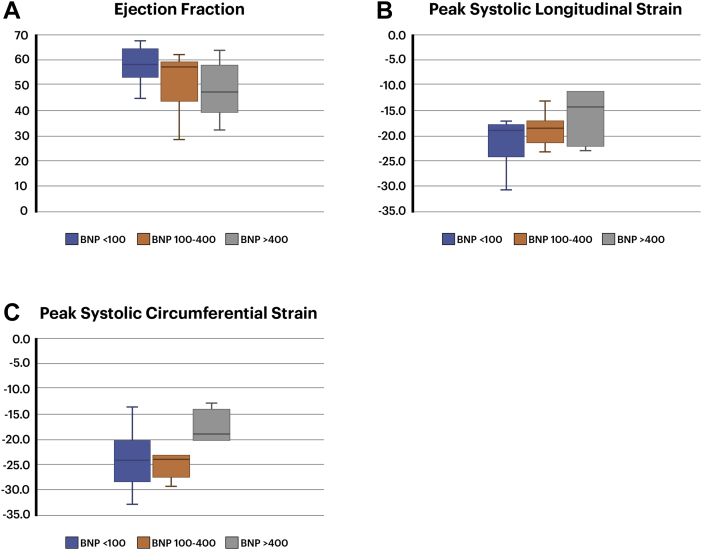
Among 25 patients, 14 (56%) were male, 20 (80%) were Black or Hispanic, 13 (52%) were overweight/obese, and the median age was 11.4 years (interquartile range: 7.5 to 16). Median ejection fraction (EF) was 55.2% (interquartile range: 48.3% to 58%), with the abnormal strain patients having a lower EF ( < 0.01). Demographics were similar between groups. The abnormal strain patients had more organ systems involved and were more likely to require inotropic support. In a comparison of MIS-C patients with normal EF (n = 15) to controls, MIS-C patients had lower peak systolic strain as well as lower early diastolic strain rates. In patients with initially depressed function, EF normalized in 8 of 10 (80%), but 4 of 11 (36%) patients had persistently abnormal systolic strain after discharge.
LV systolic dysfunction is common in the acute phase of MIS-C, and detection may be improved with strain imaging. Longitudinal cardiac follow-up is imperative, as some patients may be at risk for persistent LV dysfunction.
儿童多系统炎症综合征(MIS-C)患者中约80%会出现心脏表现。左心室(LV)收缩功能障碍是最常见的心脏表现。
在这项单中心回顾性队列研究中,我们报告了使用应变和应变率分析对MIS-C患者左心室功能进行的详细评估。我们将收缩期峰值应变z评分正常(纵向和圆周应变均正常)的患者与收缩期峰值应变z评分异常(圆周应变和/或纵向应变降低)的患者进行比较。
25例患者中,14例(56%)为男性,20例(80%)为黑人或西班牙裔,13例(52%)超重/肥胖,中位年龄为11.4岁(四分位间距:7.5至16岁)。中位射血分数(EF)为55.2%(四分位间距:48.3%至58%),应变异常的患者EF较低(<0.01)。两组患者的人口统计学特征相似。应变异常的患者涉及更多器官系统,更有可能需要使用正性肌力药物支持。将EF正常的MIS-C患者(n = 15)与对照组进行比较,MIS-C患者的收缩期峰值应变以及舒张早期应变率较低。在最初功能降低的患者中,10例中有8例(80%)的EF恢复正常,但11例中有4例(36%)患者出院后收缩期应变持续异常。
LV收缩功能障碍在MIS-C急性期很常见,应变成像可能有助于提高其检出率。必须进行长期心脏随访,因为一些患者可能有持续LV功能障碍的风险。