Department of Cancer Therapy and Research, Graduate School of Medical Sciences, Kyushu University, Fukuoka 812‑8582, Japan.
Department of Anatomical Pathology, Graduate School of Medical Sciences, Kyushu University, Fukuoka 812‑8582, Japan.
Oncol Rep. 2021 Mar;45(3):997-1010. doi: 10.3892/or.2021.7947. Epub 2021 Jan 22.
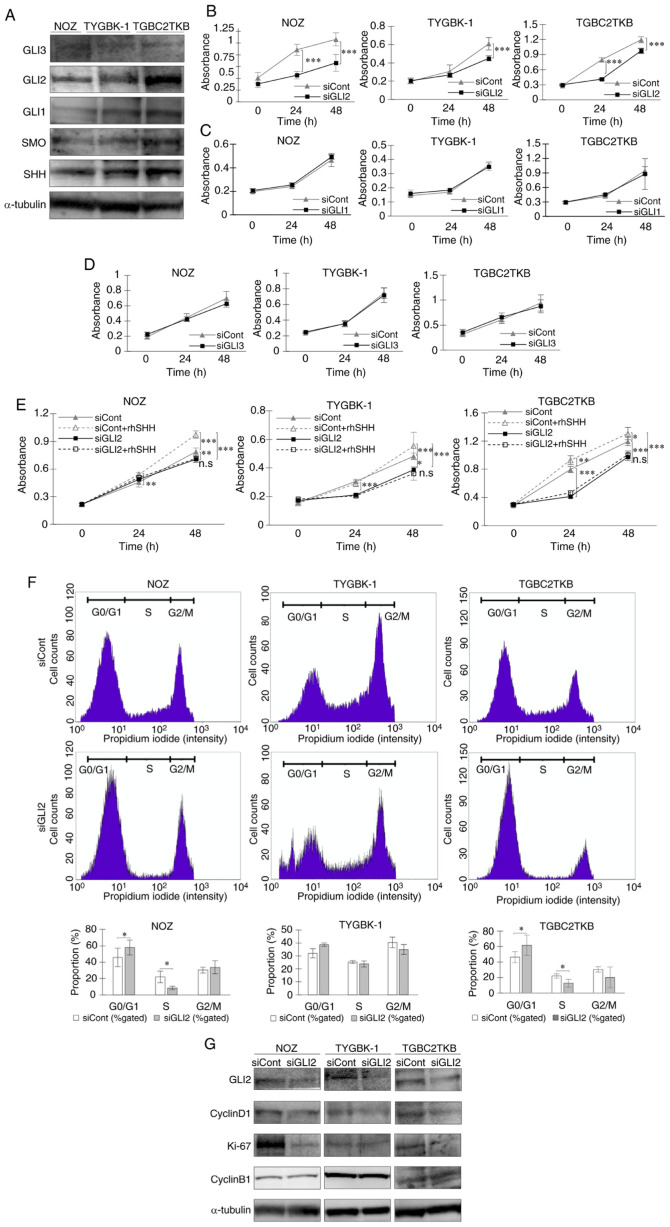
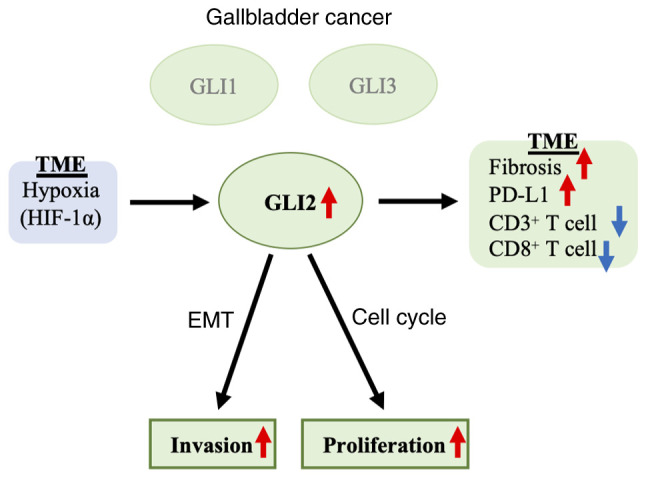
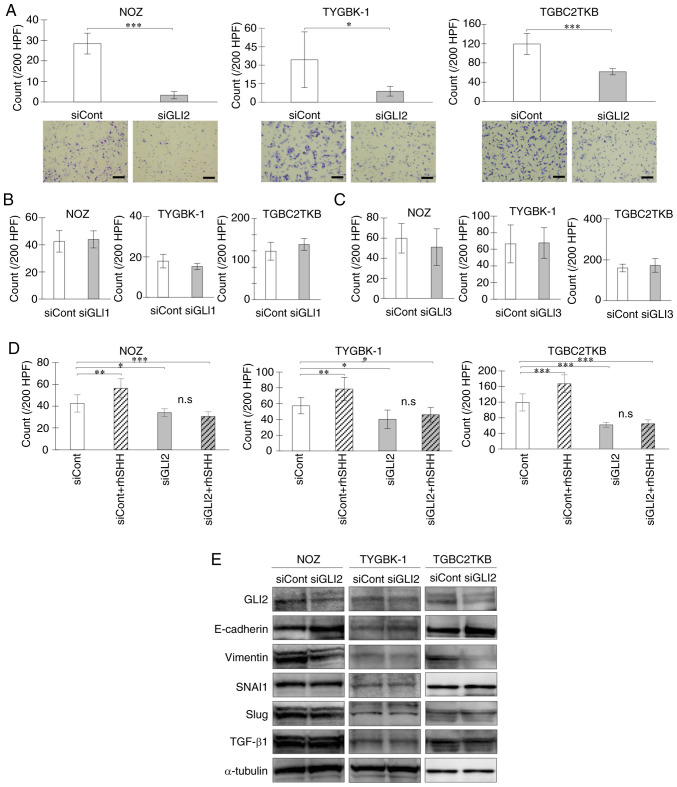
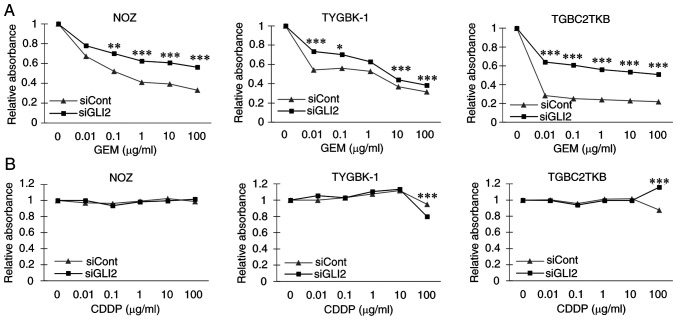
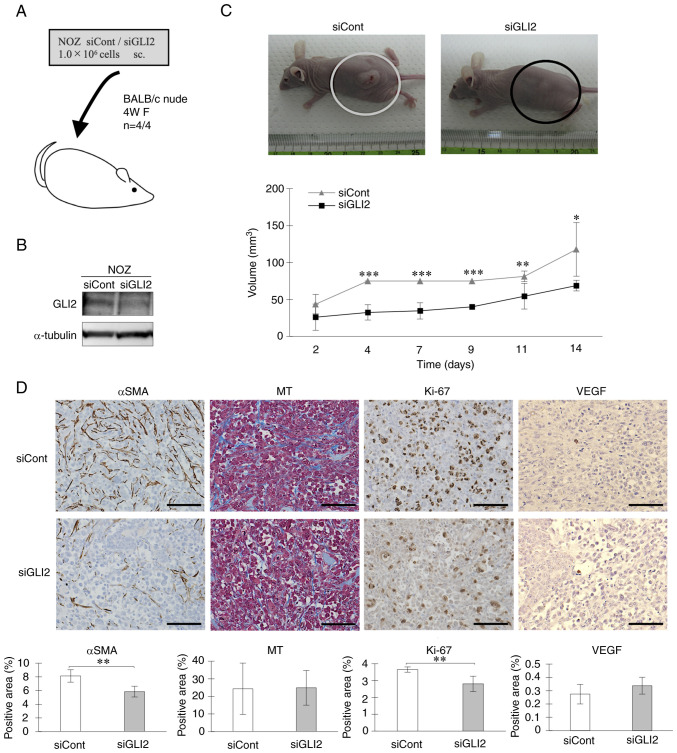
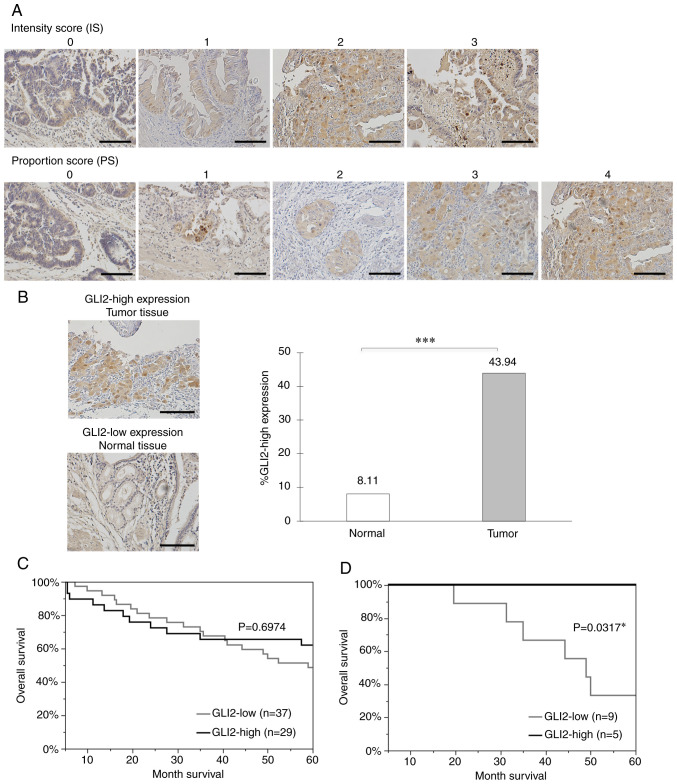
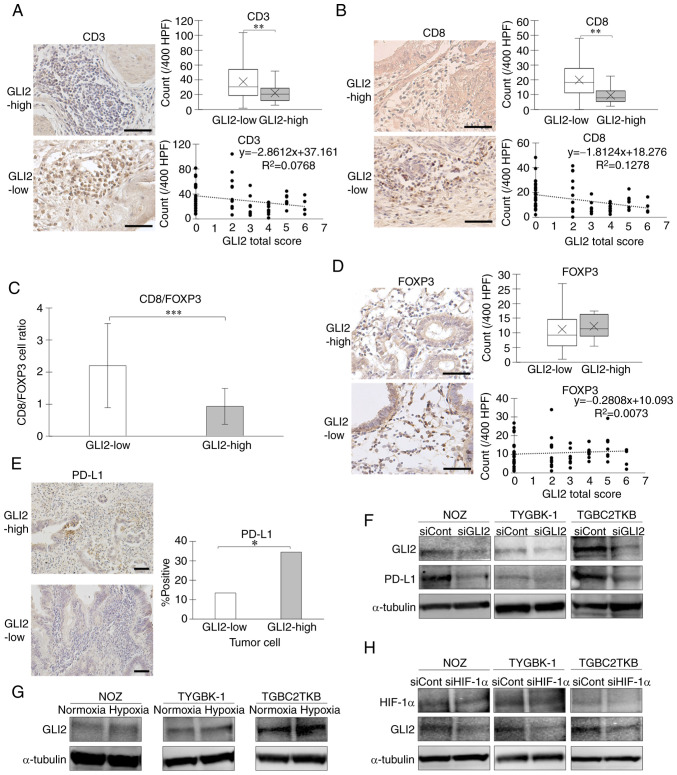
We previously reported that Hedgehog (Hh) signal was enhanced in gallbladder cancer (GBC) and was involved in the induction of malignant phenotype of GBC. In recent years, therapeutics that target Hh signaling have focused on molecules downstream of smoothened (SMO). The three transcription factors in the Hh signal pathway, glioma‑associated oncogene homolog 1 (GLI1), GLI2, and GLI3, function downstream of SMO, but their biological role in GBC remains unclear. In the present study, the biological significance of GLI1, GLI2, and GLI3 were analyzed with the aim of developing novel treatments for GBC. It was revealed that GLI2, but not GLI1 or GLI3, was involved in the cell cycle‑mediated proliferative capacity in GBC and that GLI2, but not GLI1 or GLI3, was involved in the enhanced invasive capacity through epithelial‑mesenchymal transition. Further analyses revealed that GLI2 may function in mediating gemcitabine sensitivity and that GLI2 was involved in the promotion of fibrosis in a mouse xenograft model. Immunohistochemical staining of 66 surgically resected GBC tissues revealed that GLI2‑high expression patients had fewer numbers of CD3+ and CD8+ tumor‑infiltrating lymphocytes (TILs) and increased programmed cell death ligand 1 (PD‑L1) expression in cancer cells. These results suggest that GLI2, but not GLI1 or GLI3, is involved in proliferation, invasion, fibrosis, PD‑L1 expression, and TILs in GBC and could be a novel therapeutic target. The results of this study provide a significant contribution to the development of a new treatment for refractory GBC, which has few therapeutic options.
我们之前报道过 Hedgehog(Hh)信号在胆囊癌(GBC)中增强,并参与诱导 GBC 的恶性表型。近年来,针对 Hh 信号的治疗方法集中在 Smoothened(SMO)下游的分子上。Hh 信号通路中的三个转录因子,Glioma-associated oncogene homolog 1(GLI1)、GLI2 和 GLI3,在 SMO 下游发挥作用,但它们在 GBC 中的生物学作用尚不清楚。在本研究中,分析了 GLI1、GLI2 和 GLI3 的生物学意义,旨在为 GBC 开发新的治疗方法。结果表明,GLI2 而不是 GLI1 或 GLI3 参与了 GBC 中细胞周期介导的增殖能力,并且 GLI2 而不是 GLI1 或 GLI3 参与了通过上皮-间充质转化增强的侵袭能力。进一步的分析表明,GLI2 可能在调节吉西他滨敏感性方面发挥作用,并且 GLI2 参与了在小鼠异种移植模型中的纤维化促进作用。对 66 例手术切除的 GBC 组织进行免疫组织化学染色显示,GLI2 高表达患者的 CD3+和 CD8+肿瘤浸润淋巴细胞(TILs)数量较少,癌细胞中程序性细胞死亡配体 1(PD-L1)表达增加。这些结果表明,GLI2 而不是 GLI1 或 GLI3 参与了 GBC 的增殖、侵袭、纤维化、PD-L1 表达和 TILs,并且可能是一个新的治疗靶点。本研究的结果为开发治疗难治性 GBC 的新方法提供了重要贡献,因为 GBC 的治疗选择很少。