The Shraga Segal Department of Microbiology, Immunology, and Genetics, Faculty of Health Sciences, Ben-Gurion University of the Negev, Beer Sheva 8410501, Israel.
The Center of Advanced Research and Education in Reproduction (CARER), Faculty of Health Sciences, Ben-Gurion University of the Negev, Beer Sheva 8410501, Israel.
Int J Mol Sci. 2021 Feb 26;22(5):2325. doi: 10.3390/ijms22052325.
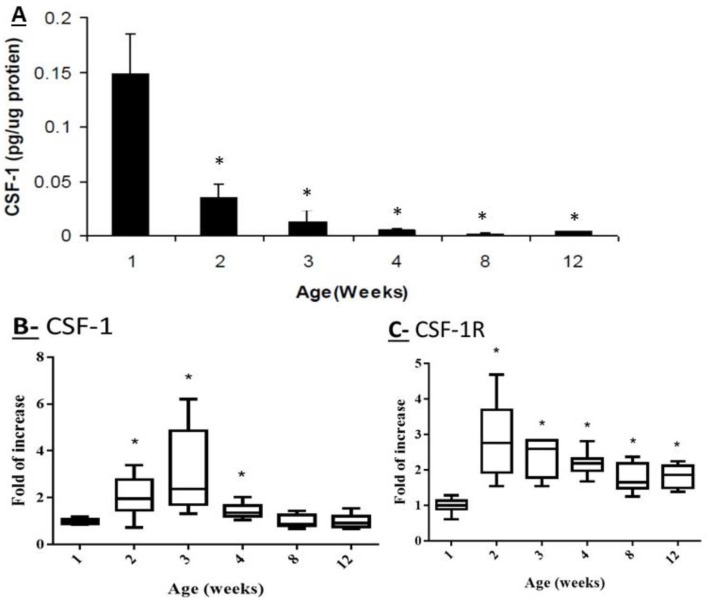
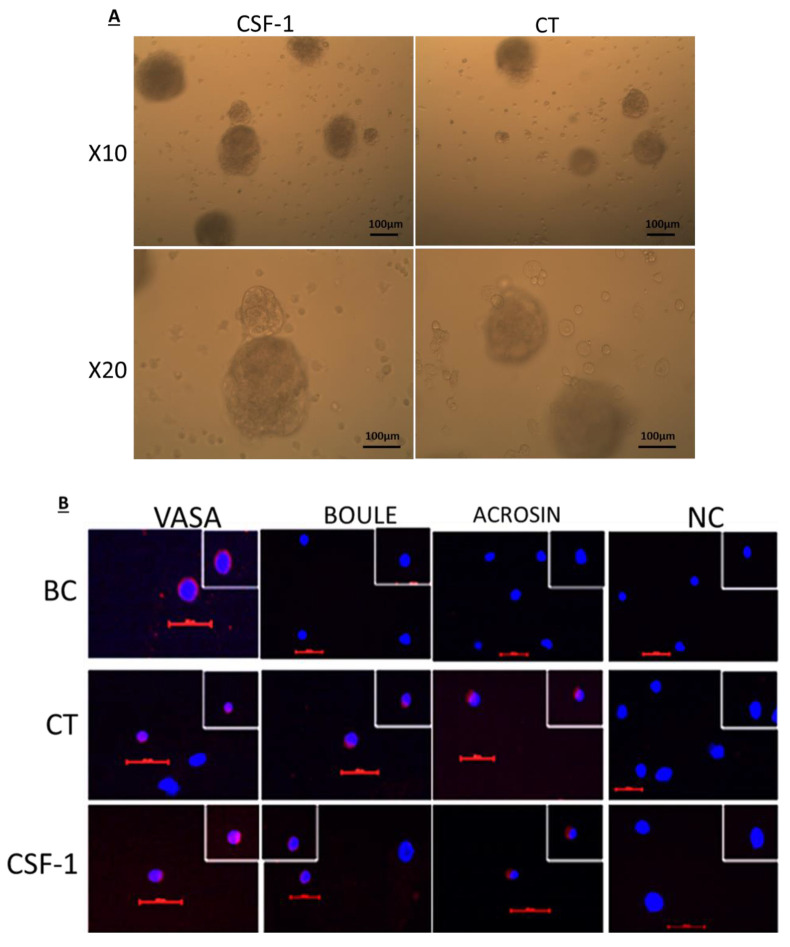
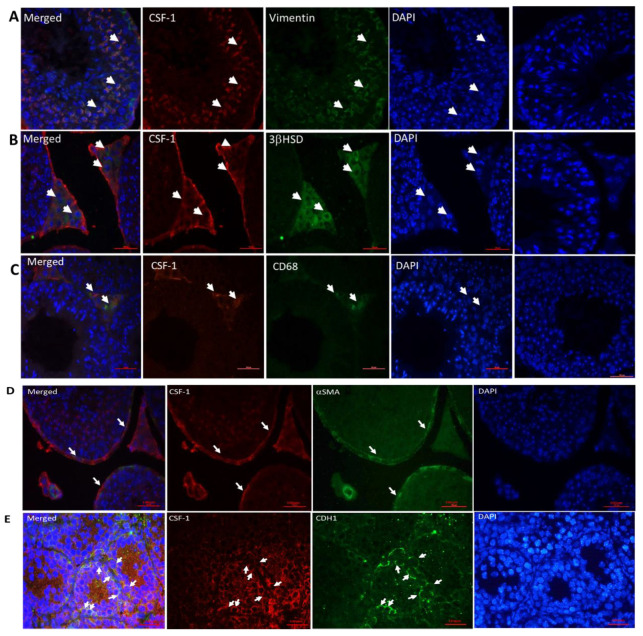
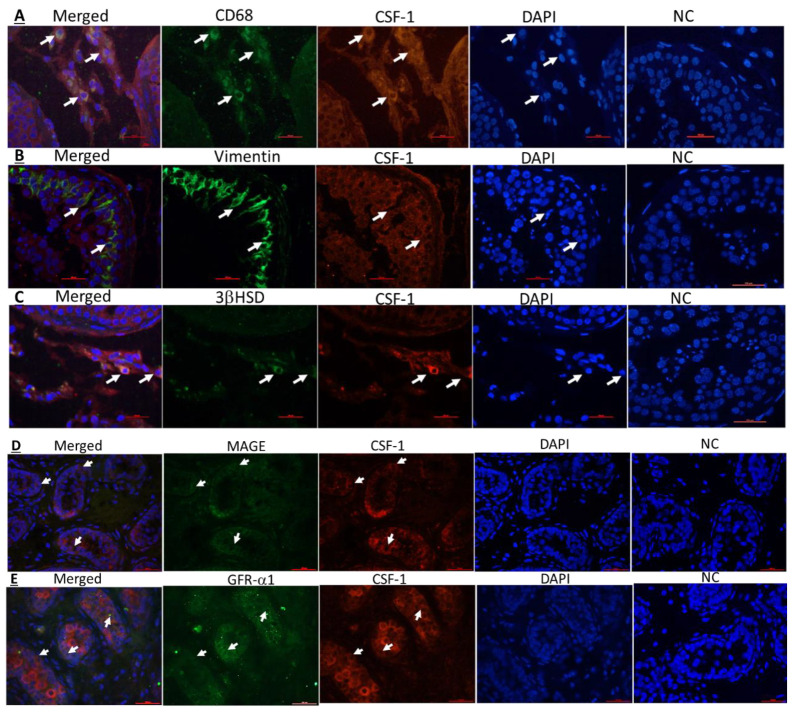
Spermatogenesis is a complex process, in which spermatogonial cells proliferate and differentiate in the seminiferous tubules of the testis to generate sperm. This process is under the regulation of endocrine and testicular paracrine/autocrine factors. In the present study, we demonstrated that colony stimulating factor-1 (CSF-1) is produced by mouse testicular macrophages, Leydig, Sertoli, peritubular cells and spermatogonial cells (such as CDH1-positively stained cells; a marker of spermatogonial cells). In addition, we demonstrated the presence of CSF-1 and its receptor (CSF-1R) in testicular macrophages, Leydig, Sertoli, peritubular cells and spermatogonial cells of human testis. We also show that the protein levels of CSF-1 were the highest in testis of 1-week-old mice and significantly decreased with age (2-12-week-old). However, the transcriptome levels of CSF-1 significantly increased in 2-3-week-old compared to 1-week-old, and thereafter significantly decreased with age. On the other hand, the transcriptome levels of CSF-1R was significantly higher in mouse testicular tissue of all examined ages (2-12-week-old) compared to 1-week-old. Our results demonstrate the involvement of CSF-1 in the induction the proliferation and differentiation of spermatogonial cells to meiotic and postmeiotic stages (BOULE- and ACROSIN-positive cells) under in vitro culture conditions, using methylcellulose culture system (MCS). Thus, it is possible to suggest that CSF-1 system, as a testicular paracrine/autocrine system, is involved in the development of different stages of spermatogenesis and may be used in the development of future therapeutic strategies for treatment of male infertility.
精子发生是一个复杂的过程,在此过程中精原细胞在睾丸的生精小管中增殖和分化,产生精子。这个过程受内分泌和睾丸旁分泌/自分泌因子的调节。在本研究中,我们证明集落刺激因子 1(CSF-1)由小鼠睾丸巨噬细胞、间质细胞、支持细胞和精原细胞(如 CDH1 阳性细胞;精原细胞的标志物)产生。此外,我们还证明了 CSF-1 及其受体(CSF-1R)存在于人类睾丸中的睾丸巨噬细胞、间质细胞、支持细胞和精原细胞中。我们还表明,CSF-1 的蛋白水平在 1 周龄小鼠的睾丸中最高,并且随着年龄的增长(2-12 周龄)显著降低。然而,CSF-1 的转录组水平在 2-3 周龄时与 1 周龄相比显著增加,此后随着年龄的增长显著降低。另一方面,CSF-1R 的转录组水平在所有检查年龄(2-12 周龄)的小鼠睾丸组织中均显著高于 1 周龄。我们的结果表明 CSF-1 参与了在体外培养条件下,使用甲基纤维素培养系统(MCS)诱导精原细胞增殖和分化为减数分裂和减数分裂后阶段(BOULE 和 ACROSIN 阳性细胞)。因此,可以推测 CSF-1 系统作为睾丸旁分泌/自分泌系统,参与了精子发生的不同阶段的发育,并可能用于开发未来治疗男性不育症的治疗策略。