Mirzaei Sepideh, Zarrabi Ali, Hashemi Farid, Zabolian Amirhossein, Saleki Hossein, Azami Negar, Hamzehlou Soodeh, Farahani Mahdi Vasheghani, Hushmandi Kiavash, Ashrafizadeh Milad, Khan Haroon, Kumar Alan Prem
Department of Biology, Faculty of Science, Islamic Azad University, Science and Research Branch, Tehran 1477893855, Iran.
Sabanci University Nanotechnology Research and Application Center (SUNUM), Tuzla, 34956 Istanbul, Turkey.
Antioxidants (Basel). 2021 Feb 26;10(3):349. doi: 10.3390/antiox10030349.
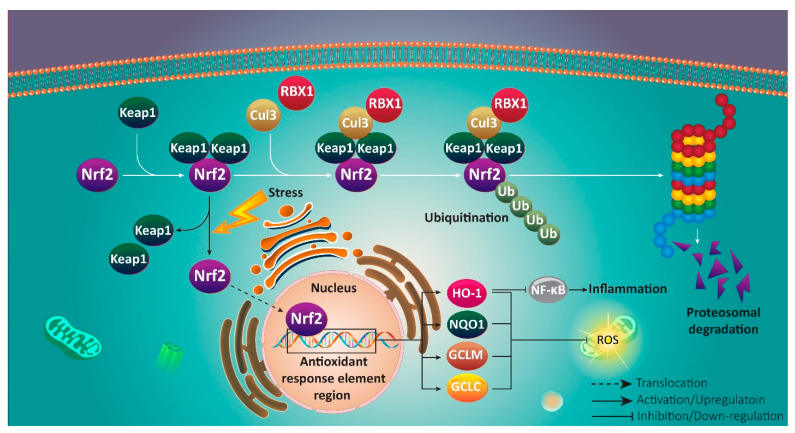
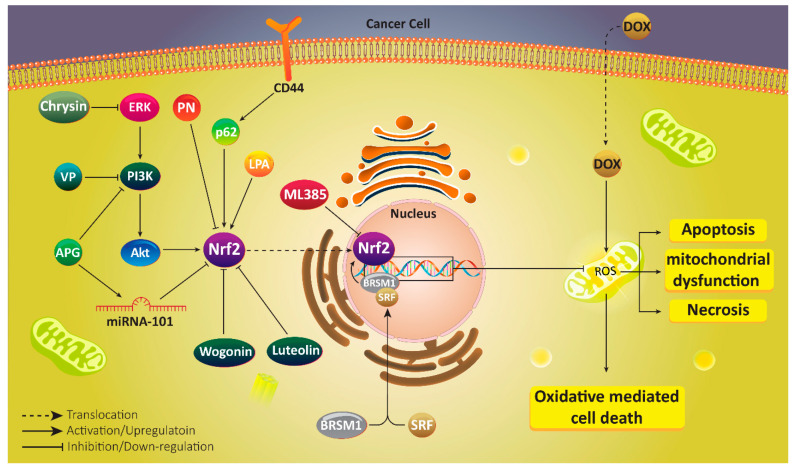
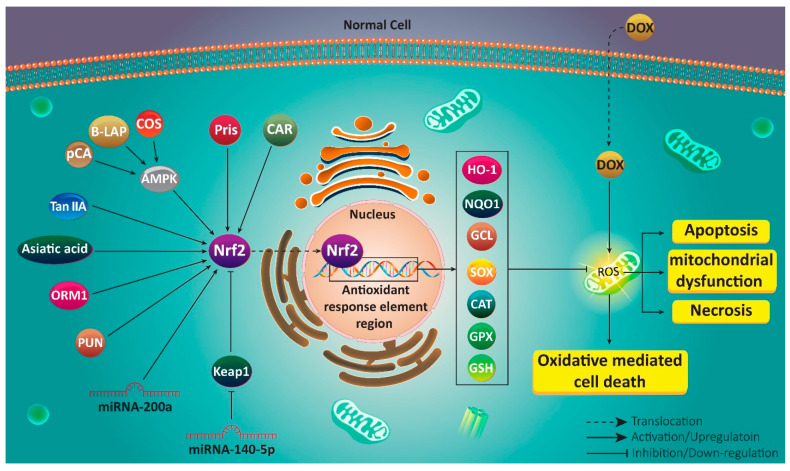
Doxorubicin (DOX) is extensively applied in cancer therapy due to its efficacy in suppressing cancer progression and inducing apoptosis. After its discovery, this chemotherapeutic agent has been frequently used for cancer therapy, leading to chemoresistance. Due to dose-dependent toxicity, high concentrations of DOX cannot be administered to cancer patients. Therefore, experiments have been directed towards revealing underlying mechanisms responsible for DOX resistance and ameliorating its adverse effects. Nuclear factor erythroid 2-related factor 2 (Nrf2) signaling is activated to increase levels of reactive oxygen species (ROS) in cells to protect them against oxidative stress. It has been reported that Nrf2 activation is associated with drug resistance. In cells exposed to DOX, stimulation of Nrf2 signaling protects cells against cell death. Various upstream mediators regulate Nrf2 in DOX resistance. Strategies, both pharmacological and genetic interventions, have been applied for reversing DOX resistance. However, Nrf2 induction is of importance for alleviating side effects of DOX. Pharmacological agents with naturally occurring compounds as the most common have been used for inducing Nrf2 signaling in DOX amelioration. Furthermore, signaling networks in which Nrf2 is a key player for protection against DOX adverse effects have been revealed and are discussed in the current review.
阿霉素(DOX)因其在抑制癌症进展和诱导细胞凋亡方面的功效而被广泛应用于癌症治疗。自其被发现以来,这种化疗药物一直被频繁用于癌症治疗,导致了化疗耐药性。由于剂量依赖性毒性,无法给癌症患者施用高浓度的DOX。因此,人们开展了相关实验,以揭示导致DOX耐药性的潜在机制,并改善其不良反应。核因子红细胞2相关因子2(Nrf2)信号通路被激活,以增加细胞内活性氧(ROS)的水平,从而保护细胞免受氧化应激。据报道,Nrf2激活与耐药性有关。在暴露于DOX的细胞中,Nrf2信号通路的刺激可保护细胞免于死亡。多种上游介质在DOX耐药性中调节Nrf2。人们已经应用了药理学和基因干预等策略来逆转DOX耐药性。然而,Nrf2的诱导对于减轻DOX的副作用很重要。以天然存在的化合物最为常见的药理学试剂已被用于在改善DOX的过程中诱导Nrf2信号通路。此外,本综述还揭示并讨论了以Nrf2作为抵御DOX不良反应关键因素的信号网络。