Dipartimento Di Scienze Della Terra E Geoambientali, Università Di Bari, Bari, Italy.
British Geological Survey, The Lyell Centre, Edinburgh, UK.
Sci Rep. 2021 Mar 2;11(1):4959. doi: 10.1038/s41598-021-84456-7.
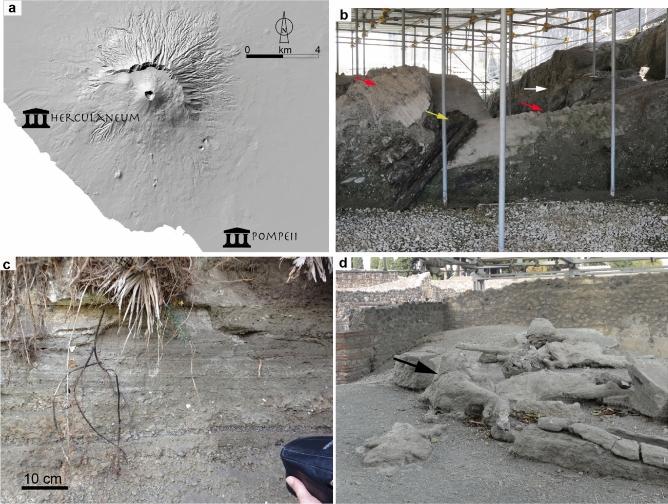
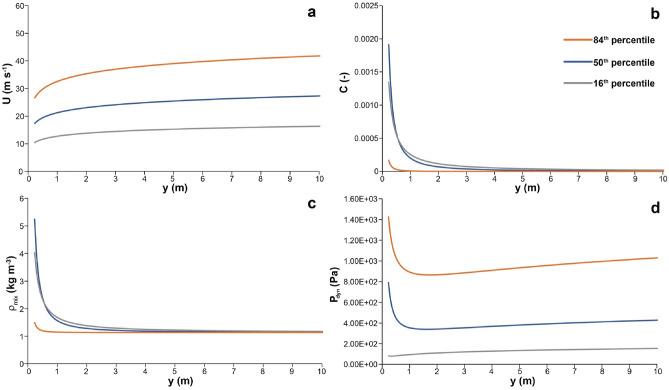
Pyroclastic density currents are ground hugging gas-particle flows that originate from the collapse of an eruption column or lava dome. They move away from the volcano at high speed, causing devastation. The impact is generally associated with flow dynamic pressure and temperature. Little emphasis has yet been given to flow duration, although it is emerging that the survival of people engulfed in a current strongly depends on the exposure time. The AD 79 event of Somma-Vesuvius is used here to demonstrate the impact of pyroclastic density currents on humans during an historical eruption. At Herculaneum, at the foot of the volcano, the temperature and strength of the flow were so high that survival was impossible. At Pompeii, in the distal area, we use a new model indicating that the current had low strength and low temperature, which is confirmed by the absence of signs of trauma on corpses. Under such conditions, survival should have been possible if the current lasted a few minutes or less. Instead, our calculations demonstrate a flow duration of 17 min, long enough to make lethal the breathing of ash suspended in the current. We conclude that in distal areas where the mechanical and thermal effects of a pyroclastic density currents are diminished, flow duration is the key for survival.
火山碎屑密度流是源自喷发柱或熔岩穹隆崩塌的贴近地面的气固两相流。它们以高速远离火山,造成破坏。其影响通常与流动动压和温度有关。尽管人们越来越认识到被卷入其中的人能否存活主要取决于暴露时间,但目前还很少关注流动持续时间。这里利用公元 79 年索马-维苏威火山的事件来说明在历史喷发期间火山碎屑密度流对人类的影响。在火山脚下的赫库兰尼姆,流的温度和强度非常高,以至于无法存活。在远处的庞贝城,我们使用一种新模型表明,流的强度和温度都很低,这从尸体上没有创伤迹象得到证实。在这种情况下,如果流持续几分钟或更短时间,存活应该是可能的。相反,我们的计算表明,流的持续时间为 17 分钟,足以使悬浮在其中的灰烬的呼吸变得致命。我们的结论是,在火山碎屑密度流的机械和热效应减弱的偏远地区,流动持续时间是生存的关键。