Institute of Medical Microbiology and Infection Control, University Hospital of Frankfurt, Goethe University, Frankfurt, Germany.
Division of Infectious Diseases, Wadsworth Center, New York State Department of Health, Albany, NY, USA.
Sci Rep. 2021 Mar 2;11(1):4964. doi: 10.1038/s41598-021-84533-x.
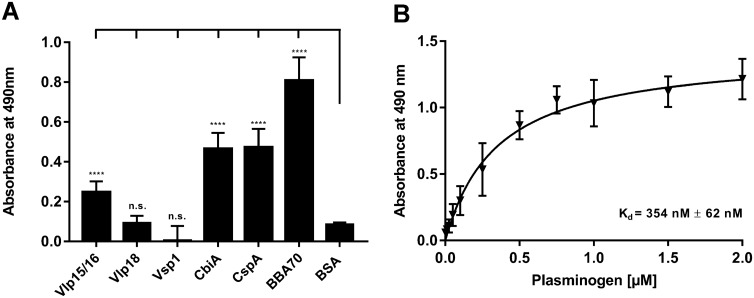
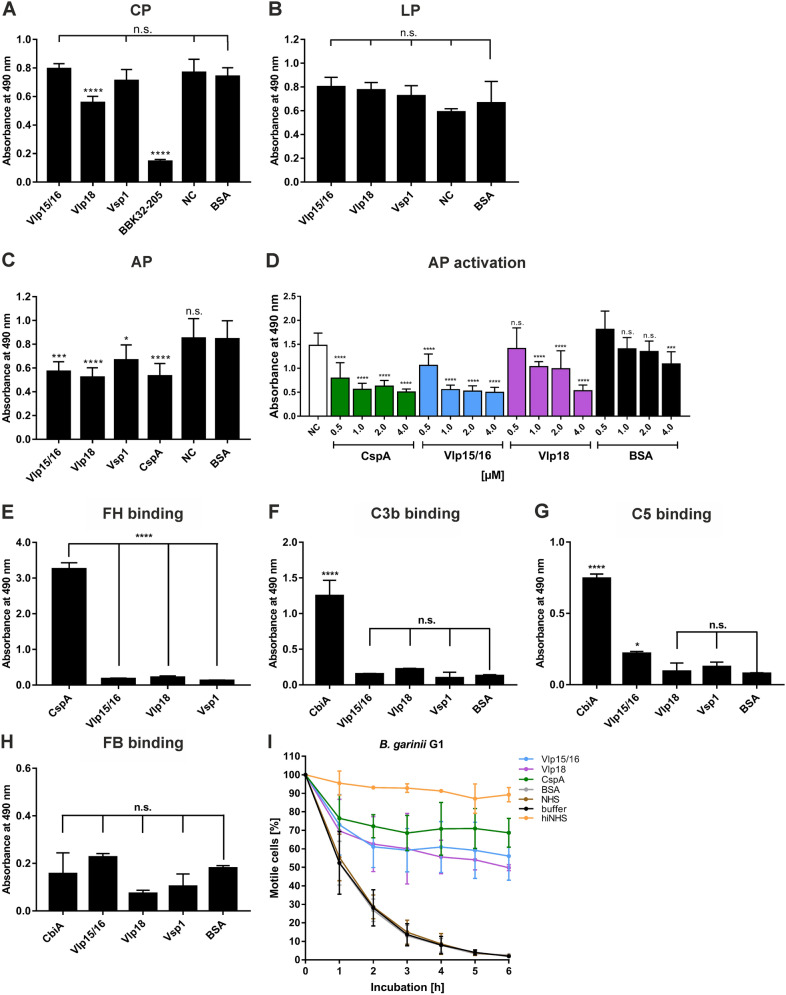
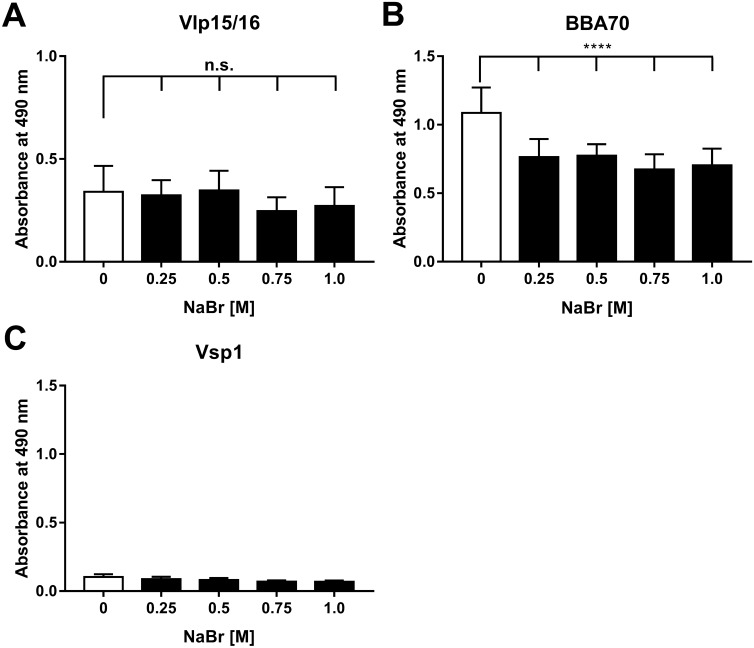
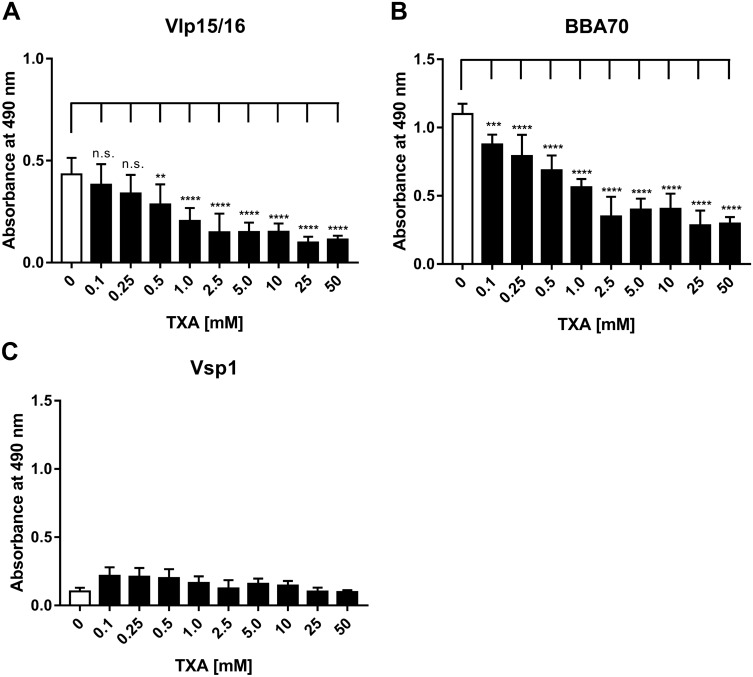
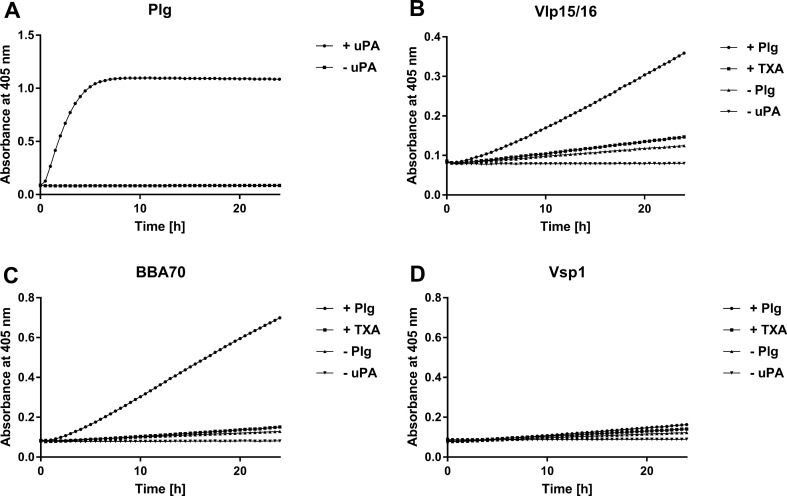
Borrelia miyamotoi, a relapsing fever spirochete transmitted by Ixodid ticks causes B. miyamotoi disease (BMD). To evade the human host´s immune response, relapsing fever borreliae, including B. miyamotoi, produce distinct variable major proteins. Here, we investigated Vsp1, Vlp15/16, and Vlp18 all of which are currently being evaluated as antigens for the serodiagnosis of BMD. Comparative analyses identified Vlp15/16 but not Vsp1 and Vlp18 as a plasminogen-interacting protein of B. miyamotoi. Furthermore, Vlp15/16 bound plasminogen in a dose-dependent fashion with high affinity. Binding of plasminogen to Vlp15/16 was significantly inhibited by the lysine analog tranexamic acid suggesting that the protein-protein interaction is mediated by lysine residues. By contrast, ionic strength did not have an effect on binding of plasminogen to Vlp15/16. Of relevance, plasminogen bound to the borrelial protein cleaved the chromogenic substrate S-2251 upon conversion by urokinase-type plasminogen activator (uPa), demonstrating it retained its physiological activity. Interestingly, further analyses revealed a complement inhibitory activity of Vlp15/16 and Vlp18 on the alternative pathway by a Factor H-independent mechanism. More importantly, both borrelial proteins protect serum sensitive Borrelia garinii cells from complement-mediated lysis suggesting multiple roles of these two variable major proteins in immune evasion of B. miyamotoi.
伯氏疏螺旋体,一种通过硬蜱传播的回归热螺旋体,引起伯氏疏螺旋体病(BMD)。为了逃避宿主的免疫反应,包括伯氏疏螺旋体在内的回归热螺旋体产生了不同的可变主要蛋白。在这里,我们研究了 Vsp1、Vlp15/16 和 Vlp18,它们目前都被评估为 BMD 血清学诊断的抗原。比较分析确定 Vlp15/16 而不是 Vsp1 和 Vlp18 是伯氏疏螺旋体的纤溶酶原结合蛋白。此外,Vlp15/16 以剂量依赖的方式与纤溶酶原高亲和力结合。纤溶酶原与 Vlp15/16 的结合被赖氨酸类似物氨甲环酸显著抑制,表明该蛋白-蛋白相互作用是由赖氨酸残基介导的。相比之下,离子强度对纤溶酶原与 Vlp15/16 的结合没有影响。值得注意的是,纤溶酶原与伯氏疏螺旋体蛋白结合后,在尿激酶型纤溶酶原激活剂(uPa)的作用下切割显色底物 S-2251,表明其保留了生理活性。有趣的是,进一步的分析显示 Vlp15/16 和 Vlp18 对替代途径具有补体抑制活性,通过一种不依赖于因子 H 的机制。更重要的是,这两种伯氏疏螺旋体蛋白都能保护对补体敏感的伯氏包柔螺旋体细胞免受补体介导的裂解,这表明这两种可变主要蛋白在伯氏疏螺旋体的免疫逃避中具有多种作用。