Department of Radiology, University Medical Center Utrecht, Utrecht, The Netherlands.
Department of Neonatology, Leiden University Medical Center, Leiden, The Netherlands.
Pediatr Res. 2022 Jul;92(1):174-179. doi: 10.1038/s41390-021-01436-3. Epub 2021 Mar 2.
The mammillary bodies (MBs) have repeatedly been shown to be critical for memory, yet little is known about their involvement in numerous neurological conditions linked to memory impairments, including neonatal encephalopathy.
We implemented a multicentre retrospective study, assessing magnetic resonance scans of 219 infants with neonatal encephalopathy who had undergone hypothermia treatment in neonatal intensive care units located in the Netherlands and Italy.
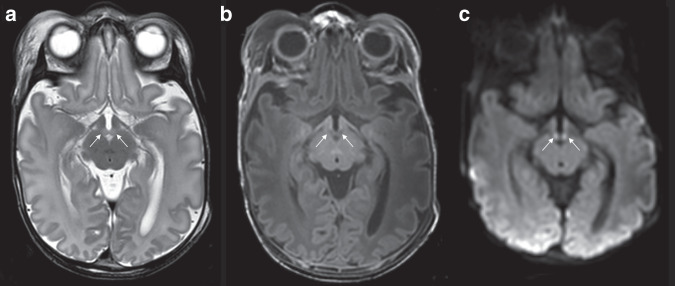
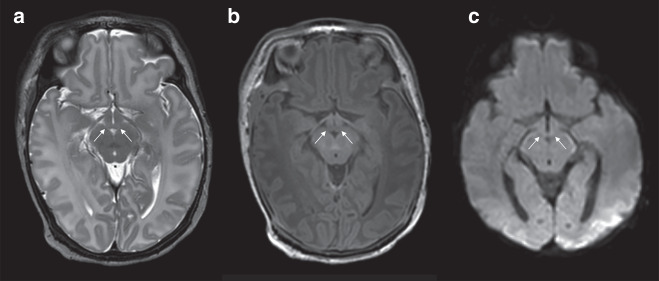
Abnormal MB signal was observed in ~40% of infants scanned; in half of these cases, the brain appeared otherwise normal. MB involvement was not related to the severity of encephalopathy or the pattern/severity of hypoxic-ischaemic brain injury. Follow-up scans were available for 18 cases with abnormal MB signal; in eight of these cases, the MBs appeared severely atrophic.
This study highlights the importance of assessing the status of the MBs in neonatal encephalopathy; this may require changes to scanning protocols to ensure that the slices are sufficiently thin to capture the MBs. Furthermore, long-term follow-up of infants with abnormal MB signal is needed to determine the effects on cognition, which may enable the use of early intervention strategies. Further research is needed to assess the role of therapeutic hypothermia in MB involvement in neonatal encephalopathy.
The MBs are particularly sensitive to hypoxia in neonates. Current hypothermia treatment provides incomplete protection against MB injury. MB involvement is likely overlooked as it can often occur when the rest of the brain appears normal. Given the importance of the MBs for memory, it is necessary that this region is properly assessed in neonatal encephalopathy. This may require improvements in scanning protocols.
乳状体(MBs)已多次被证明对记忆至关重要,但对于它们在许多与记忆障碍相关的神经疾病中的作用,包括新生儿脑病,了解甚少。
我们实施了一项多中心回顾性研究,评估了在荷兰和意大利新生儿重症监护病房接受低温治疗的 219 名患有新生儿脑病的婴儿的磁共振扫描。
约 40%的扫描婴儿出现 MB 信号异常;在这些病例中,有一半的大脑外观正常。MB 受累与脑病的严重程度或缺氧缺血性脑损伤的模式/严重程度无关。对 18 例 MB 信号异常的病例进行了随访扫描;在这些病例中,有 8 例 MB 严重萎缩。
本研究强调了在新生儿脑病中评估 MB 状态的重要性;这可能需要改变扫描方案,以确保切片足够薄,以捕捉 MB。此外,需要对 MB 信号异常的婴儿进行长期随访,以确定其对认知的影响,这可能使早期干预策略成为可能。需要进一步研究以评估治疗性低温对新生儿脑病中 MB 受累的作用。
MB 在新生儿中对缺氧特别敏感。目前的低温治疗并不能完全防止 MB 损伤。由于大脑的其他部分看起来正常,因此 MB 受累往往容易被忽视。鉴于 MB 对记忆的重要性,有必要在新生儿脑病中对该区域进行适当评估。这可能需要改进扫描方案。