Di Toro Alessandro, Giuliani Lorenzo, Smirnova Alexandra, Favalli Valentina, Serio Alessandra, Urtis Mario, Grasso Maurizia, Arbustini Eloisa
Centre for Inherited Cardiovascular Diseases, IRCCS Foundation University Hospital Policlinico San Matteo, Pavia, Italy.
InGenomics srls, Pavia Technopole, Pavia, Italy.
Eur Heart J Suppl. 2020 Nov 18;22(Suppl L):L6-L10. doi: 10.1093/eurheartj/suaa124. eCollection 2020 Nov.
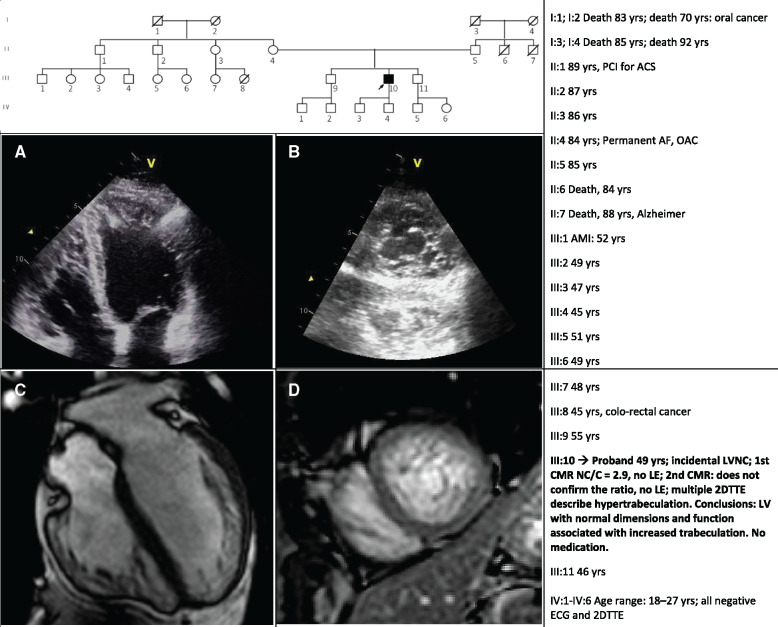
Left ventricular non-compaction (LVNC) is defined by the triad: prominent trabecular anatomy, thin compacted layer, and deep inter-trabecular recesses. No person, sick or healthy, demonstrates identical anatomy of the trabeculae; their configuration represents a sort of individual dynamic 'cardiac fingerprinting'. LVNC can be observed in healthy subjects with normal left ventricular (LV) size and function, in athletes, in pregnant women, as well as in patients with haematological disorders, neuromuscular diseases, and chronic renal failure; it can be acquired and potentially reversible. When LVNC is observed in patients with dilated cardiomyopathy (DCM), hypertrophic cardiomyopathy, restrictive cardiomyopathy, or arrhythmogenic cardiomyopathy, the risk exists of misnaming the cardiomyopathy as 'LVNC cardiomyopathy' rather than properly describe, i.e. a 'DCM associated with LVNC'. In rare infantile CMPs (the paradigm is tafazzinopathy or Barth syndrome), the non-compaction (NC) is intrinsically part of the cardiac phenotype. The LVNC is also common in congenital heart disease (CHD) as well as in chromosomal disorders with systemic manifestations. The high prevalence of LVNC in healthy athletes, its possible reversibility or regression, and the increasing detection in healthy subjects suggest a cautious use of the term 'LVNC cardiomyopathy', which describes the morphology, but not the functional profile of the cardiac disease. Genetic testing, when positive, usually reflects the genetic causes of an underlying cardiomyopathy rather than that of the NC, which often does not segregate with CMP phenotype in families. Therefore, when associated with LV dilation and dysfunction, hypertrophy, or CHD, the leading diagnosis is cardiomyopathy or CHD followed by the descriptor LVNC.
左心室心肌致密化不全(LVNC)由以下三联征定义:显著的小梁结构、薄的致密层和深陷的小梁间隐窝。无论患病与否,没有人的小梁结构完全相同;其形态代表了一种个体动态的“心脏指纹”。LVNC可见于左心室(LV)大小和功能正常的健康受试者、运动员、孕妇以及患有血液系统疾病、神经肌肉疾病和慢性肾衰竭的患者;它可能是后天获得的且具有潜在可逆性。当在扩张型心肌病(DCM)、肥厚型心肌病、限制型心肌病或致心律失常性心肌病患者中观察到LVNC时,存在将心肌病错误命名为“LVNC心肌病”而不是正确描述为“与LVNC相关的DCM”的风险。在罕见的婴儿型心肌病(典型例子是tafazzinopathy或Barth综合征)中,心肌致密化不全(NC)是心脏表型的内在组成部分。LVNC在先天性心脏病(CHD)以及伴有全身表现的染色体疾病中也很常见。LVNC在健康运动员中的高患病率、其可能的可逆性或消退以及在健康受试者中检测到的增加,提示应谨慎使用“LVNC心肌病”这一术语,该术语描述的是心脏病的形态而非功能特征。基因检测呈阳性时,通常反映的是潜在心肌病的遗传原因,而非NC的遗传原因,NC在家族中往往不与心肌病表型共分离。因此,当与LV扩张和功能障碍、肥厚或CHD相关时,主要诊断为心肌病或CHD,随后加上描述词LVNC。