Fukuda Taise T H, Helfrich Eric J N, Mevers Emily, Melo Weilan G P, Van Arnam Ethan B, Andes David R, Currie Cameron R, Pupo Monica T, Clardy Jon
Department of Biological Chemistry and Molecular Pharmacology, Harvard Medical School, Boston, Massachusetts 02115, United States.
School of Pharmaceutical Sciences of Ribeirão Preto, University of São Paulo, Ribeirão Preto, São Paulo 14040-903, Brazil.
ACS Cent Sci. 2021 Feb 24;7(2):292-299. doi: 10.1021/acscentsci.0c00978. Epub 2021 Jan 20.
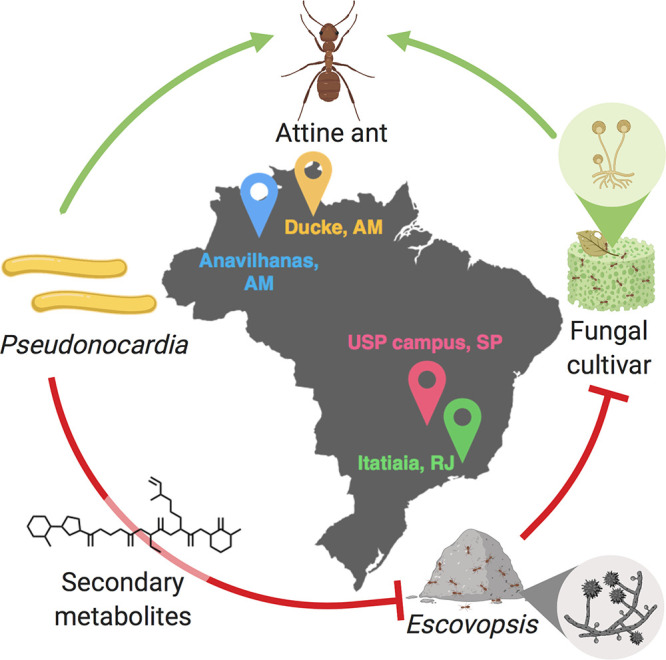
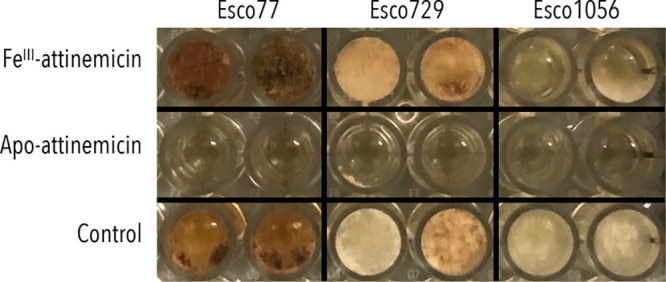
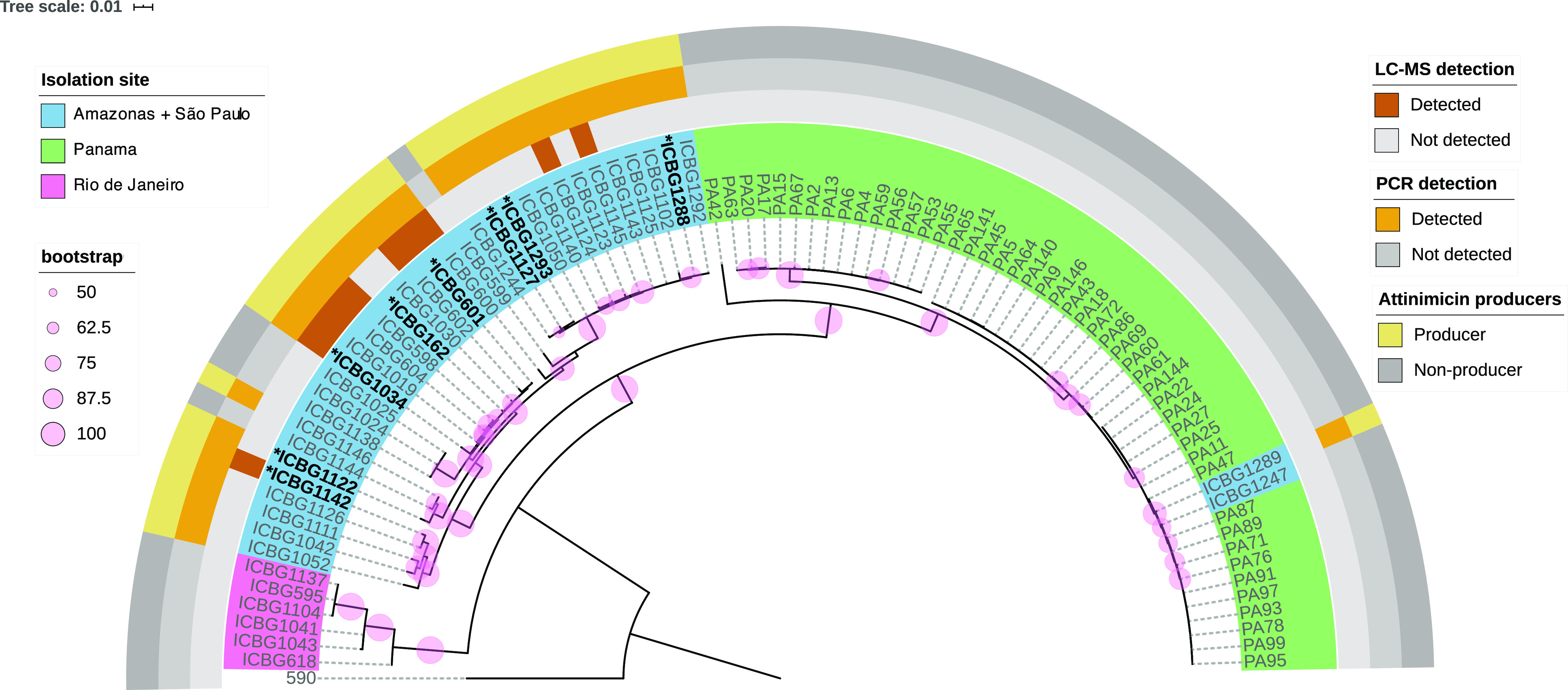
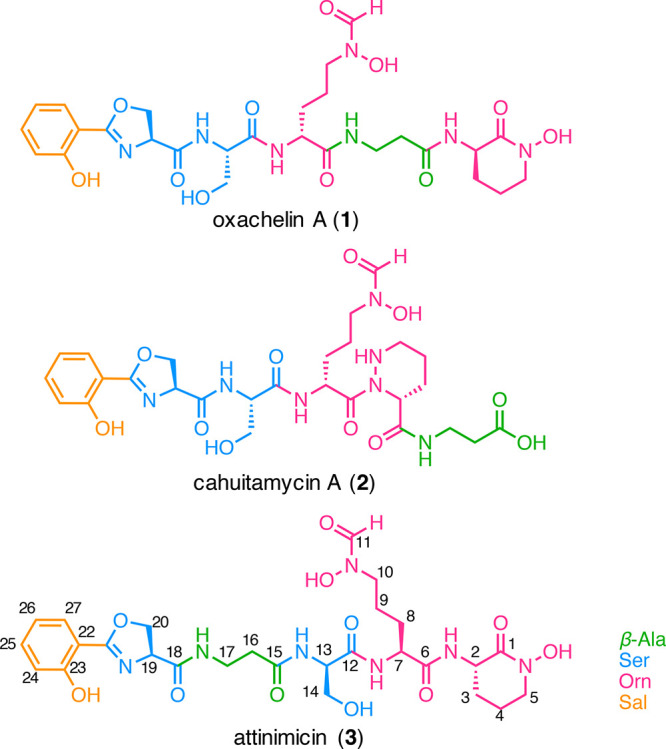
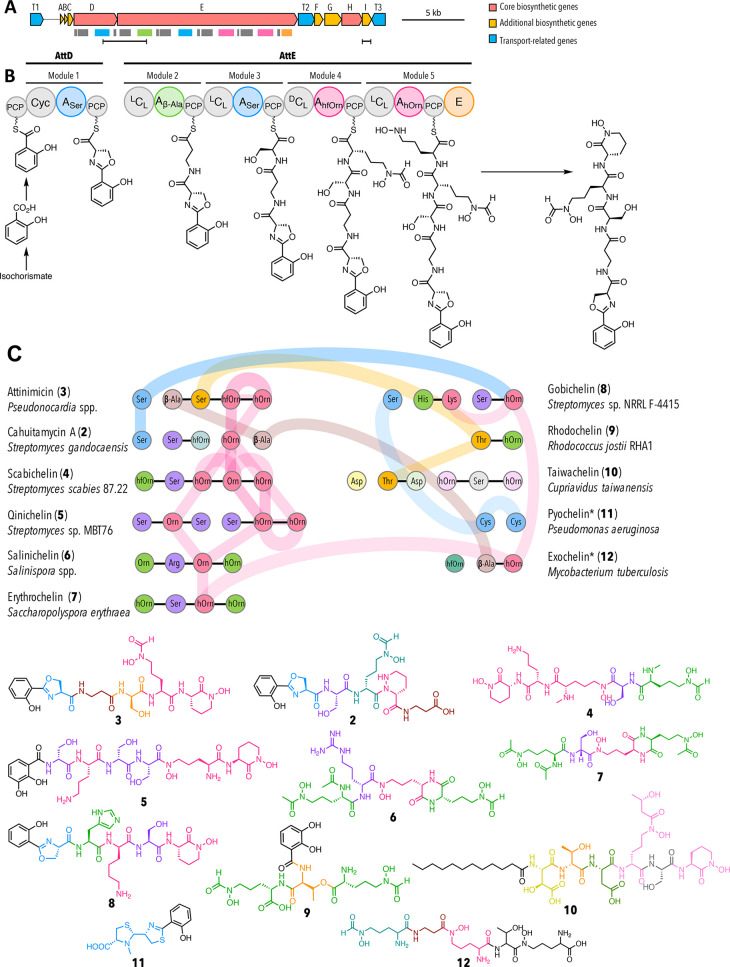
Fungus-growing ants engage in a multilateral symbiosis: they cultivate a fungal garden as their primary food source and host symbiotic actinobacteria ( spp.) that provide chemical defenses. The bacterial symbionts produce small specialized metabolites that protect the fungal garden from specific fungal pathogens ( spp.), and in return, they are fed by the ant hosts. Multiple studies on the molecules underlying this symbiotic system have led to the discovery of a large number of structurally diverse antifungal molecules, but somewhat surprisingly no shared structural theme emerged from these studies. A large systematic study of Brazilian nests led to the discovery of the widespread production of a potent but overlooked antifungal agent, which we named attinimicin, by nearly two-thirds of all strains from multiple sites in Brazil. Here we report the structure of attinimicin, its putative biosynthetic gene cluster, and the evolutionary relationship between attinimicin and two related peptides, oxachelin A and cahuitamycin A. All three nonribosomal peptides are structural isomers with different primary peptide sequences. Attinimicin shows iron-dependent antifungal activity against specific environmental fungal parasites but no activity against the fungal cultivar. Attinimicin showed potent activity in a mouse infection model comparable to clinically used azole-containing antifungals. detection of attinimicin in both ant nests and on worker ants supports an ecological role for attinimicin in protecting the fungal cultivar from pathogens. The geographic spread of the attinimicin biosynthetic gene cluster in Brazilian spp. marks attinimicin as the first specialized metabolite from ant-associated bacteria with broad geographic distribution.
它们培育真菌园作为主要食物来源,并宿主共生放线菌( spp.),这些放线菌提供化学防御。细菌共生体产生小型的特殊代谢产物,保护真菌园免受特定真菌病原体( spp.)的侵害,作为回报,蚂蚁宿主会喂养它们。对这个共生系统背后分子的多项研究导致发现了大量结构多样的抗真菌分子,但有些令人惊讶的是,这些研究并没有发现共同的结构主题。一项对巴西蚁巢的大型系统研究导致发现,来自巴西多个地点的近三分之二的所有 菌株广泛产生一种强效但被忽视的抗真菌剂,我们将其命名为attinimicin。在这里,我们报告了attinimicin的结构、其假定的生物合成基因簇,以及attinimicin与两种相关肽oxachelin A和cahuitamycin A之间的进化关系。所有这三种非核糖体肽都是具有不同一级肽序列的结构异构体。Attinimicin对特定的环境真菌寄生虫显示出铁依赖性抗真菌活性,但对真菌栽培品种没有活性。Attinimicin在小鼠感染模型中显示出与临床使用的含唑抗真菌剂相当的强效活性。在蚁巢和工蚁身上都检测到了attinimicin,这支持了attinimicin在保护真菌栽培品种免受病原体侵害方面的生态作用。attinimicin生物合成基因簇在巴西 spp.中的地理分布表明,attinimicin是第一种来自与蚂蚁相关细菌且具有广泛地理分布的特殊代谢产物。