Meyers Jordan M, Ramanathan Muthukumar, Shanderson Ronald L, Donohue Laura, Ferguson Ian, Guo Margaret G, Rao Deepti S, Miao Weili, Reynolds David, Yang Xue, Zhao Yang, Yang Yen-Yu, Wang Yinsheng, Khavari Paul A
Program in Epithelial Biology, Stanford University, Stanford, CA 94305, USA.
These authors contributed equally.
bioRxiv. 2021 Feb 23:2021.02.23.432450. doi: 10.1101/2021.02.23.432450.
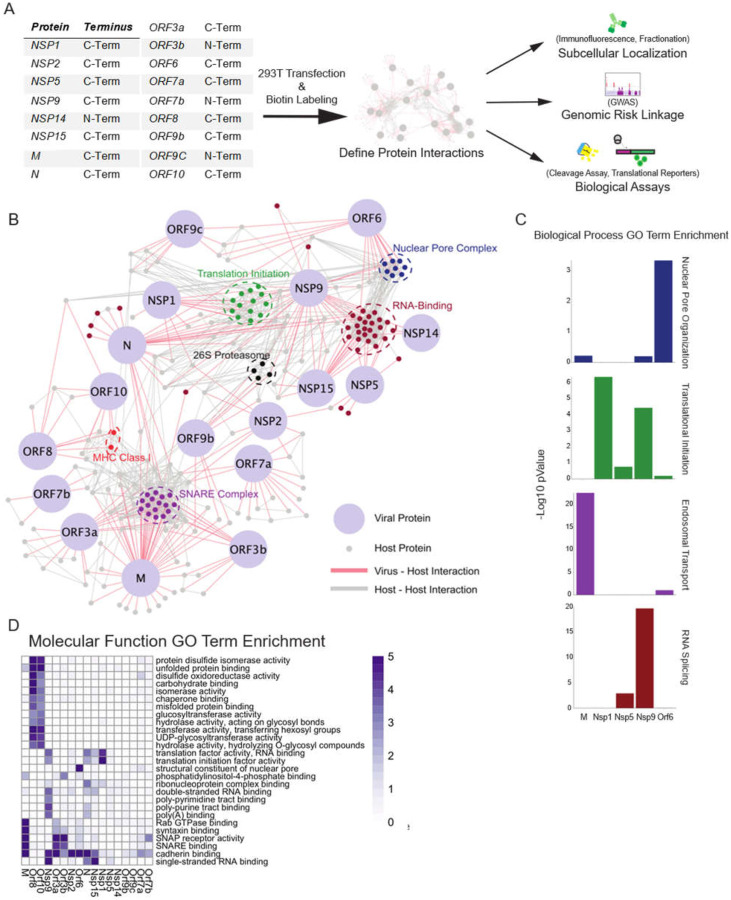
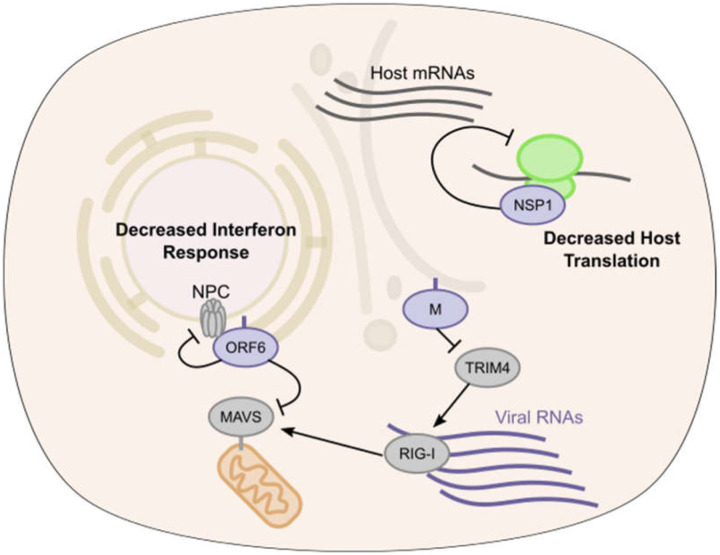
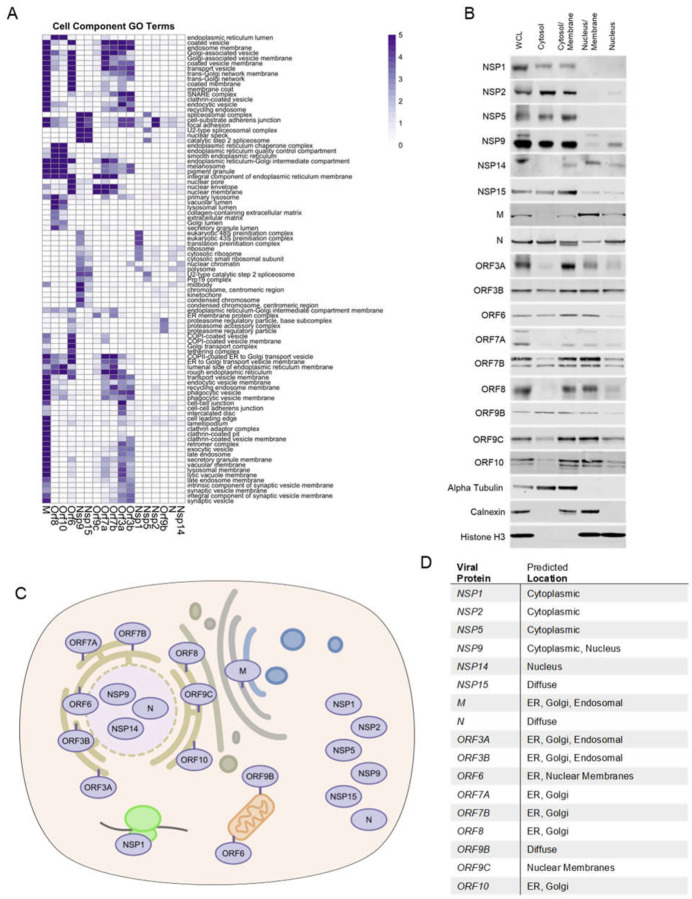
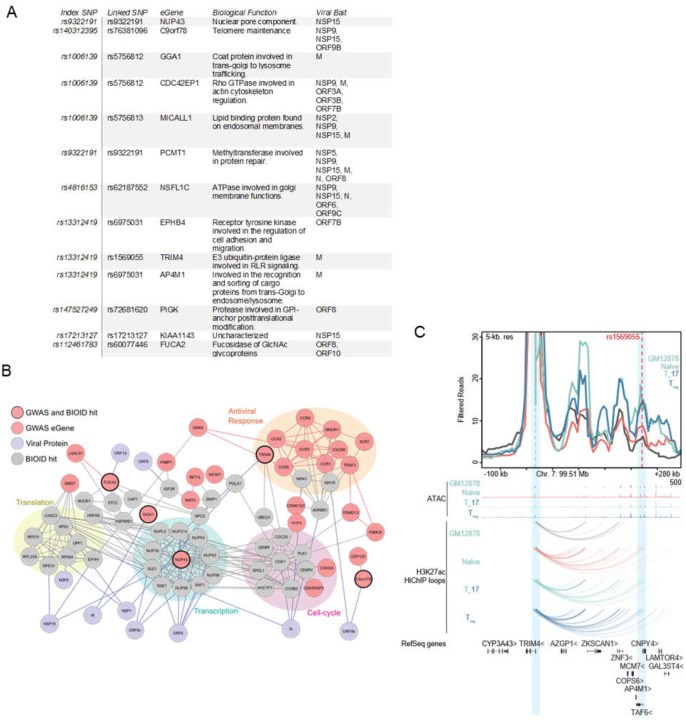
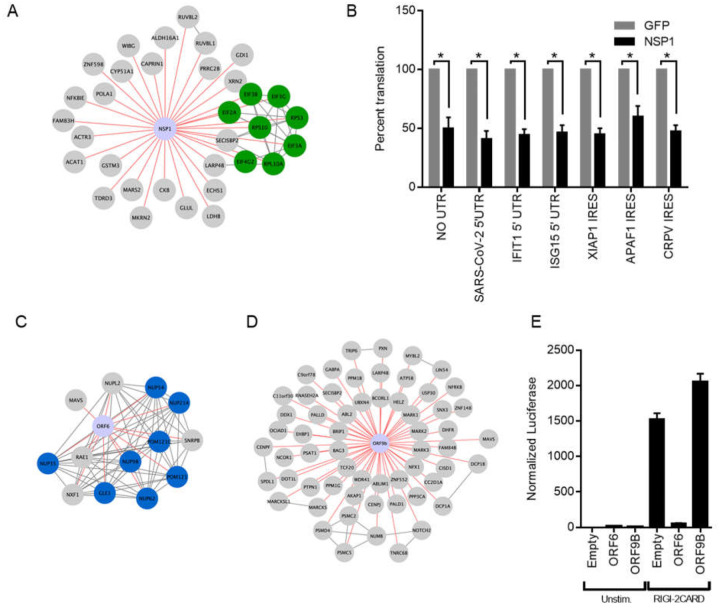
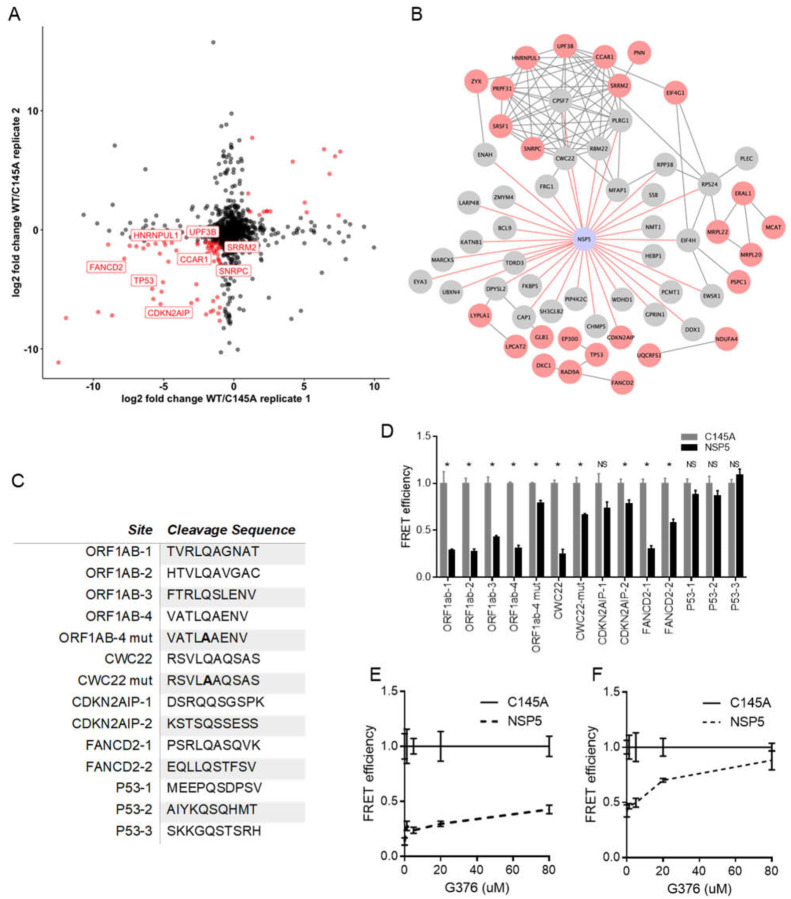
Viral proteins localize within subcellular compartments to subvert host machinery and promote pathogenesis. To study SARS-CoV-2 biology, we generated an atlas of 2422 human proteins vicinal to 17 SARS-CoV-2 viral proteins using proximity proteomics. This identified viral proteins at specific intracellular locations, such as association of accessary proteins with intracellular membranes, and projected SARS-CoV-2 impacts on innate immune signaling, ER-Golgi transport, and protein translation. It identified viral protein adjacency to specific host proteins whose regulatory variants are linked to COVID-19 severity, including the TRIM4 interferon signaling regulator which was found proximal to the SARS-CoV-2 M protein. Viral NSP1 protein adjacency to the EIF3 complex was associated with inhibited host protein translation whereas ORF6 localization with MAVS was associated with inhibited RIG-I 2CARD-mediated promoter activation. Quantitative proteomics identified candidate host targets for the NSP5 protease, with specific functional cleavage sequences in host proteins CWC22 and FANCD2. This data resource identifies host factors proximal to viral proteins in living human cells and nominates pathogenic mechanisms employed by SARS-CoV-2.
SARS-CoV-2 is the latest pathogenic coronavirus to emerge as a public health threat. We create a database of proximal host proteins to 17 SARS-CoV-2 viral proteins. We validate that NSP1 is proximal to the EIF3 translation initiation complex and is a potent inhibitor of translation. We also identify ORF6 antagonism of RNA-mediate innate immune signaling. We produce a database of potential host targets of the viral protease NSP5, and create a fluorescence-based assay to screen cleavage of peptide sequences. We believe that this data will be useful for identifying roles for many of the uncharacterized SARS-CoV-2 proteins and provide insights into the pathogenicity of new or emerging coronaviruses.
病毒蛋白定位于亚细胞区室,以颠覆宿主机制并促进发病。为研究严重急性呼吸综合征冠状病毒2(SARS-CoV-2)生物学特性,我们利用邻近蛋白质组学生成了一个包含2422种与17种SARS-CoV-2病毒蛋白相邻的人类蛋白图谱。这确定了病毒蛋白在特定细胞内位置,比如辅助蛋白与细胞内膜的关联,并预测了SARS-CoV-2对固有免疫信号传导、内质网-高尔基体运输和蛋白质翻译的影响。它确定了病毒蛋白与特定宿主蛋白的邻接关系,这些宿主蛋白的调控变体与COVID-19严重程度相关,包括TRIM4干扰素信号调节因子,该因子被发现靠近SARS-CoV-2 M蛋白。病毒NSP1蛋白与EIF3复合体的邻接关系与宿主蛋白翻译受抑制有关,而ORF6与线粒体抗病毒信号蛋白(MAVS)的定位与RIG-I 2CARD介导的启动子激活受抑制有关。定量蛋白质组学确定了NSP5蛋白酶的候选宿主靶点,宿主蛋白CWC22和FANCD2中具有特定的功能切割序列。该数据资源确定了活的人类细胞中靠近病毒蛋白的宿主因子,并提出了SARS-CoV-2采用的致病机制。
SARS-CoV-2是最新出现的对公众健康构成威胁的致病性冠状病毒。我们创建了一个与17种SARS-CoV-2病毒蛋白相邻的宿主蛋白数据库。我们验证了NSP1靠近EIF3翻译起始复合体,是一种有效的翻译抑制剂。我们还确定了ORF6对RNA介导的固有免疫信号传导的拮抗作用。我们生成了病毒蛋白酶NSP5潜在宿主靶点的数据库,并创建了一种基于荧光的检测方法来筛选肽序列的切割。我们相信,这些数据将有助于确定许多未表征的SARS-CoV-2蛋白的作用,并为新型或新出现的冠状病毒的致病性提供见解。