Evidence Based Social Science Research Center, School of Public Health, Lanzhou University, Lanzhou, China; Key Laboratory of Evidence Based Medicine and Knowledge Translation of Gansu Province, Lanzhou, China; WHO Collaborating Centre for Guideline Implementation and Knowledge Translation, Lanzhou University, Lanzhou, China.
School of Foreign Language, Lanzhou University of Arts and Science, Lanzhou University, Lanzhou, China.
J Clin Epidemiol. 2021 Jul;135:17-28. doi: 10.1016/j.jclinepi.2021.02.021. Epub 2021 Feb 28.
To assess the reporting and methodological quality of COVID-19 systematic reviews, and to analyze trends and gaps in the quality, clinical topics, author countries, and populations of the reviews using an evidence mapping approach.
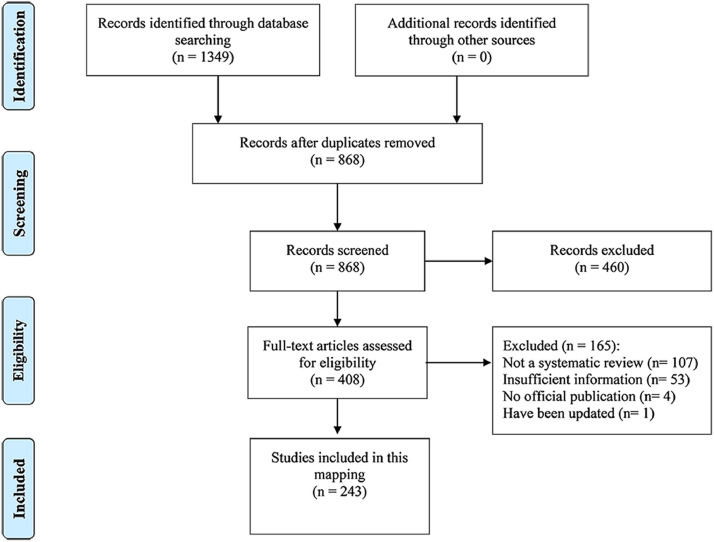
A structured search for systematic reviews concerning COVID-19 was performed using PubMed, Embase, Cochrane Library, Campbell Library, Web of Science, CBM, WanFang Data, CNKI, and CQVIP from inception until June 2020. The quality of each review was assessed using the Assessment of Multiple Systematic Reviews 2 (AMSTAR 2) checklist and the Preferred Reporting Items for Systematic Reviews and Meta-Analyses (PRISMA) checklist.
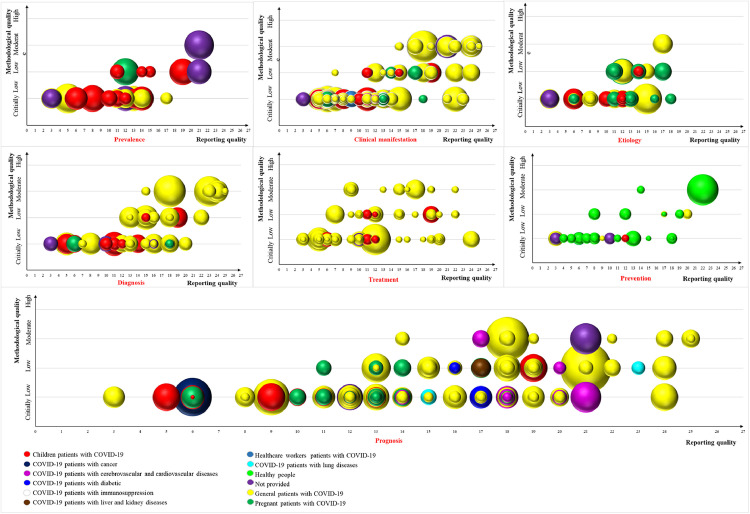
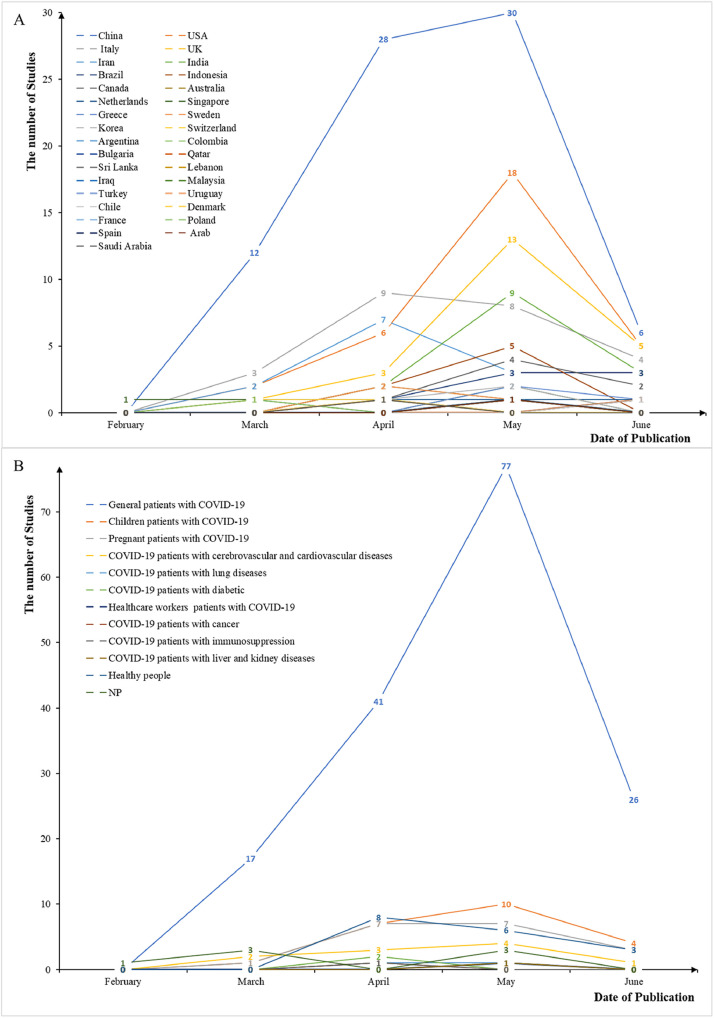
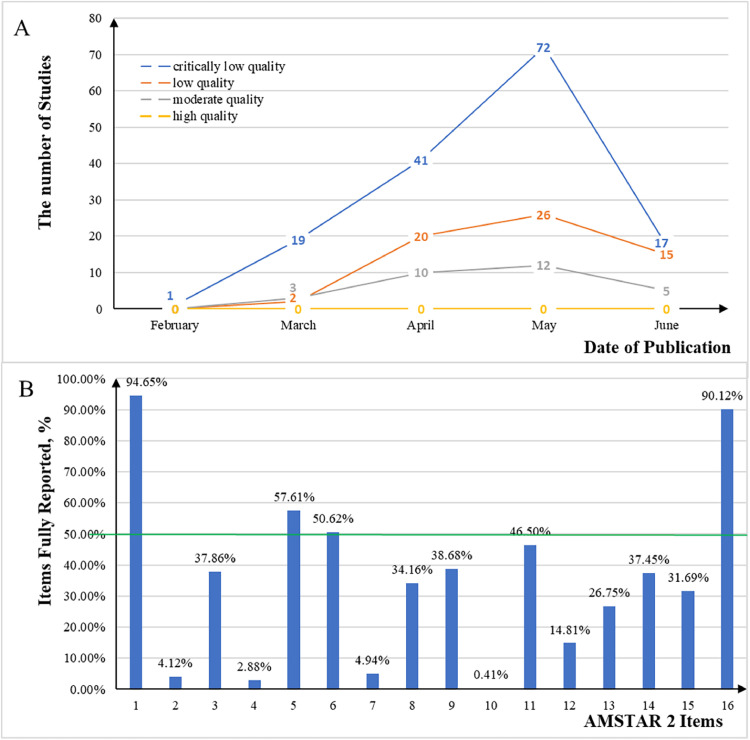
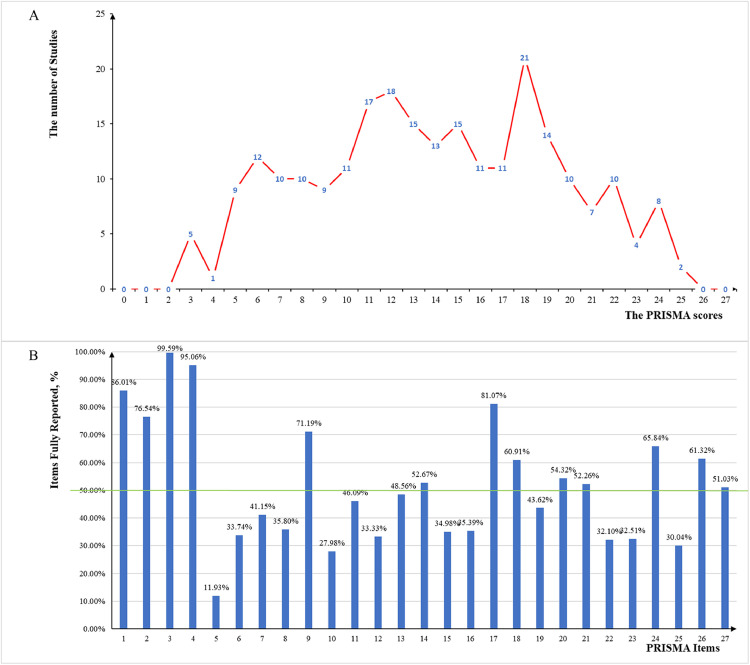
In total, 243 systematic reviews met the inclusion criteria, over 50% of which (128, 52.7%) were from 14 developing countries, with China contributing the most reviews (76, 31.3%). In terms of methodological quality of the studies, 30 (12.3%) were of moderate quality, 63 (25.9%) were of low quality, and 150 (61.7%) were of critically low quality. In terms of reporting quality, the median (interquartile range) PRISMA score was 14 (10-18). Regarding the topics of the reviews, 24 (9.9%) focused on the prevalence of COVID-19, 69 (28.4%) focused on the clinical manifestations, 30 (12.3%) focused on etiology, 43 (17.7%) focused on diagnosis, 65 (26.7%) focused on treatment, 104 (42.8%) focused on prognosis, and 25 (10.3%) focused on prevention. These studies mainly focused on general patients with COVID-19 (161, 66.3%), followed by children (22, 9.1%) and pregnant patients (18, 7.4%).
This study systematically evaluated the methodological and reporting quality of systematic reviews of COVID-19, summarizing and analyzing trends in their clinical topics, author countries, and study populations.
评估 COVID-19 系统评价的报告和方法学质量,并采用证据图谱方法分析系统评价在质量、临床主题、作者国家和研究人群方面的趋势和差距。
从建库到 2020 年 6 月,使用 PubMed、Embase、Cochrane 图书馆、Campbell 图书馆、Web of Science、CBM、WanFang Data、CNKI 和 CQVIP 对有关 COVID-19 的系统评价进行结构化检索。使用评估多个系统评价 2(AMSTAR 2)检查表和系统评价和荟萃分析的首选报告项目(PRISMA)检查表评估每个评价的质量。
共纳入 243 篇系统评价,其中超过 50%(128 篇,52.7%)来自 14 个发展中国家,中国发表的系统评价最多(76 篇,31.3%)。就研究的方法学质量而言,30 篇(12.3%)为中度质量,63 篇(25.9%)为低质量,150 篇(61.7%)为极低质量。在报告质量方面,PRISMA 评分中位数(四分位距)为 14(10-18)。就评价的主题而言,24 篇(9.9%)关注 COVID-19 的患病率,69 篇(28.4%)关注临床表现,30 篇(12.3%)关注病因,43 篇(17.7%)关注诊断,65 篇(26.7%)关注治疗,104 篇(42.8%)关注预后,25 篇(10.3%)关注预防。这些研究主要集中在普通 COVID-19 患者(161 例,66.3%),其次是儿童(22 例,9.1%)和孕妇(18 例,7.4%)。
本研究系统评估了 COVID-19 系统评价的方法学和报告质量,总结和分析了其临床主题、作者国家和研究人群方面的趋势。