Chen Cunte, Xu Ling, Gao Rili, Wang Shunqing, Zhang Yuping, Wang Caixia, Zeng Chengwu, Li Yangqiu
Institute of Hematology, School of Medicine, Key Laboratory for Regenerative Medicine of Ministry of Education, Jinan University, Guangzhou, China.
Department of Hematology, First Affiliated Hospital, The Clinical Medicine Postdoctoral Research Station, Jinan University, Guangzhou, China.
Front Pharmacol. 2021 Feb 1;11:582955. doi: 10.3389/fphar.2020.582955. eCollection 2020.
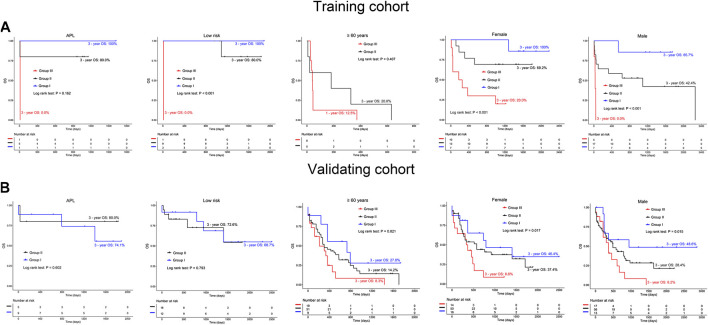
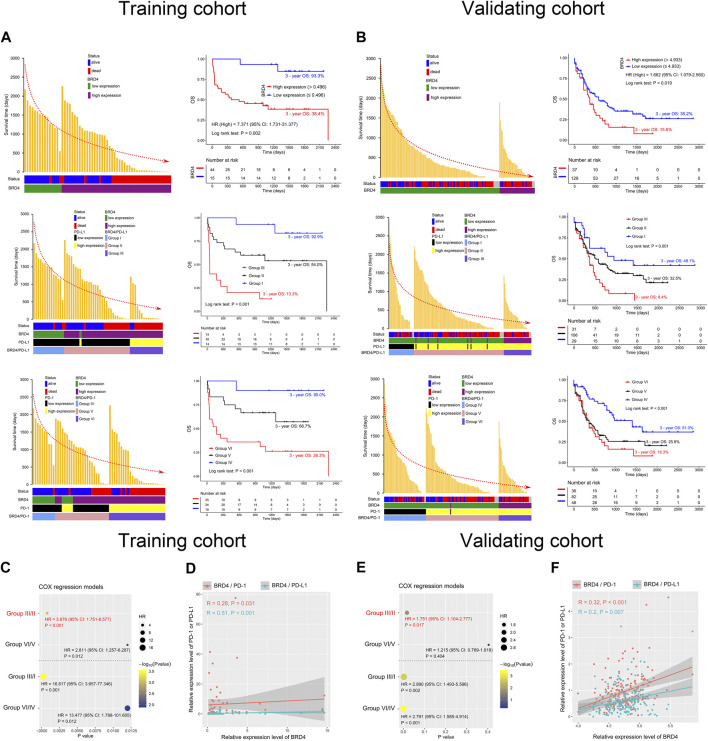
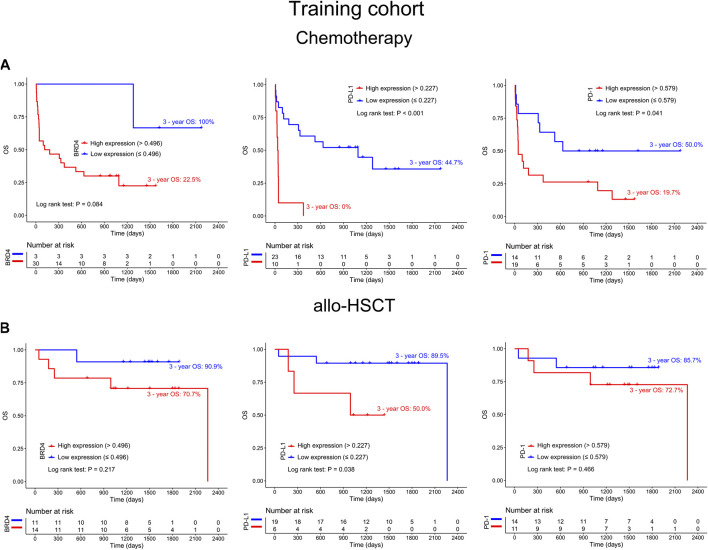
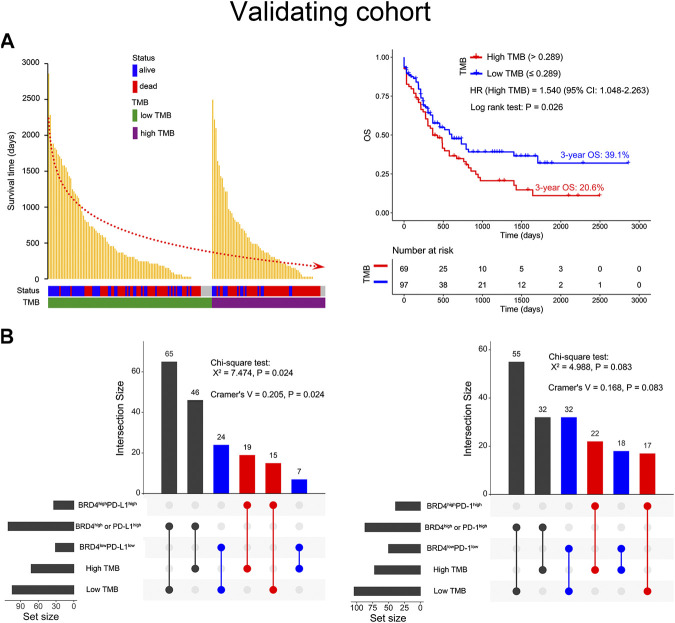
Positive response to PD-1/PD-L1 blockades was observed in the treatment of solid tumors. However, the clinical response to PD-1/PD-L1 blockade varied in patients with acute myeloid leukemia (AML). It is thought that there are factors other than PD-1 and PD-L1 that may affect the effect of immunotherapy. This study explored the impact of transcriptome-based co-expression of bromodomain containing 4 (BRD4) and PD-1/PD-L1 on the overall survival (OS) of patients with AML, in order to understand whether BRD4 would affect the effect of PD-1/PD-L1 blockades. Bone marrow samples from 59 AML patients in our clinical center and data of 176 patients from the Cancer Genome Atlas (TCGA) database were used for OS analysis and validation. It was found that increased expression of BRD4 was associated with poor OS in AML patients. Moreover, co-expression of BRD4 with PD-1 or PD-L1 was related to poor OS. The co-expression of BRD4 and PD-L1 was better than BRD4 and PD-1 for OS prediction. Furthermore, co-expression of BRD4 and PD-L1 was positively correlated with high tumor mutation burden, which contributed to poor OS in AML patients. Additionally, the co-expression of BRD4 and PD-L1 was associated with poor OS in non-acute promyelocytic leukemia patients with intermediate/high risk or under 60 years. Our results suggest that transcriptome-based co-expression of BRD4 and PD-L1 is a predictor for poor OS in AML patients, which might provide novel insight into designing combinational targeted therapy for AML.
在实体瘤治疗中观察到对PD-1/PD-L1阻断剂有阳性反应。然而,急性髓系白血病(AML)患者对PD-1/PD-L1阻断的临床反应各不相同。人们认为,除了PD-1和PD-L1之外,还有其他因素可能影响免疫治疗的效果。本研究探讨了含溴结构域蛋白4(BRD4)与PD-1/PD-L1基于转录组的共表达对AML患者总生存期(OS)的影响,以了解BRD4是否会影响PD-1/PD-L1阻断剂的效果。我们临床中心59例AML患者的骨髓样本以及来自癌症基因组图谱(TCGA)数据库的176例患者的数据用于OS分析和验证。研究发现,BRD4表达增加与AML患者较差的OS相关。此外,BRD4与PD-1或PD-L1的共表达与较差的OS相关。BRD4与PD-L1的共表达在OS预测方面优于BRD4与PD-1的共表达。此外,BRD4与PD-L1的共表达与高肿瘤突变负担呈正相关,这导致AML患者的OS较差。另外,BRD4与PD-L1的共表达与中/高风险或60岁以下的非急性早幼粒细胞白血病患者较差的OS相关。我们的结果表明,基于转录组的BRD4与PD-L1共表达是AML患者OS较差的一个预测指标,这可能为设计AML的联合靶向治疗提供新的见解。