Marceglia Sara, Prenassi Marco, Galbiati Tommaso F, Porta Mauro, Zekaj Edvin, Priori Alberto, Servello Domenico
Dipartimento di Ingegneria e Architettura, Università degli Studi di Trieste, Trieste, Italy.
Unità Operativa Neurofisiopatologia, Fondazione Istituto di Ricovero e Cura a Carattere Scientifico Ca'Granda Ospedale Maggiore Policlinico, Milan, Italy.
Front Neurol. 2021 Feb 15;12:578324. doi: 10.3389/fneur.2021.578324. eCollection 2021.
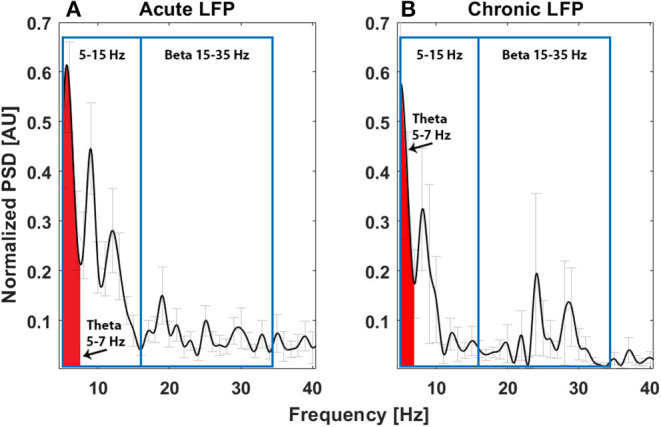
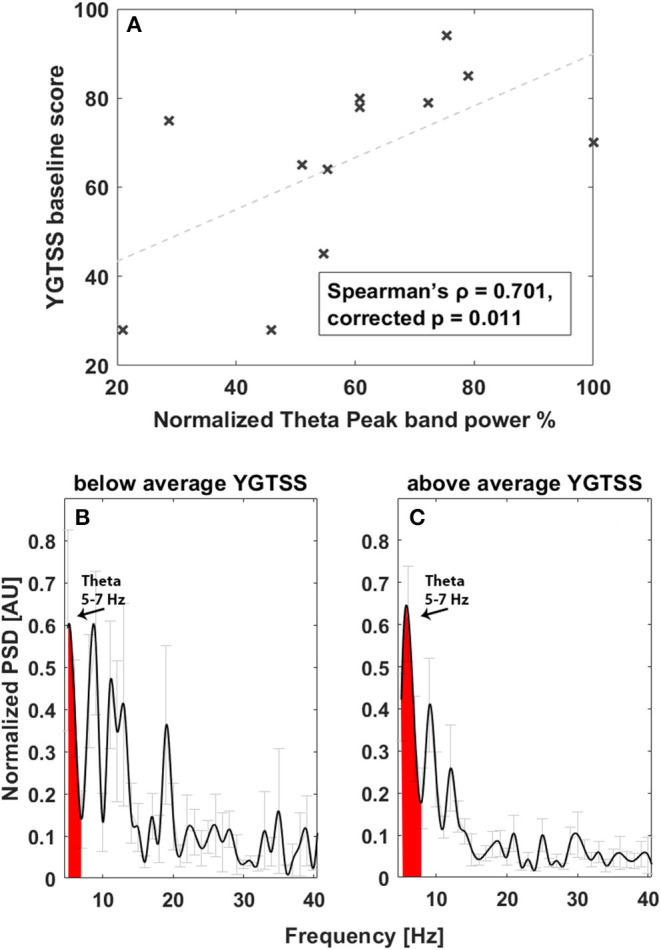
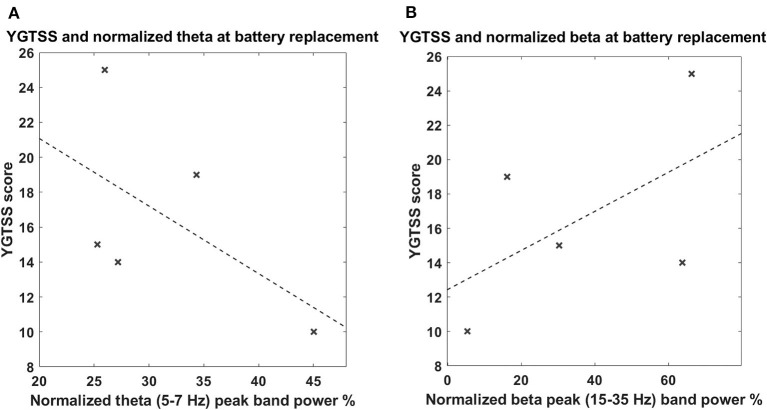
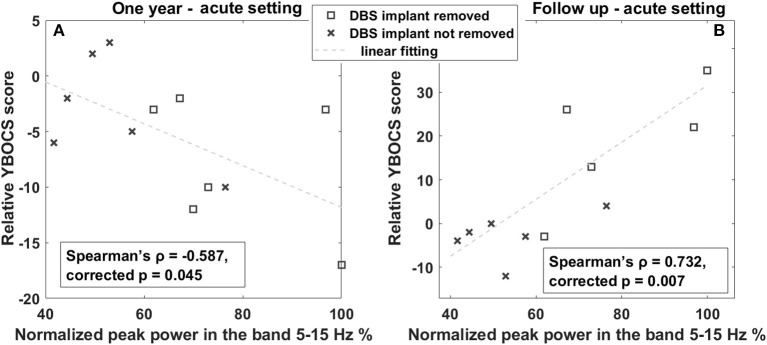
Local field potential (LFP) recordings helped to clarify the pathophysiology of Tourette syndrome (TS) and to define new strategies for deep brain stimulation (DBS) treatment for refractory TS, based on the delivery of stimulation in accordance with changes in the electrical activity of the DBS target area. However, there is little evidence on the relationship between LFP pattern and DBS outcomes in TS. To investigate the relationship between LFP oscillations and DBS effects on tics and on obsessive compulsive behavior (OCB) comorbidities. We retrospectively analyzed clinical data and LFP recordings from 17 patients treated with DBS of the centromedian-parafascicular/ventralis oralis (CM-Pf/VO) complex, and followed for more several years after DBS in the treating center. In these patients, LFPs were recorded either in the acute setting (3-5 days after DBS electrode implant) or in the chronic setting (during impulse generator replacement surgery). LFP oscillations were correlated with the Yale Global Tic Severity Scale (YGTSS) and the Yale-Brown Obsessive-Compulsive Scale (Y-BOCS) collected at baseline (before DBS surgery), 1 year after DBS, and at the last follow-up available. We found that, at baseline, in the acute setting, the power of the oscillations included in the 5-15-Hz band, previously identified as TS biomarker, is correlated with the pathophysiology of tics, being significantly correlated with total YGTSS before DBS (Spearman's ρ = 0.701, = 0.011). The power in the 5-15-Hz band was also correlated with the improvement in Y-BOCS after 1 year of DBS (Spearman's ρ = -0.587, = 0.045), thus suggesting a relationship with the DBS effects on OCB comorbidities. Our observations confirm that the low-frequency (5-15-Hz) band is a significant biomarker of TS, being related to the severity of tics and, also to the long-term response on OCBs. This represents a step toward both the understanding of the mechanisms underlying DBS effects in TS and the development of adaptive DBS strategies.
局部场电位(LFP)记录有助于阐明抽动秽语综合征(TS)的病理生理学,并基于根据脑深部电刺激(DBS)目标区域电活动变化进行刺激传递,为难治性TS的DBS治疗确定新策略。然而,关于TS中LFP模式与DBS结果之间的关系,证据很少。为了研究LFP振荡与DBS对抽动及共病强迫行为(OCB)的影响之间的关系。我们回顾性分析了17例接受中央中核-束旁核/腹侧口部(CM-Pf/VO)复合体DBS治疗的患者的临床数据和LFP记录,并在治疗中心进行DBS后随访了数年。在这些患者中,LFP记录要么在急性期(DBS电极植入后3 - 5天)进行,要么在慢性期(在脉冲发生器更换手术期间)进行。LFP振荡与在基线(DBS手术前)、DBS后1年以及最后一次可用随访时收集的耶鲁全球抽动严重程度量表(YGTSS)和耶鲁-布朗强迫量表(Y-BOCS)相关。我们发现,在基线时,在急性期,先前被确定为TS生物标志物的5 - 15赫兹频段内的振荡功率与抽动的病理生理学相关,与DBS前的YGTSS总分显著相关(斯皮尔曼相关系数ρ = 0.701,P = 0.011)。5 - 15赫兹频段的功率也与DBS 1年后Y-BOCS的改善相关(斯皮尔曼相关系数ρ = -0.587,P = 0.045),因此表明与DBS对OCB共病的影响有关。我们的观察结果证实,低频(5 - 15赫兹)频段是TS的重要生物标志物,与抽动的严重程度以及对OCB的长期反应有关。这代表了在理解TS中DBS作用机制以及开发适应性DBS策略方面迈出的一步。