Oregon National Primate Research Center, Oregon Health & Science University, Beaverton, OR, United States.
Emergent BioSolutions, San Diego, CA, United States.
Front Immunol. 2021 Feb 15;11:626464. doi: 10.3389/fimmu.2020.626464. eCollection 2020.
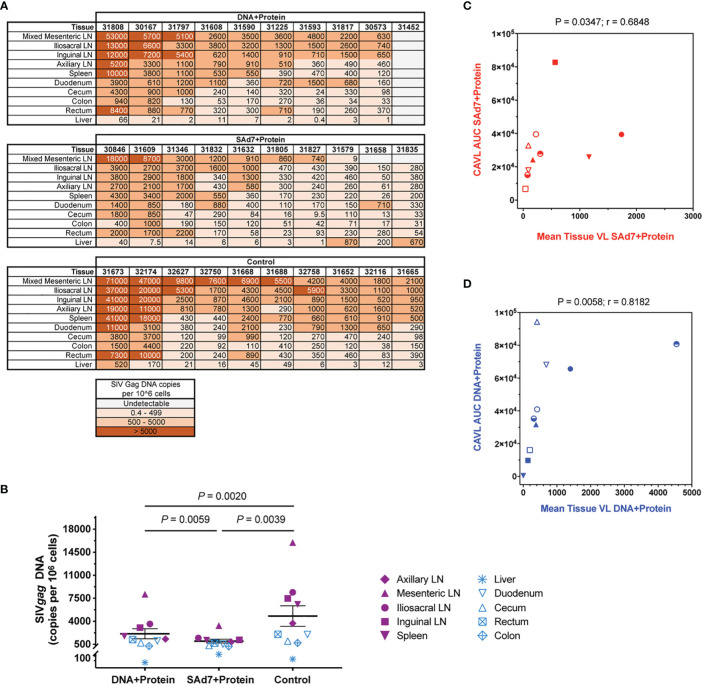
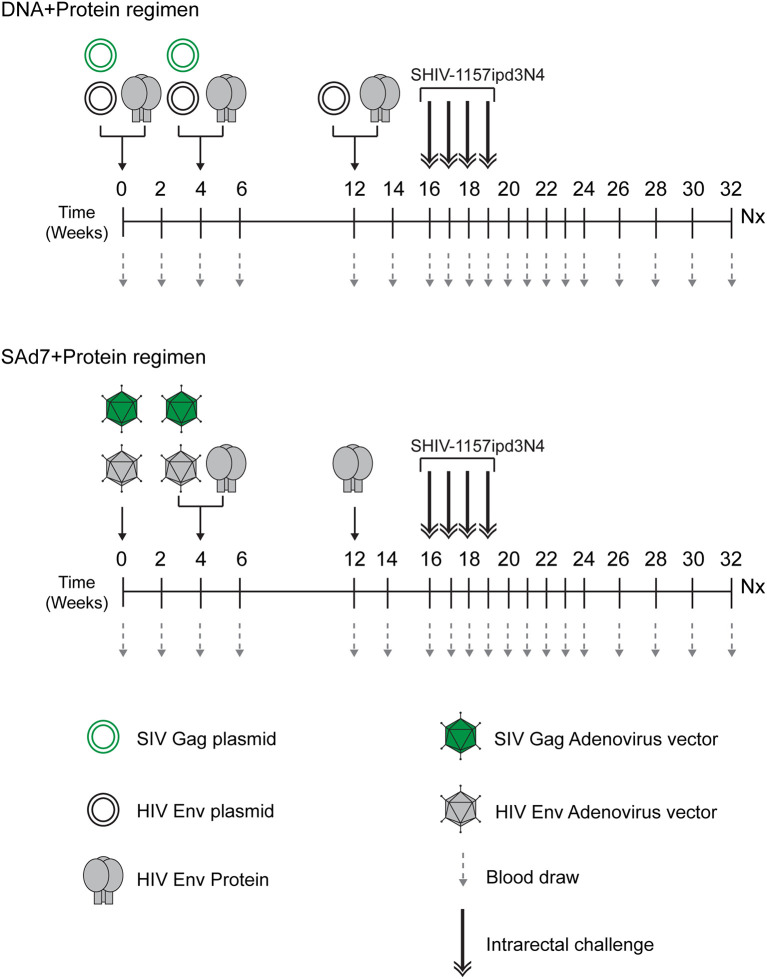
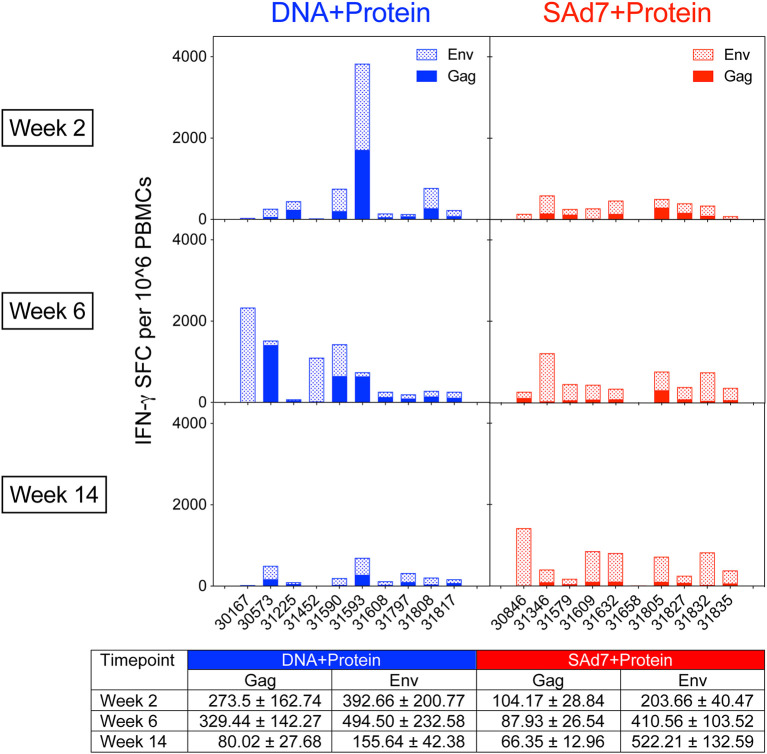
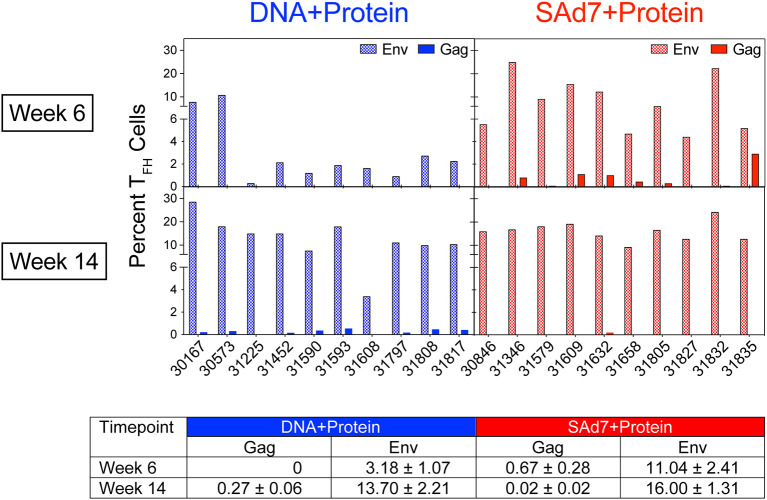
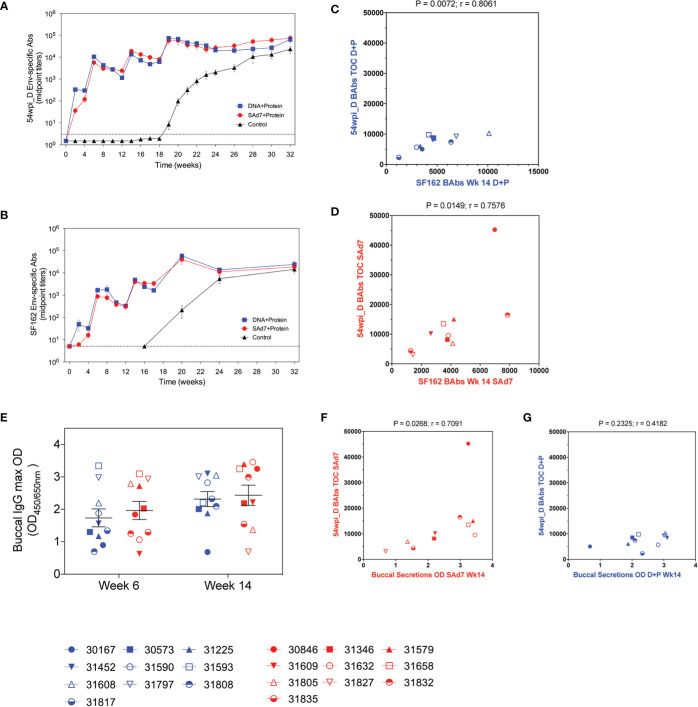
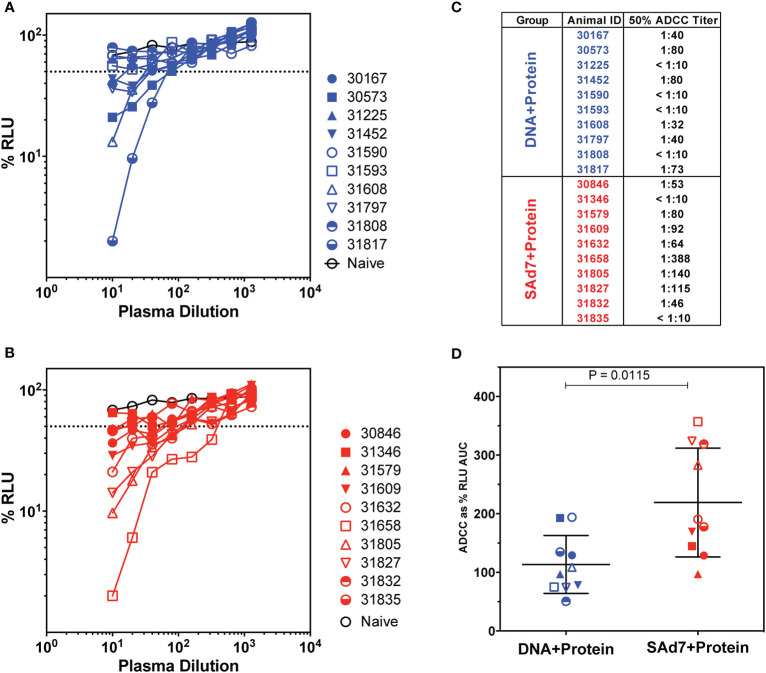
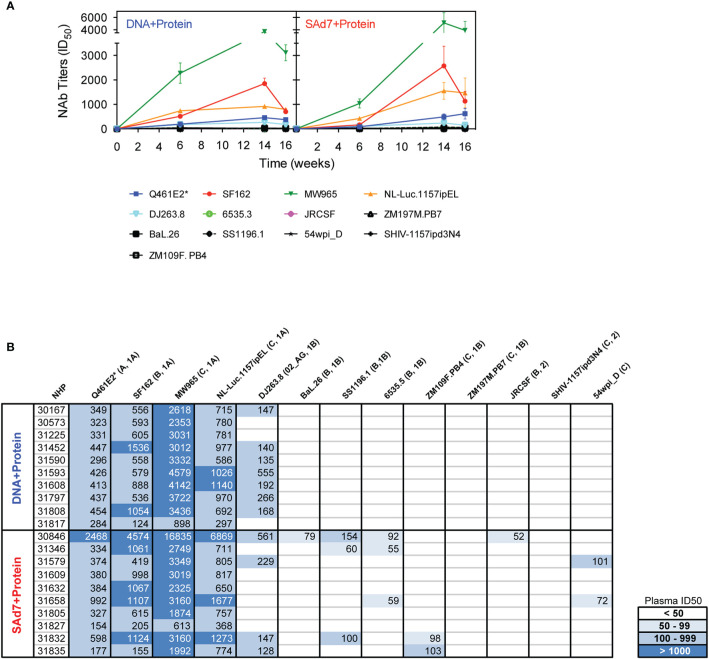
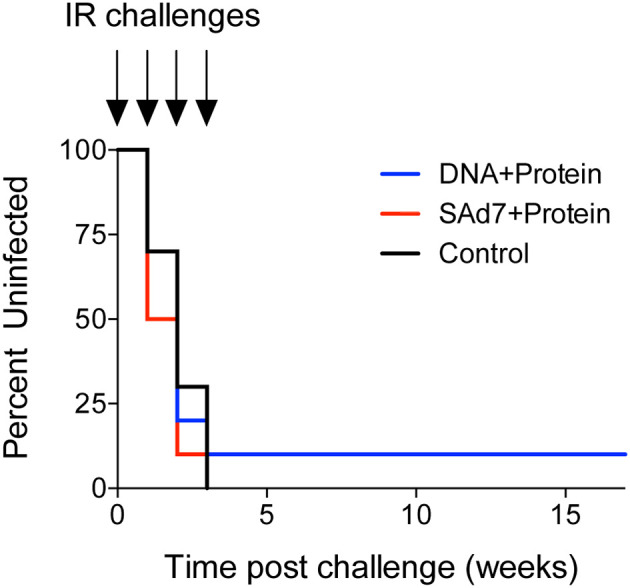
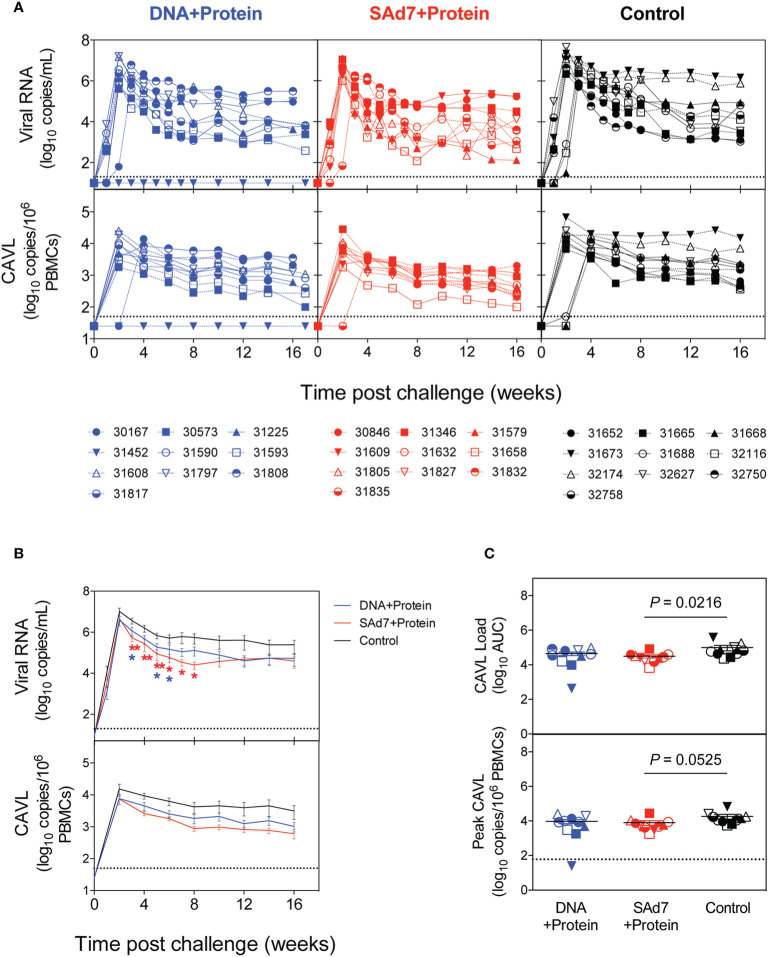
Designing immunogens and improving delivery methods eliciting protective immunity is a paramount goal of HIV vaccine development. A comparative vaccine challenge study was performed in rhesus macaques using clade C HIV Envelope (Env) and SIV Gag antigens. One group was vaccinated using co-immunization with DNA Gag and Env expression plasmids cloned from a single timepoint and trimeric Env gp140 glycoprotein from one of these clones (DNA+Protein). The other group was a prime-boost regimen composed of two replicating simian (SAd7) adenovirus-vectored vaccines expressing Gag and one Env clone from the same timepoint as the DNA+Protein group paired with the same Env gp140 trimer (SAd7+Protein). The env genes were isolated from a single pre-peak neutralization timepoint approximately 1 year post infection in CAP257, an individual with a high degree of neutralization breadth. Both DNA+Protein and SAd7+Protein vaccine strategies elicited significant Env-specific T cell responses, lesser Gag-specific responses, and moderate frequencies of Env-specific T cells. Both vaccine modalities readily elicited systemic and mucosal Env-specific IgG but not IgA. There was a higher frequency and magnitude of ADCC activity in the SAd7+Protein than the DNA+Protein arm. All macaques developed moderate Tier 1 heterologous neutralizing antibodies, while neutralization of Tier 1B or Tier 2 viruses was sporadic and found primarily in macaques in the SAd7+Protein group. Neither vaccine approach provided significant protection from viral acquisition against repeated titered mucosal challenges with a heterologous Tier 2 clade C SHIV. However, lymphoid and gut tissues collected at necropsy showed that animals in both vaccine groups each had significantly lower copies of viral DNA in individual tissues compared to levels in controls. In the SAd7+Protein-vaccinated macaques, total and peak PBMC viral DNA were significantly lower compared with controls. Taken together, this heterologous Tier 2 SHIV challenge study shows that combination vaccination with SAd7+Protein was superior to combination DNA+Protein in reducing viral seeding in tissues in the absence of protection from infection, thus emphasizing the priming role of replication-competent SAd7 vector. Despite the absence of correlates of protection, because antibody responses were significantly higher in this vaccine group, we hypothesize that vaccine-elicited antibodies contribute to limiting tissue viral seeding.
设计免疫原并改进引发保护性免疫的递送方法是 HIV 疫苗开发的首要目标。在恒河猴中进行了一项基于 clade C HIV 包膜 (Env) 和 SIV Gag 抗原的比较疫苗挑战性研究。一组通过用 DNA Gag 和 Env 表达质粒进行共免疫接种来接种,这些质粒是从单一时间点克隆的,并且是来自这些克隆之一的三聚体 Env gp140 糖蛋白(DNA+Protein)。另一组是由两种复制性的猴(SAd7)腺病毒载体疫苗组成的初免-加强方案,该疫苗表达 Gag 和与 DNA+Protein 组相同的 Env 克隆,该克隆来自同一时间点,与相同的 Env gp140 三聚体配对(SAd7+Protein)。Env 基因是从 CAP257 中分离出来的,CAP257 是一位在感染后大约 1 年达到中和高峰的个体,其具有高度的中和广度。DNA+Protein 和 SAd7+Protein 疫苗策略都引起了显著的 Env 特异性 T 细胞反应,较小的 Gag 特异性反应和中等频率的 Env 特异性 T 细胞。两种疫苗方式都容易引起系统和粘膜 Env 特异性 IgG,但不能引起 IgA。SAd7+Protein 组中的 ADCC 活性频率和幅度均高于 DNA+Protein 组。所有恒河猴均产生中等程度的 1 型异源中和抗体,而对 1B 型或 2 型病毒的中和作用则零星出现,主要存在于 SAd7+Protein 组的恒河猴中。两种疫苗方法都不能提供针对重复的经粘膜滴度挑战的异源 2 型 clade C SHIV 的病毒获得性的显著保护。然而,尸检时收集的淋巴组织和肠道组织表明,与对照组相比,两组疫苗中的动物在个体组织中的病毒 DNA 拷贝数均显著降低。在 SAd7+Protein 接种的恒河猴中,与对照组相比,总 PBMC 病毒 DNA 和峰值 PBMC 病毒 DNA 均明显降低。综上所述,这项异源 2 型 SHIV 挑战研究表明,与组合 DNA+Protein 相比,SAd7+Protein 联合疫苗在降低组织中病毒接种方面具有优势,而在不预防感染的情况下,这强调了复制性 SAd7 载体的启动作用。尽管没有保护相关性,但由于该疫苗组的抗体反应明显更高,我们假设疫苗诱导的抗体有助于限制组织中病毒的定植。