Ren Rui, Gao Jie, Yin Dongmei, Li Kai, Lu Chuqiao, Ahmad Sagheer, Wei Yonglu, Jin Jianpeng, Zhu Genfa, Yang Fengxi
Guangdong Key Laboratory of Ornamental Plant Germplasm Innovation and Utilization, Environmental Horticulture Research Institute, Guangdong Academy of Agricultural Sciences, Guangzhou, China.
College of Agronomy, Henan Agricultural University, Zhengzhou, China.
Front Plant Sci. 2021 Feb 15;12:626015. doi: 10.3389/fpls.2021.626015. eCollection 2021.
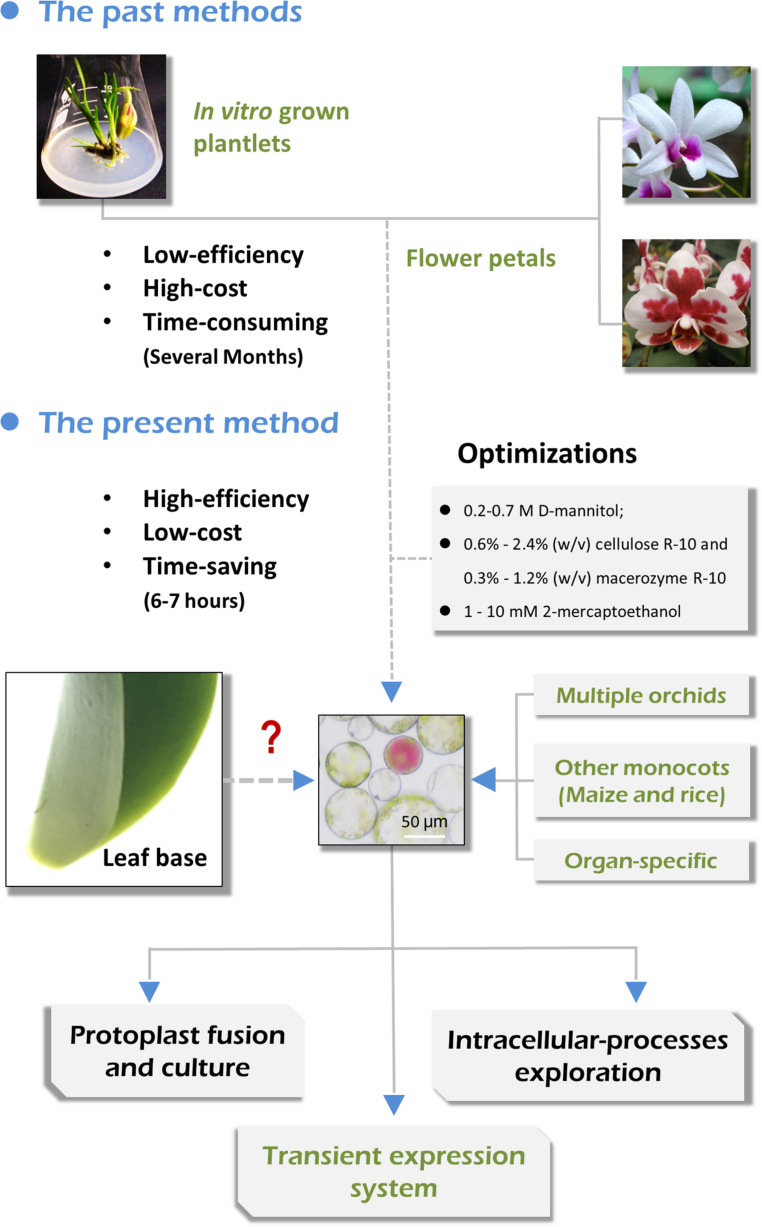
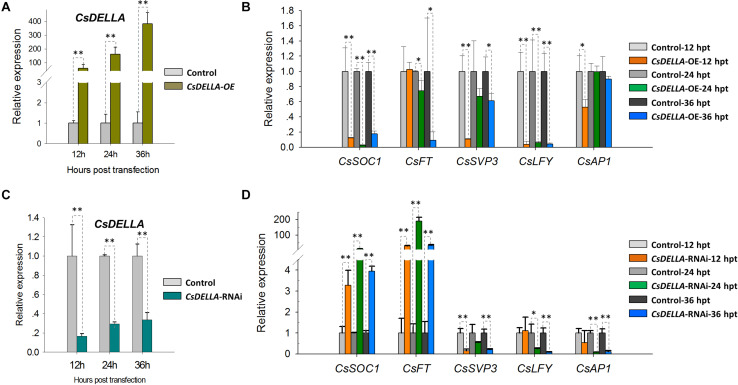
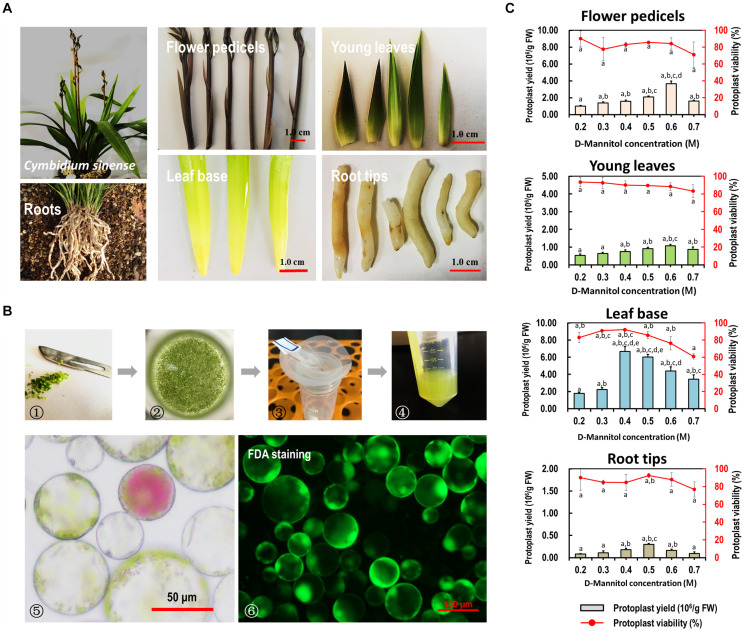
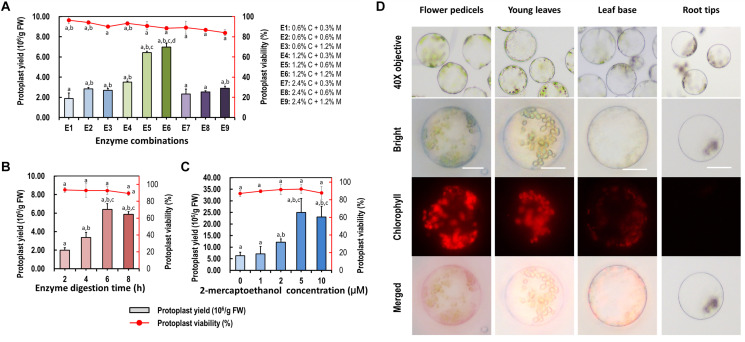
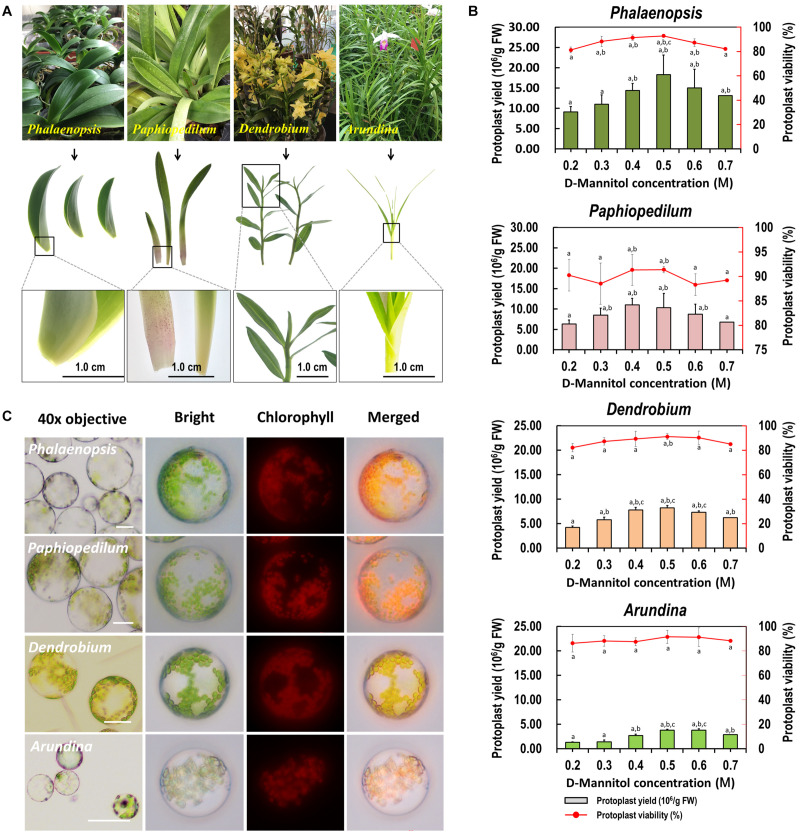
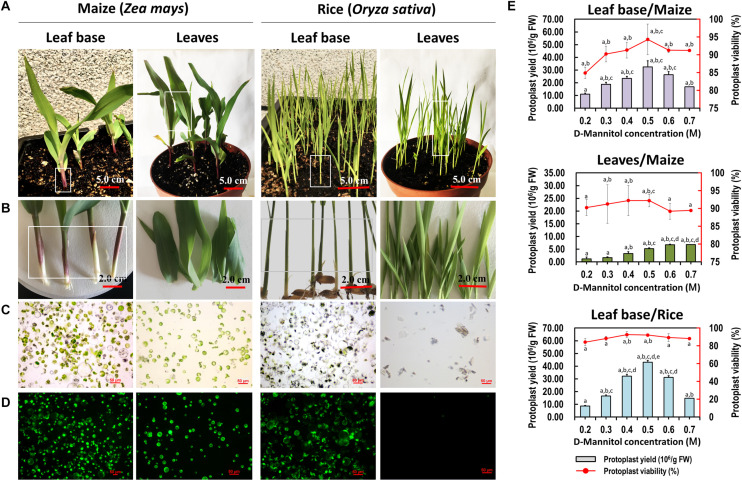
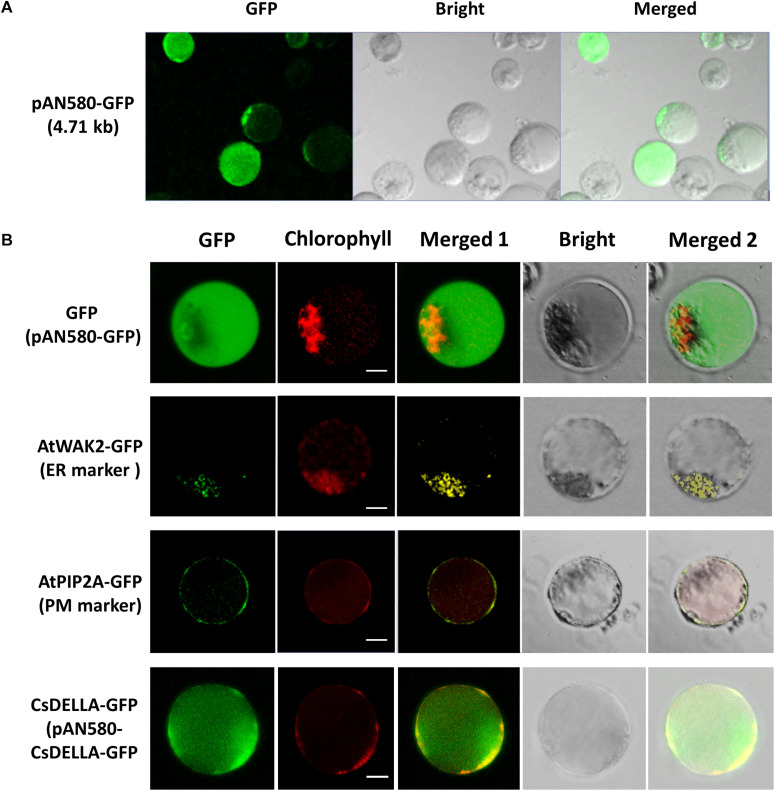
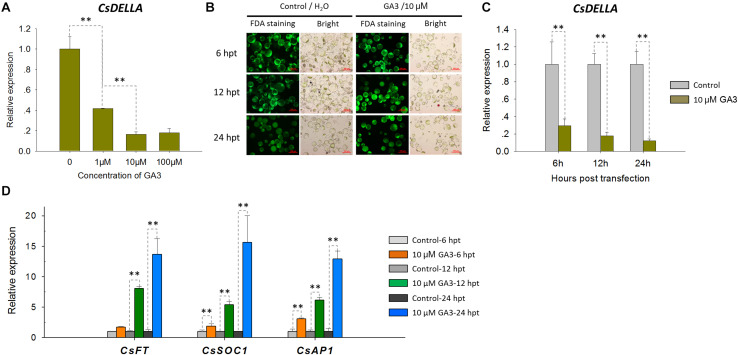
Versatile protoplast platforms greatly facilitate the development of modern botany. However, efficient protoplast-based systems are still challenging for numerous horticultural plants and crops. Orchids are globally cultivated ornamental and medicinal monocot plants, but few efficient protoplast isolation and transient expression systems have been developed. In this study, we established a highly efficient orchid protoplast isolation protocol by selecting suitable source materials and optimizing the enzymatic conditions, which required optimal D-mannitol concentrations (0.4-0.6 M) combined with optimal 1.2% cellulose and 0.6% macerozyme, 5 μM of 2-mercaptoethanol and 6 h digestion. Tissue- and organ-specific protoplasts were successfully isolated from young leaves [∼3.22 × 10/g fresh weight (FW)], flower pedicels (∼5.26 × 10/g FW), and young root tips (∼7.66 × 10/g FW) of orchids. This protocol recommends the leaf base tissues (the tender part of young leaves attached to the stem) as better source materials. High yielding viable protoplasts were isolated from the leaf base of (∼2.50 × 10/g FW), (1.83 × 10/g FW), (1.10 × 10/g FW), (8.21 × 10/g FW), (3.78 × 10/g FW) orchids, and other economically important monocot crops including maize () (3.25 × 10/g FW) and rice () (4.31 × 10/g FW), which showed marked advantages over previous mesophyll protoplast isolation protocols. Leaf base protoplasts of orchids were used for polyethylene glycol (PEG)-mediated transfection, and a transfection efficiency of more than 80% was achieved. This leaf base protoplast system was applied successfully to analyze the -mediated gibberellin signaling in orchids. We investigated the subcellular localization of the CsDELLA-green fluorescent protein fusion and analyzed the role of in the regulation of gibberellin to flowering-related genes via efficient transient overexpression and gene silencing of in protoplasts. This protoplast isolation and transient expression system is the most efficient based on the documented results to date. It can be widely used for cellular and molecular studies in orchids and other economically important monocot crops, especially for those lacking an efficient genetic transformation system .
多功能原生质体平台极大地促进了现代植物学的发展。然而,对于许多园艺植物和农作物来说,基于原生质体的高效系统仍然具有挑战性。兰花是全球种植的观赏和药用单子叶植物,但目前开发的高效原生质体分离和瞬时表达系统却很少。在本研究中,我们通过选择合适的源材料并优化酶解条件,建立了一种高效的兰花原生质体分离方案,该方案需要最佳的D - 甘露醇浓度(0.4 - 0.6 M),并结合最佳的1.2%纤维素和0.6%果胶酶、5 μM的2 - 巯基乙醇以及6小时的酶解时间。成功从兰花的幼叶[约3.22×10⁶/g鲜重(FW)]、花梗(约5.26×10⁶/g FW)和幼根尖端(约7.66×10⁶/g FW)中分离出组织和器官特异性原生质体。该方案推荐叶基部组织(幼叶附着于茎的嫩部)作为更好的源材料。从蝴蝶兰(约2.50×10⁶/g FW)、大花蕙兰(1.83×10⁶/g FW)、石斛兰(1.10×10⁶/g FW)、文心兰(8.21×10⁶/g FW)、卡特兰(3.78×10⁶/g FW)等兰花以及其他重要经济单子叶作物如玉米(3.25×10⁶/g FW)和水稻(4.31×10⁶/g FW)的叶基部中分离出了高产有活力的原生质体,这比以前的叶肉原生质体分离方案具有显著优势。利用兰花叶基部原生质体进行聚乙二醇(PEG)介导的转染,转染效率达到了80%以上。该叶基部原生质体系统成功应用于分析蝴蝶兰中赤霉素信号通路。我们研究了CsDELLA - 绿色荧光蛋白融合体的亚细胞定位,并通过在原生质体中对CsDELLA进行高效瞬时过表达和基因沉默,分析了其在赤霉素对开花相关基因调控中的作用。基于目前已报道的结果,该原生质体分离和瞬时表达系统是最有效的。它可广泛用于兰花和其他重要经济单子叶作物的细胞和分子研究,特别是对于那些缺乏高效遗传转化系统的作物。