Laboratório Especial de Toxinologia Aplicada (LETA), CeTICS, Instituto Butantan, São Paulo, Brazil.
Department of Chemical and Biological Sciences, Institute of Biosciences of Botucatu, São Paulo State University (UNESP), Botucatu, Brazil.
BMC Genomics. 2021 Mar 4;22(1):153. doi: 10.1186/s12864-021-07441-4.
During vertebrate evolution, the heart has undergone remarkable changes that lead to morphophysiological differences in the fully formed heart of these species, such as chamber septation, heart rate frequency, blood pressure, and cardiac output volume. Despite these differences, the heart developmental process is guided by a core gene set conserved across vertebrates. Nonetheless, the regulatory mechanisms controlling the expression of genes involved in heart development and maintenance are largely uncharted. MicroRNAs (miRNAs) have been described as important regulatory elements in several biological processes, including heart biology. These small RNA molecules are broadly conserved in sequence and genomic context in metazoans. Mutations may occur in miRNAs and/or genes that contribute to the establishment of distinct repertoires of miRNA-target interactions, thereby favoring the differential control of gene expression and, consequently, the origin of novel phenotypes. In fact, several studies showed that miRNAs are integrated into genetic regulatory networks (GRNs) governing specific developmental programs and diseases. However, studies integrating miRNAs in vertebrate heart GRNs under an evolutionary perspective are still scarce.
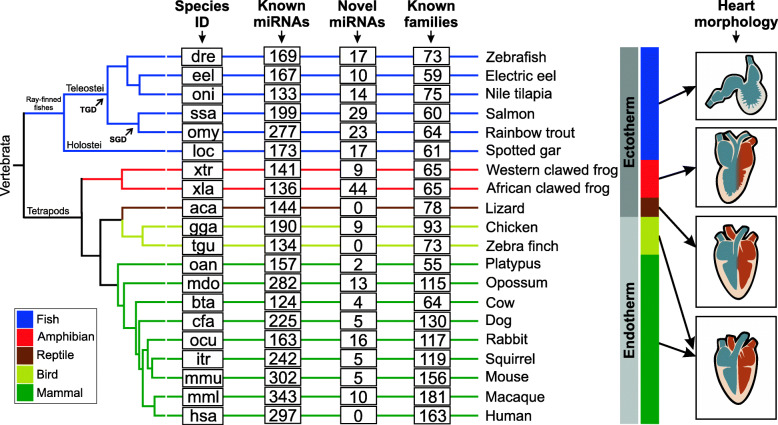
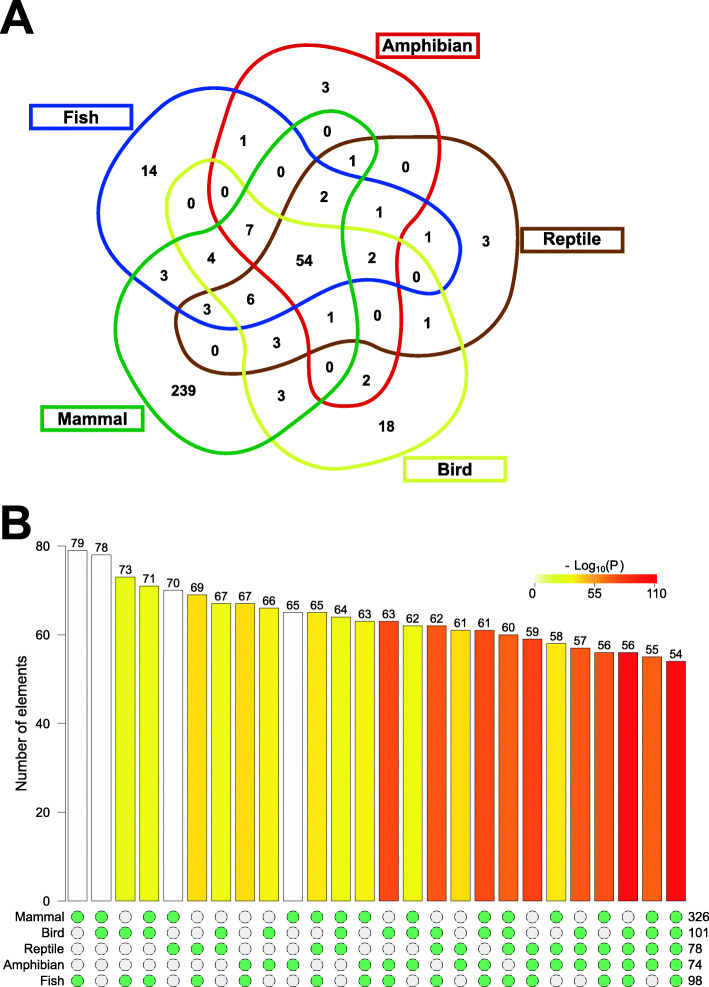
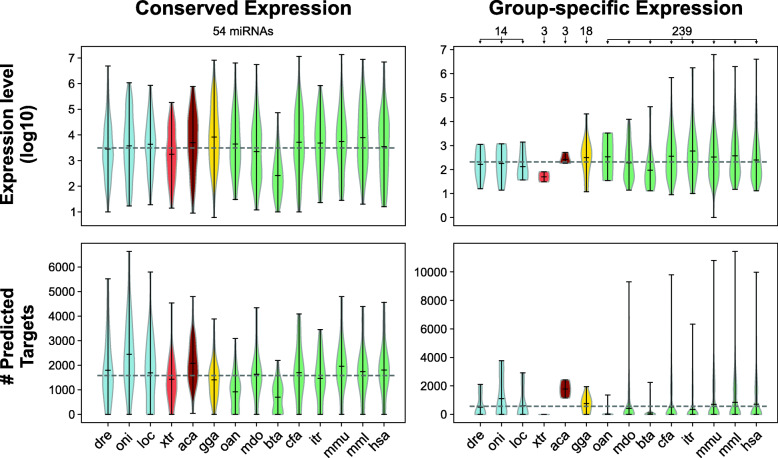
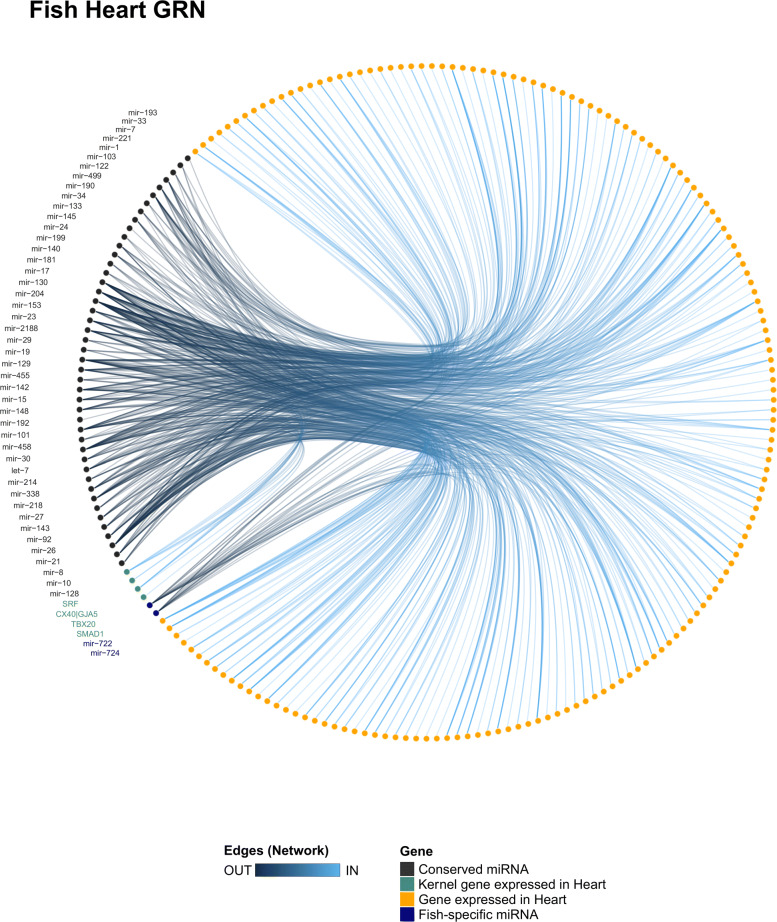
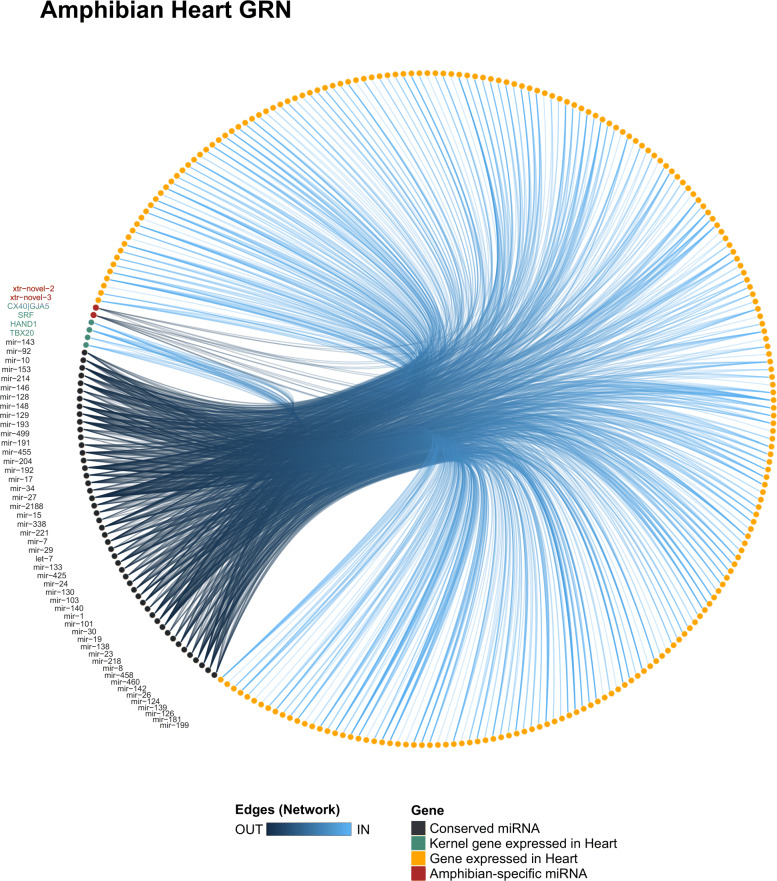
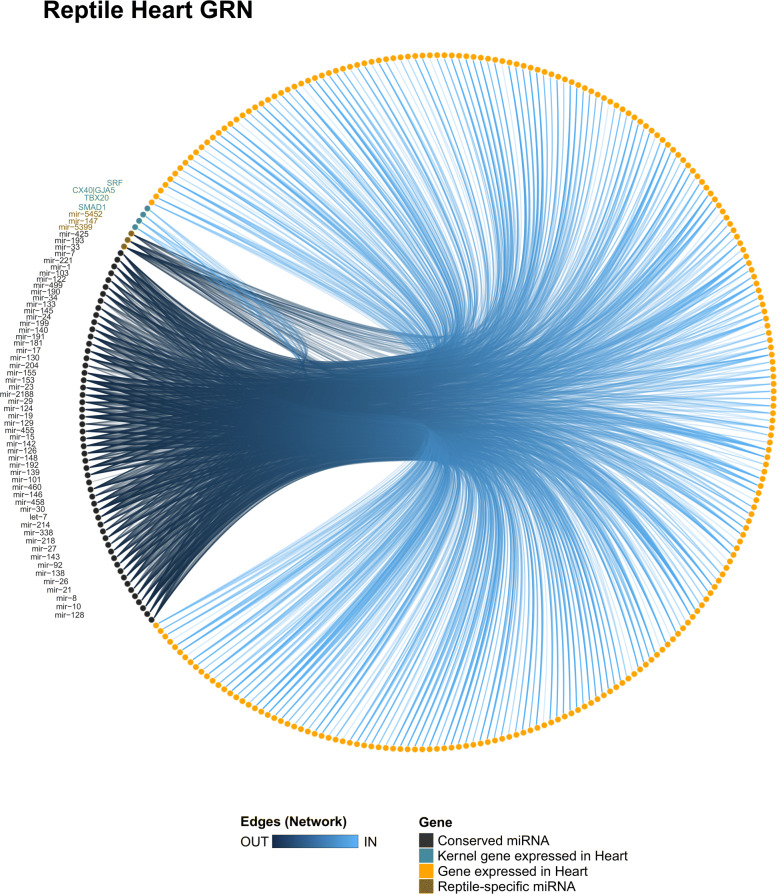
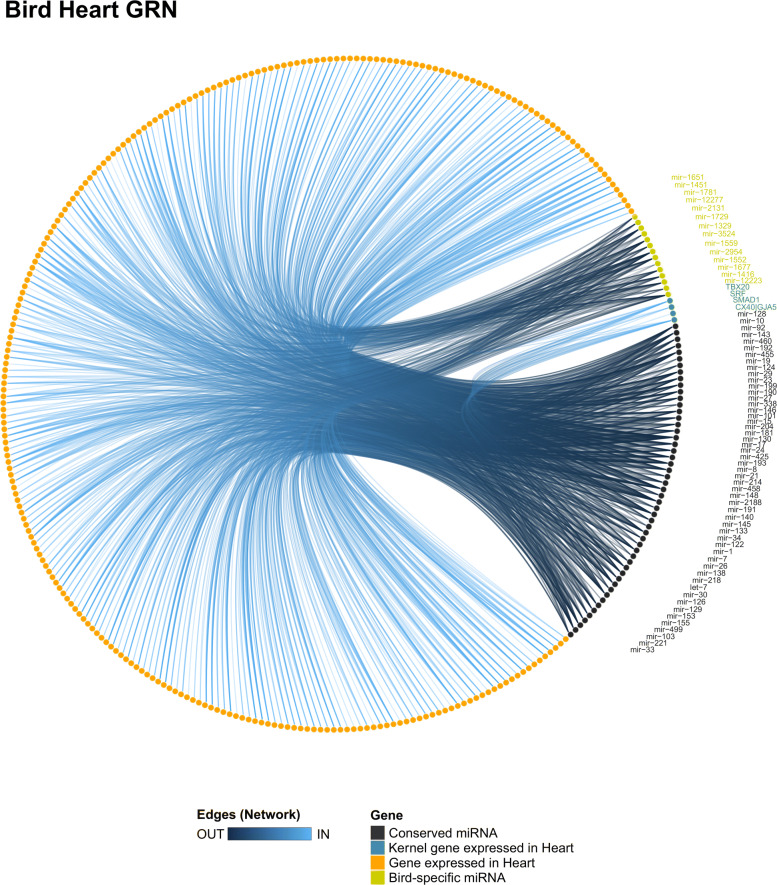
We comprehensively examined and compared the heart miRNome of 20 species representatives of the five major vertebrate groups. We found 54 miRNA families with conserved expression and a variable number of miRNA families with group-specific expression in fishes, amphibians, reptiles, birds, and mammals. We also detected that conserved miRNAs present higher expression levels and a higher number of targets, whereas the group-specific miRNAs present lower expression levels and few targets.
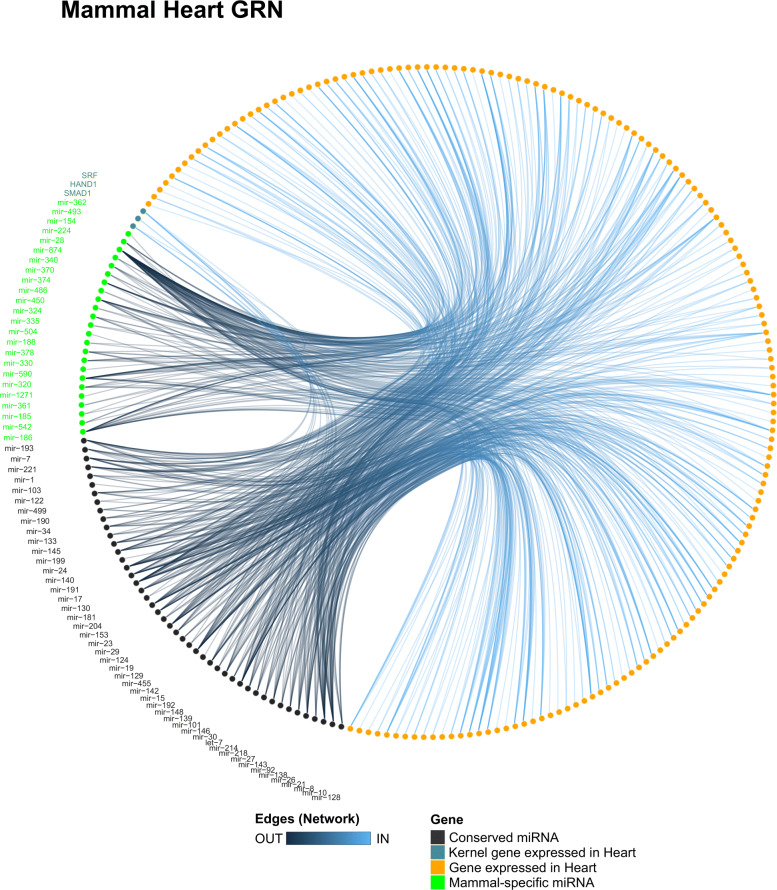
Both the conserved and group-specific miRNAs can be considered modulators orchestrating the core and peripheral genes of heart GRNs of vertebrates, which can be related to the morphophysiological differences and similarities existing in the heart of distinct vertebrate groups. We propose a hypothesis to explain evolutionary differences in the putative functional roles of miRNAs in the heart GRNs analyzed. Furthermore, we present new insights into the molecular mechanisms that could be helping modulate the diversity of morphophysiology in the heart organ of vertebrate species.
在脊椎动物进化过程中,心脏发生了显著变化,导致这些物种完全形成的心脏在室间隔、心率频率、血压和心输出量等方面存在形态生理学差异。尽管存在这些差异,但心脏发育过程受到跨脊椎动物保守的核心基因集的指导。尽管如此,控制参与心脏发育和维持的基因表达的调控机制在很大程度上仍未被探索。microRNAs(miRNAs)已被描述为包括心脏生物学在内的几个生物学过程中的重要调节因子。这些小分子 RNA 在后生动物中在序列和基因组背景上广泛保守。miRNAs 和/或基因的突变可能导致独特的 miRNA 靶相互作用谱的建立,从而有利于基因表达的差异控制,并因此导致新表型的出现。事实上,几项研究表明,miRNAs 被整合到控制特定发育程序和疾病的遗传调控网络(GRNs)中。然而,从进化角度综合研究 miRNA 在脊椎动物心脏 GRNs 中的作用仍然很少。
我们全面检查和比较了代表五个主要脊椎动物群体的 20 个物种的心脏 miRNome。我们发现了 54 个具有保守表达的 miRNA 家族和具有鱼类、两栖动物、爬行动物、鸟类和哺乳动物群体特异性表达的 miRNA 家族。我们还发现,保守 miRNA 具有更高的表达水平和更多的靶标,而群体特异性 miRNA 具有更低的表达水平和少数靶标。
保守和群体特异性 miRNA 都可以被视为调节脊椎动物心脏 GRN 的核心和外围基因的调节剂,这与不同脊椎动物群体心脏中存在的形态生理学差异和相似性有关。我们提出了一个假设,以解释 miRNA 在分析的心脏 GRNs 中潜在功能作用的进化差异。此外,我们对有助于调节脊椎动物物种心脏器官形态生理学多样性的分子机制提出了新的见解。