Department of Pathogenic Biology, School of Basic Medical Sciences and Forensic Medicine, Sichuan University, Chengdu, West China, China.
Chengdu Institute of Biology, Chinese Academy of Sciences, Chengdu, Sichuan, China.
Parasit Vectors. 2021 Mar 4;14(1):135. doi: 10.1186/s13071-021-04639-z.
Ticks are ectoparasites that feed on blood of a broad taxonomical range of terrestrial and flying vertebrates and are distributed across a wide range of environmental settings. To date, the species identity, diversity, and relationships among the ticks on lizards in China have been poorly understood.
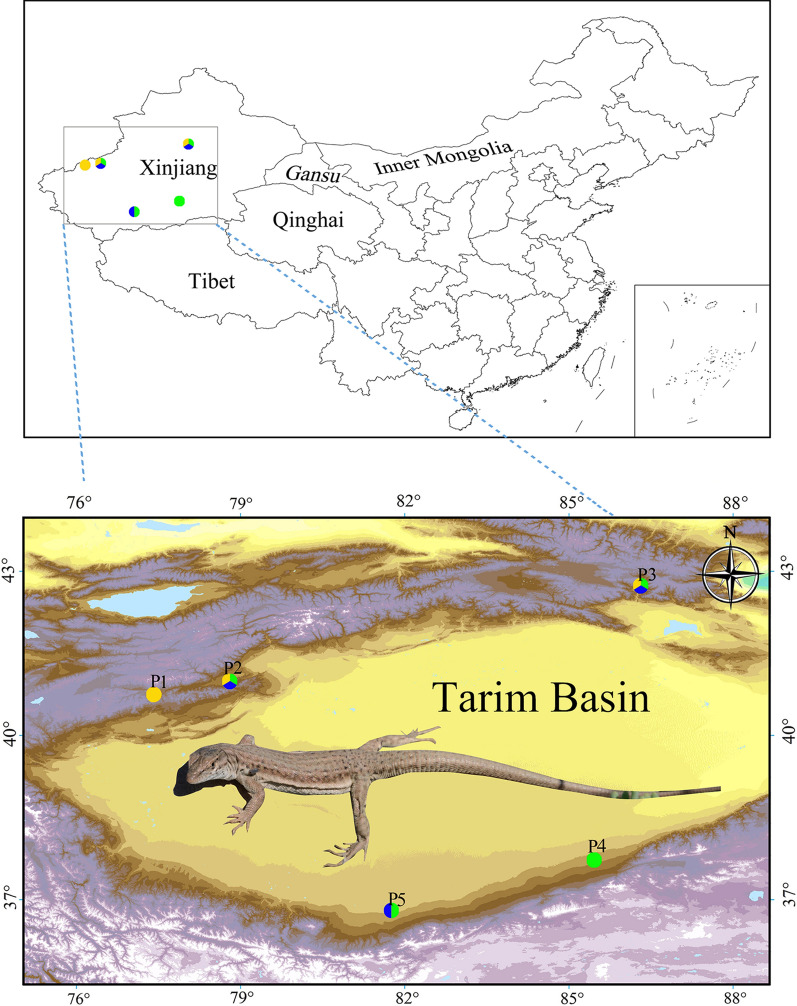
In this study, 30 ticks, collected from the multi-ocellated racerunner (Eremias multiocellata) lizard in the Tarim Basin and adjacent Yanqi Basin of the Xinjiang Uygur Autonomous Region in China, were identified by morphological observation and confirmed by DNA-based techniques. The mitochondrially encoded 12S rRNA, 16S rRNA, and COI gene fragments of ticks were amplified and sequenced. To understand the genetic polymorphisms, 47 ticks collected from hedgehogs and 1 from brushwood in the Tarim Basin were also included. Species identification was based on both morphological and molecular characters. The median-joining network approach was used to evaluate the intraspecific genealogies of the ticks and their relatedness with the geographical origin or hosts.
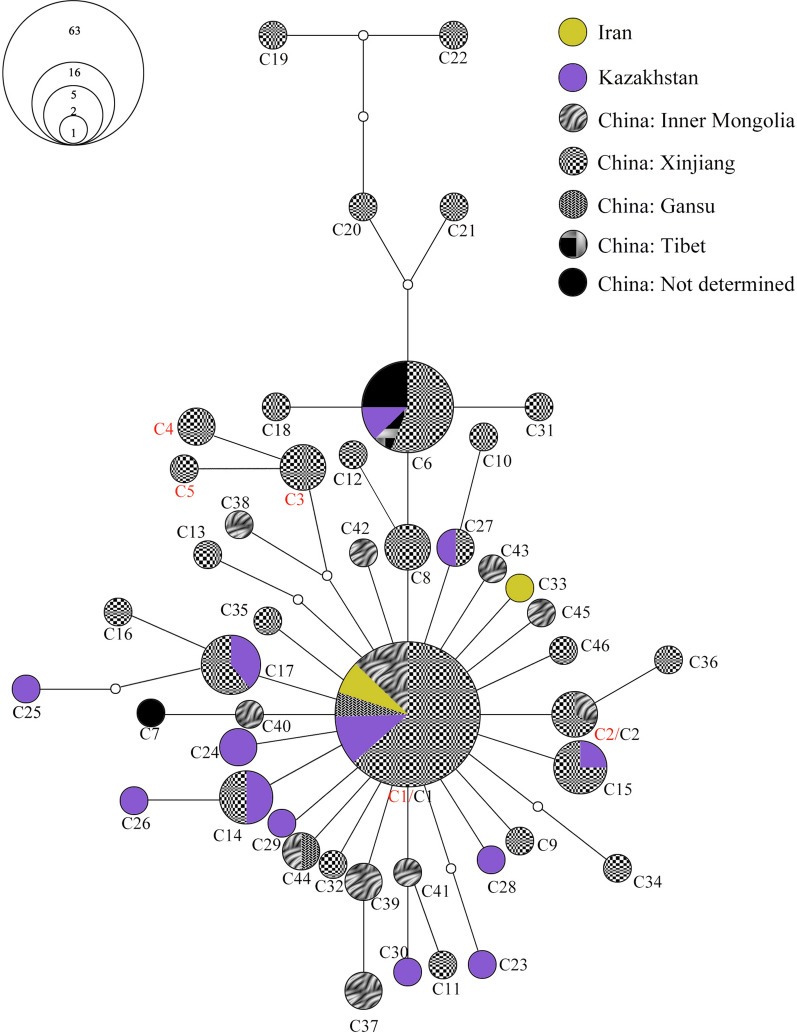
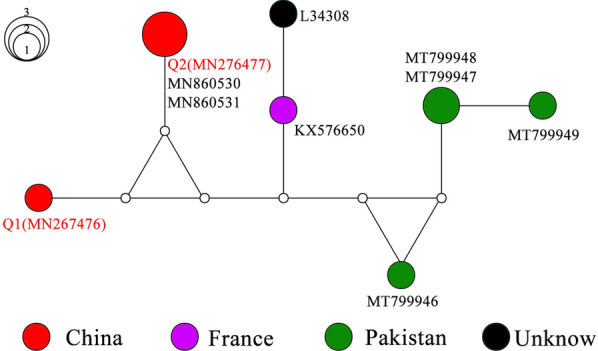
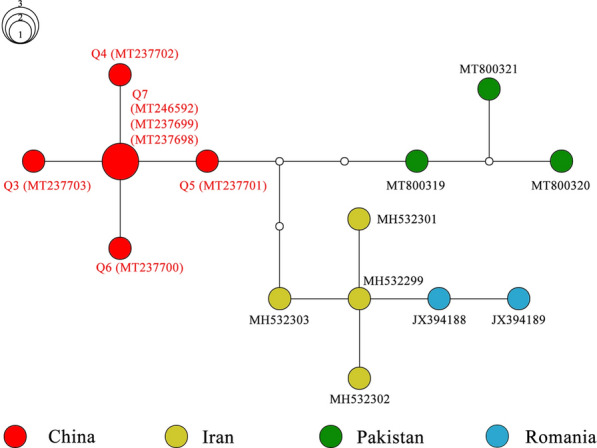
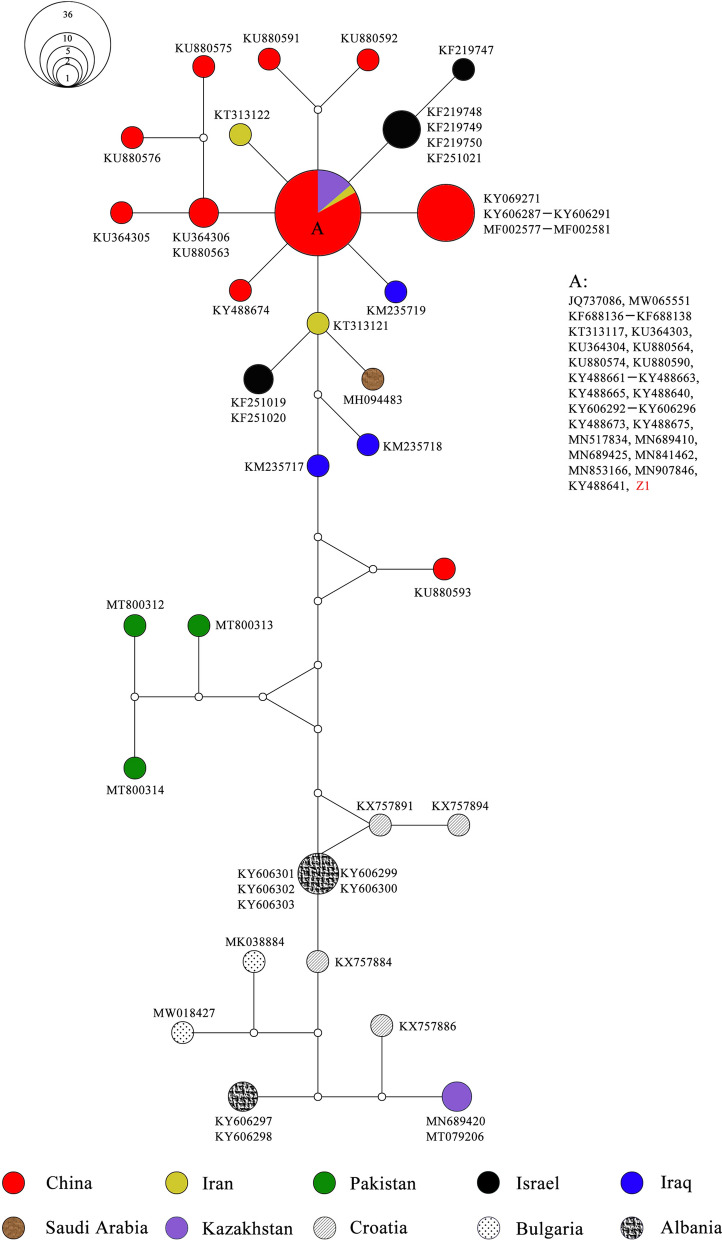
The sequence similarity analysis confirmed that the 30 ticks belong to three genera and three species including 11 individuals of Hyalomma asiaticum, 3 of Rhipicephalus turanicus, and 16 of Haemaphysalis sulcata. A network approach revealed paraphyletic populations of R. turanicus and Hy. asiaticum at the intraspecies level regarding geographical origin and low host specificity. For R. turanicus and Hy. asiaticum, common ancestry was observed between COI sequences from lizards and other sequence types from different hosts and countries.
To our knowledge, our study is the first to conduct a molecular survey of ticks from lizards in the arid regions of Xinjiang, China. Eremias multiocellata is an atypical host of the three tick species. Notably, two species of ticks, Hy. asiaticum and R. turanicus, have been collected and identified from lizards in China for the first time. Star-like networks suggest both of them might have experienced recent population expansion. The discoveries are closely related to the geographical environments in Xinjiang and will provide information for the control of ticks and tick-borne pathogens in Northwest China.
蜱是一种外寄生虫,以广泛的陆地和飞行脊椎动物的血液为食,分布于广泛的环境中。迄今为止,中国蜥蜴上蜱的种类、多样性及其相互关系尚不清楚。
本研究中,从中国新疆塔里木盆地及其毗邻的焉耆盆地的多斑棱蜥(Eremias multiocellata)蜥蜴上采集了 30 只蜱虫,通过形态学观察和基于 DNA 的技术进行鉴定。扩增和测序了蜱虫的线粒体编码 12S rRNA、16S rRNA 和 COI 基因片段。为了了解遗传多态性,还包括来自塔里木盆地刺猬的 47 只蜱虫和 1 只来自灌木丛的蜱虫。物种鉴定基于形态学和分子特征。使用中位数连接网络方法评估蜱虫的种内系统发育及其与地理起源或宿主的亲缘关系。
序列相似性分析证实,这 30 只蜱虫属于三个属和三个种,包括 11 只亚洲璃眼蜱、3 只图兰扇头蜱和 16 只长角血蜱。网络方法揭示了 R. turanicus 和 Hy. asiaticum 在种内水平上的地理起源和宿主特异性低的偏系种群。对于 R. turanicus 和 Hy. asiaticum,从蜥蜴和其他不同宿主和国家的 COI 序列中观察到共同的祖先。
据我们所知,本研究首次对中国新疆干旱地区蜥蜴上的蜱虫进行了分子调查。多斑棱蜥是这三个蜱种的非典型宿主。值得注意的是,Hy. asiaticum 和 R. turanicus 这两个蜱种是首次在中国的蜥蜴上采集和鉴定。星形网络表明,它们可能都经历了最近的种群扩张。这些发现与新疆的地理环境密切相关,将为中国西北地区蜱和蜱传病原体的控制提供信息。