Aix Marseille Univ, IRD, AP-HM, SSA, Vecteurs-Infections Tropicales et Méditeranéennes (VITROME), Marseille, France.
IHU-Méditerranée infection, Marseille, France.
Parasit Vectors. 2023 Jun 22;16(1):211. doi: 10.1186/s13071-023-05764-7.
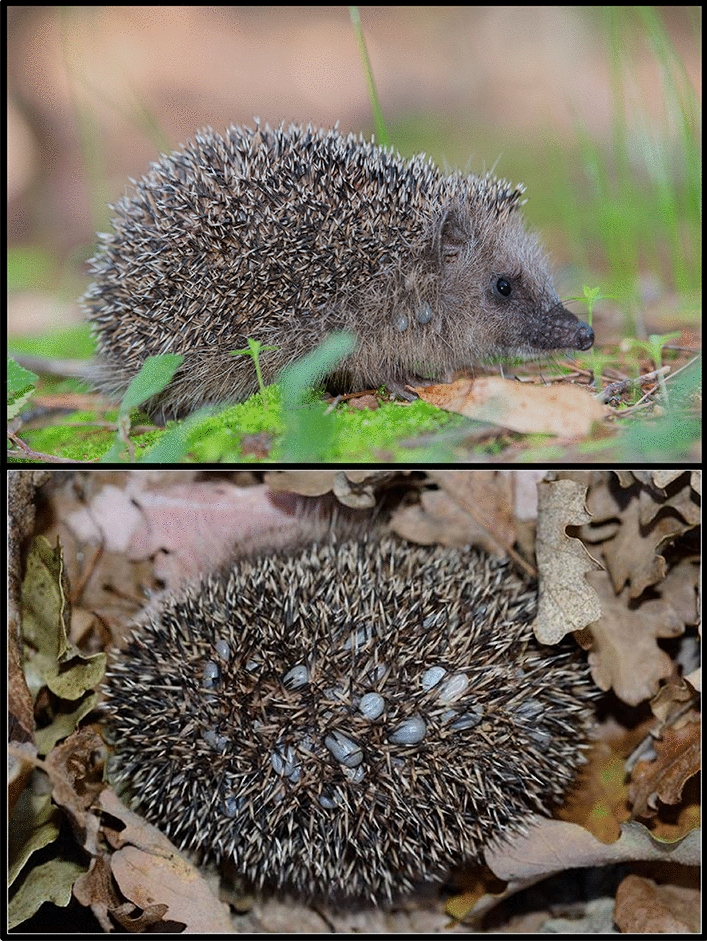
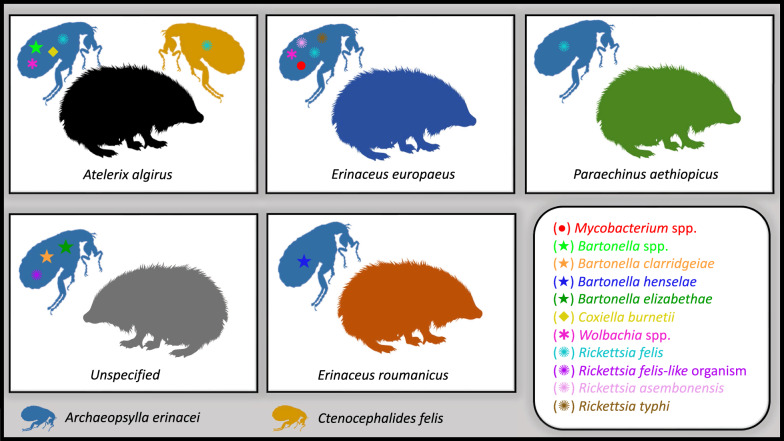
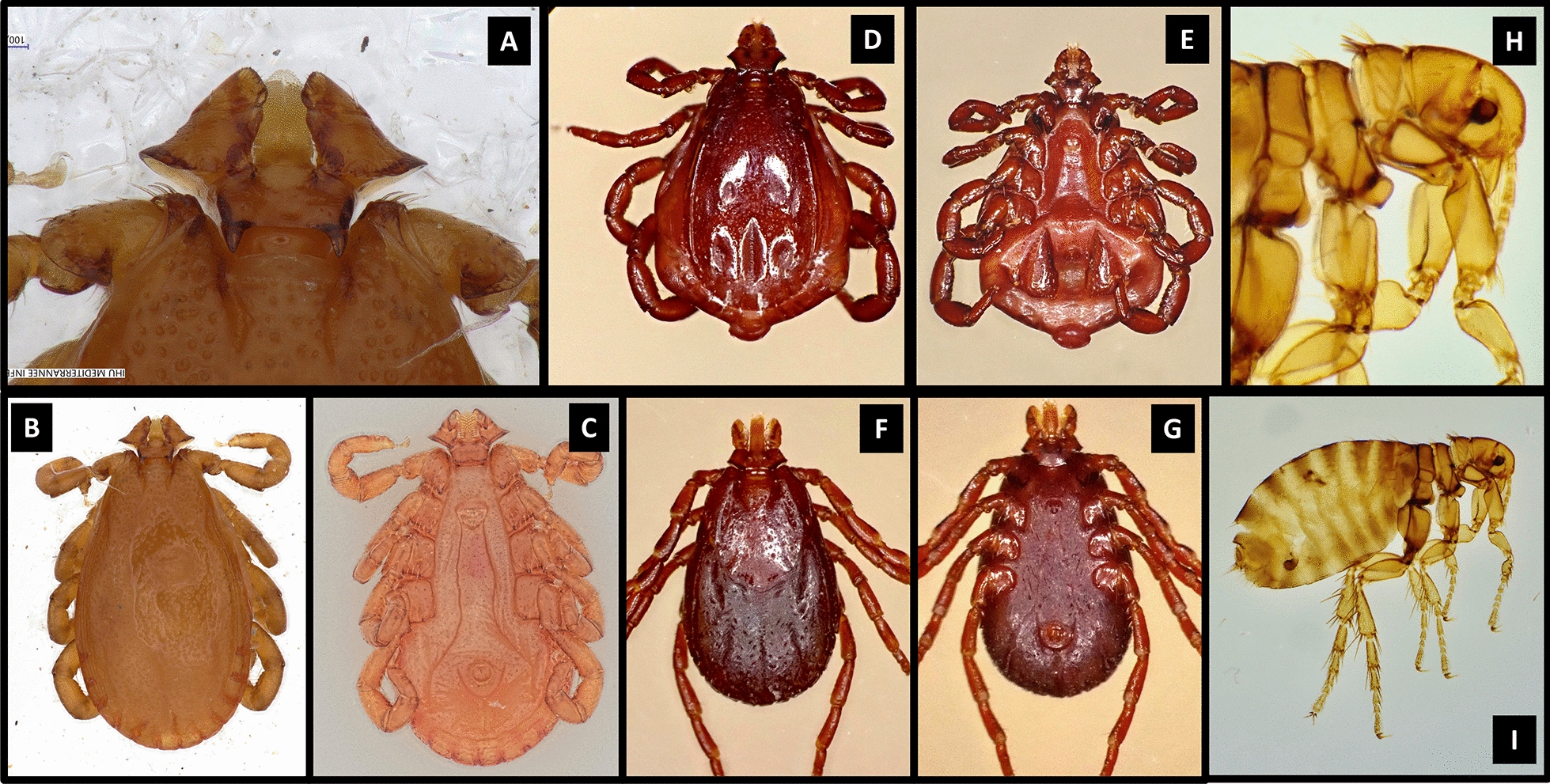
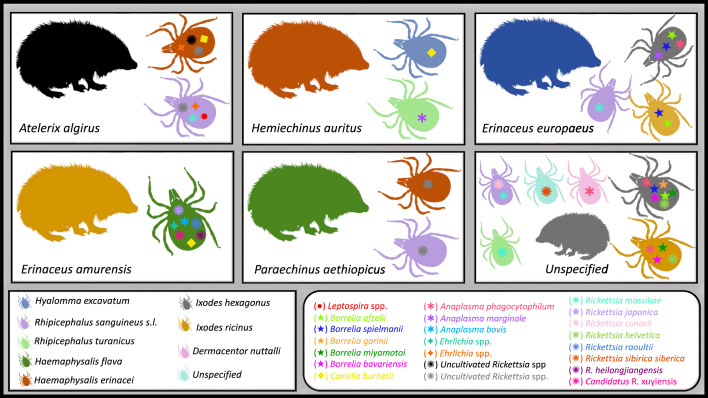
Hedgehogs are small synanthropic mammals that live in rural areas as well as in urban and suburban areas. They can be reservoirs of several microorganisms, including certain pathogenic agents that cause human and animal public health issues. Hedgehogs are often parasitized by blood-sucking arthropods, mainly hard ticks and fleas, which in turn can also carry various vector-born microorganisms of zoonotic importance. Many biotic factors, such as urbanization and agricultural mechanization, have resulted in the destruction of the hedgehog's natural habitats, leading these animals to take refuge near human dwellings, seeking food and shelter in parks and gardens and exposing humans to zoonotic agents that can be transmitted either directly by them or indirectly by their ectoparasites. In this review, we focus on the microorganisms detected in arthropods sampled from hedgehogs worldwide. Several microorganisms have been reported in ticks collected from these animals, including various Borrelia spp., Anaplasma spp., Ehrlichia spp., and Rickettsia spp. species as well as Coxiella burnetii and Leptospira spp. As for fleas, C. burnetii, Rickettsia spp., Wolbachia spp., Mycobacterium spp. and various Bartonella species have been reported. The detection of these microorganisms in arthropods does not necessarily mean that they can be transmitted to humans and animals. While the vector capacity and competence of fleas and ticks for some of these microorganisms has been proven, in other cases the microorganisms may have simply been ingested with blood taken from an infected host. Further investigations are needed to clarify this issue. As hedgehogs are protected animals, handling them is highly regulated, making it difficult to conduct epidemiological studies on them. Their ectoparasites represent a very interesting source of information on microorganisms circulating in populations of these animals, especially vector-born ones.
刺猬是小型的适应城市生活的哺乳动物,生活在农村、城市和郊区。它们可能是多种微生物的宿主,包括一些引起人类和动物公共卫生问题的致病因子。刺猬经常被吸血节肢动物寄生,主要是硬蜱和跳蚤,这些节肢动物反过来也可以携带各种具有动物源性的重要媒介微生物。许多生物因素,如城市化和农业机械化,导致了刺猬自然栖息地的破坏,使这些动物在人类居住的地方避难,在公园和花园里寻找食物和庇护所,使人类暴露于可以直接或间接通过它们或它们的外寄生虫传播的动物源性病原体。在这篇综述中,我们关注的是从世界各地刺猬身上采集的节肢动物中检测到的微生物。从这些动物身上采集的蜱虫中报告了几种微生物,包括各种伯氏疏螺旋体、无形体、埃立克体和立克次体以及贝氏柯克斯体和钩端螺旋体。至于跳蚤,已经报告了贝氏柯克斯体、立克次体、沃尔巴克氏体、分枝杆菌和各种巴尔通体。在节肢动物中检测到这些微生物并不一定意味着它们可以传播给人类和动物。虽然已经证明了跳蚤和蜱虫对其中一些微生物的媒介能力和媒介效能,但在其他情况下,这些微生物可能只是与从受感染宿主身上采集的血液一起摄入的。需要进一步的调查来澄清这个问题。由于刺猬是受保护的动物,对它们的处理受到高度监管,因此很难对它们进行流行病学研究。它们的外寄生虫是关于这些动物种群中循环的微生物的非常有趣的信息来源,特别是媒介传播的微生物。