La Jolla Institute for Immunology, La Jolla, CA, USA.
University of Southampton, Faculty of Medicine, Southampton, UK.
Nat Commun. 2021 Mar 4;12(1):1446. doi: 10.1038/s41467-021-21574-w.
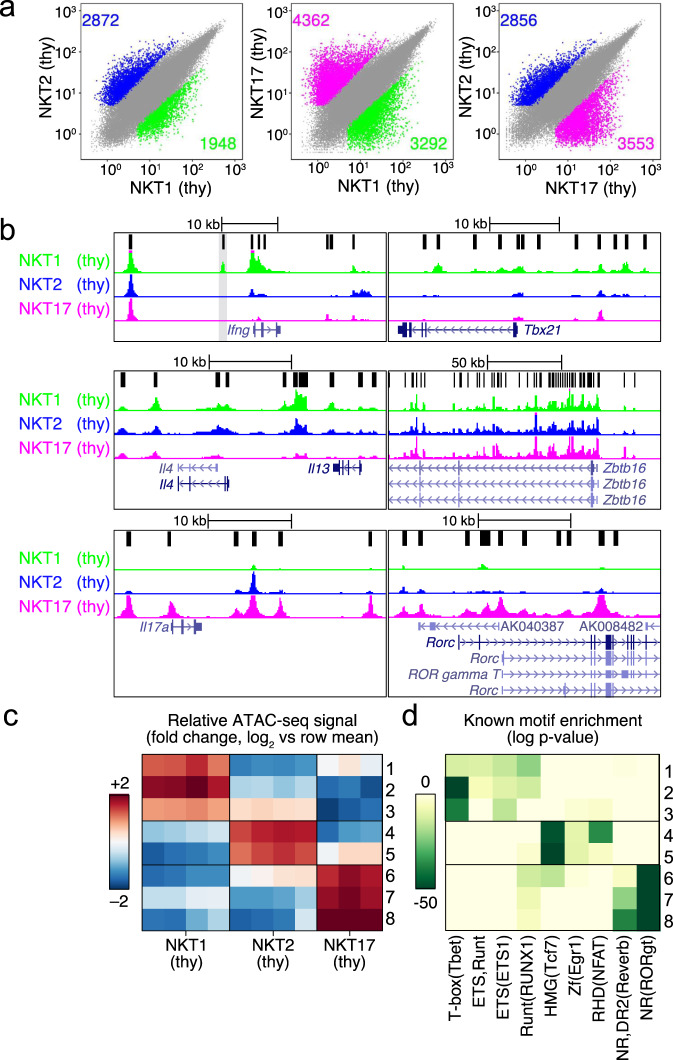
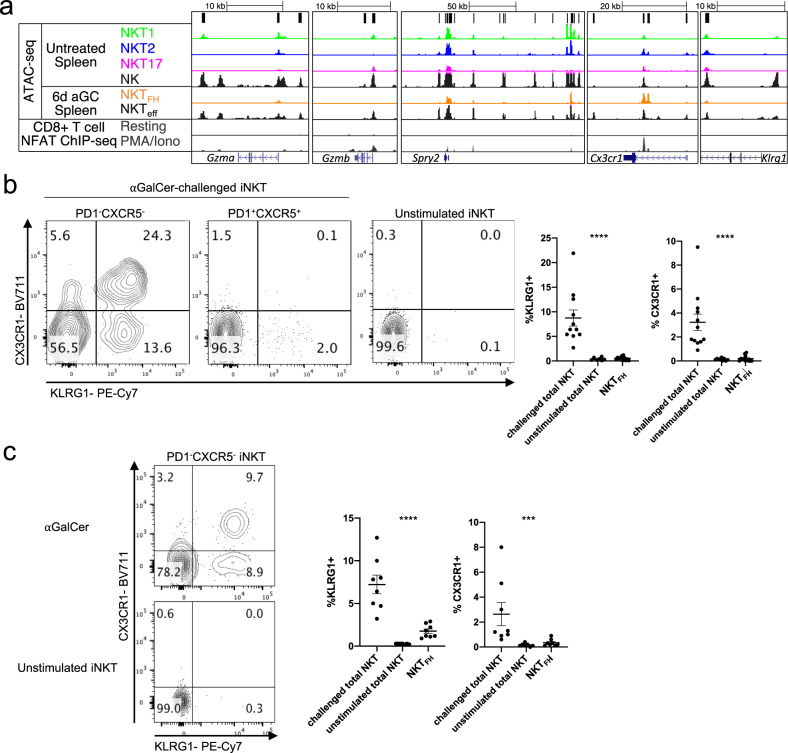
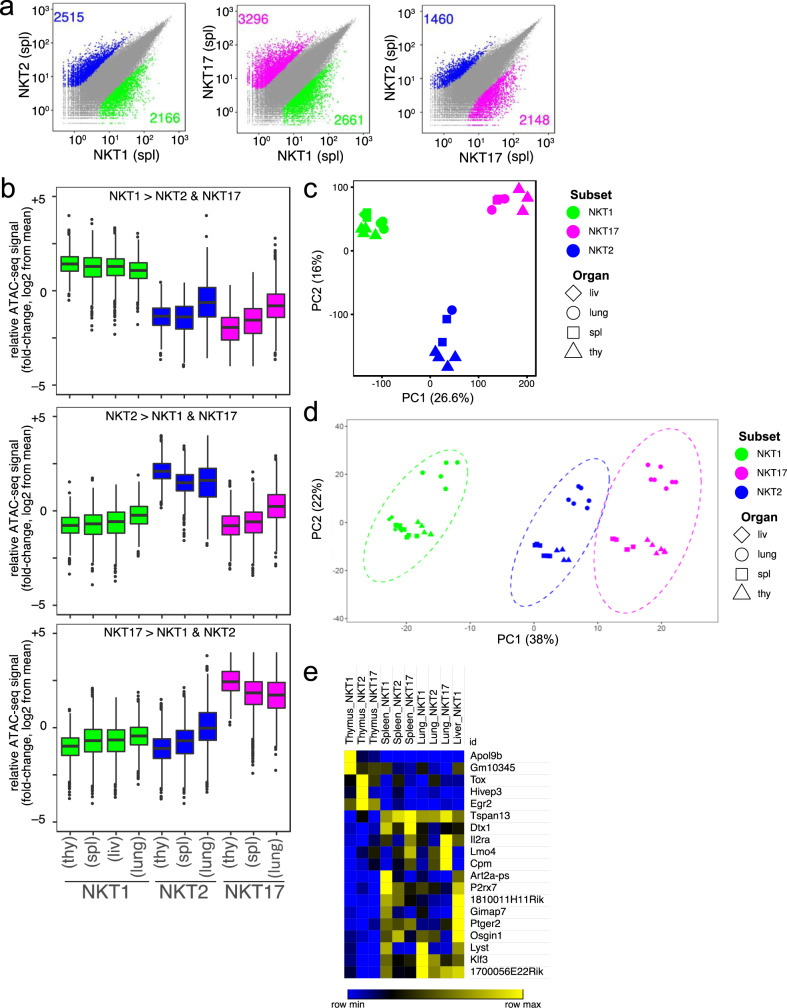
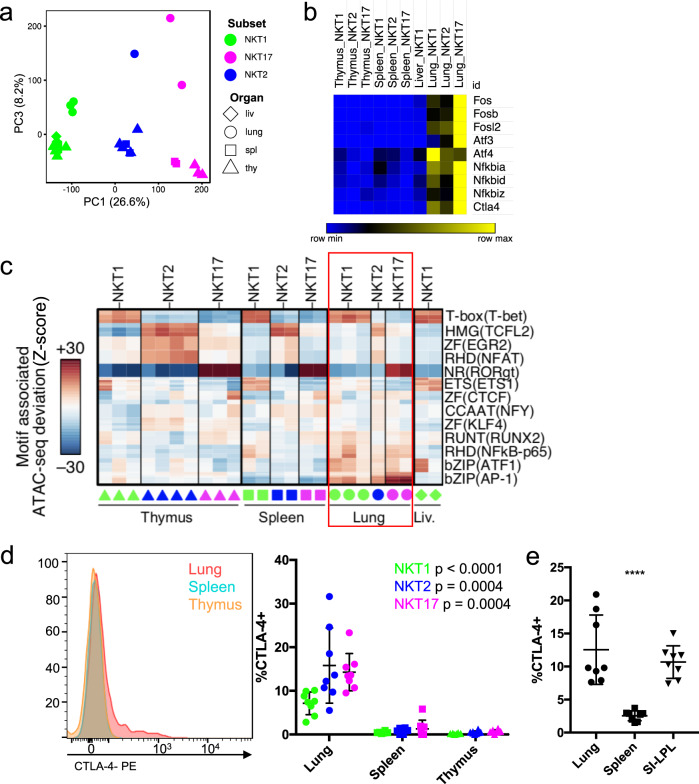
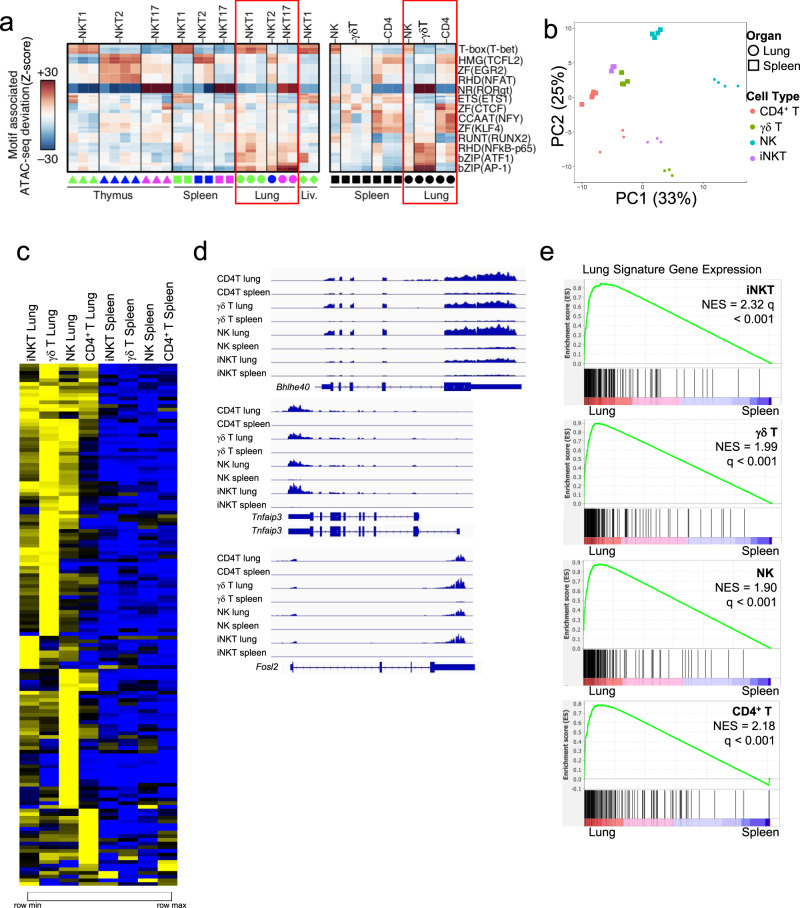
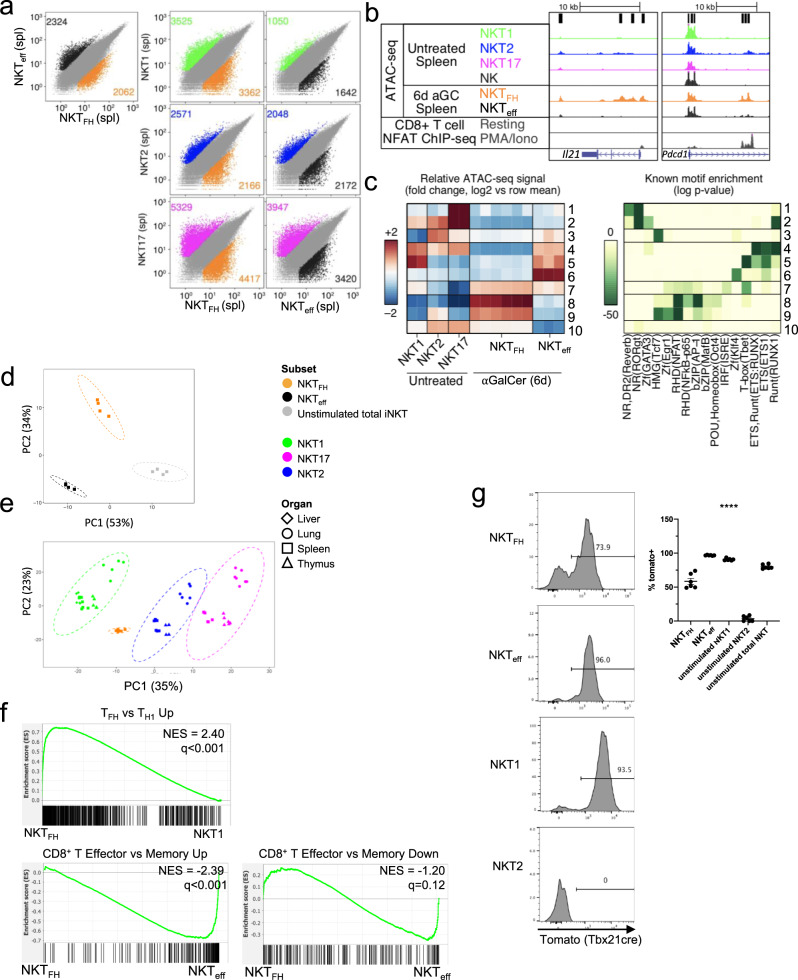
Invariant natural killer T cells (iNKT cells) differentiate into thymic and peripheral NKT1, NKT2 and NKT17 subsets. Here we use RNA-seq and ATAC-seq analyses and show iNKT subsets are similar, regardless of tissue location. Lung iNKT cell subsets possess the most distinct location-specific features, shared with other innate lymphocytes in the lung, possibly consistent with increased activation. Following antigenic stimulation, iNKT cells undergo chromatin and transcriptional changes delineating two populations: one similar to follicular helper T cells and the other NK or effector like. Phenotypic analysis indicates these changes are observed long-term, suggesting that iNKT cells gene programs are not fixed, but they are capable of chromatin remodeling after antigen to give rise to additional subsets.
不变自然杀伤 T 细胞 (iNKT 细胞) 分化为胸腺和外周 NKT1、NKT2 和 NKT17 亚群。在这里,我们使用 RNA-seq 和 ATAC-seq 分析表明,iNKT 亚群是相似的,而与组织位置无关。肺 iNKT 细胞亚群具有最独特的位置特异性特征,与肺中的其他固有淋巴细胞共享,可能与增加的激活一致。在抗原刺激后,iNKT 细胞经历染色质和转录变化,划定两个群体:一个类似于滤泡辅助 T 细胞,另一个类似于 NK 或效应细胞。表型分析表明,这些变化是长期观察到的,这表明 iNKT 细胞的基因程序不是固定的,但它们能够在抗原后重塑染色质,从而产生额外的亚群。