Zhou Zhangjian, Xie Xin, Wang Xuan, Zhang Xin, Li Wenxin, Sun Tuanhe, Cai Yifan, Wu Jianhua, Dang Chengxue, Zhang Hao
Department of Oncology, The Second Affiliated Hospital of Xi'an Jiaotong University, Xi'an, China.
Department of Surgical Oncology, The First Affiliated Hospital of Xi'an Jiaotong University, Xi'an, China.
Front Genet. 2021 Feb 16;12:623424. doi: 10.3389/fgene.2021.623424. eCollection 2021.
Colon cancer has a huge incidence and mortality worldwide every year. Immunotherapy could be a new therapeutic option for patients with advanced colon cancer. Tumor mutation burden (TMB) and immune infiltration are considered critical in immunotherapy but their characteristics in colon cancer are still controversial.
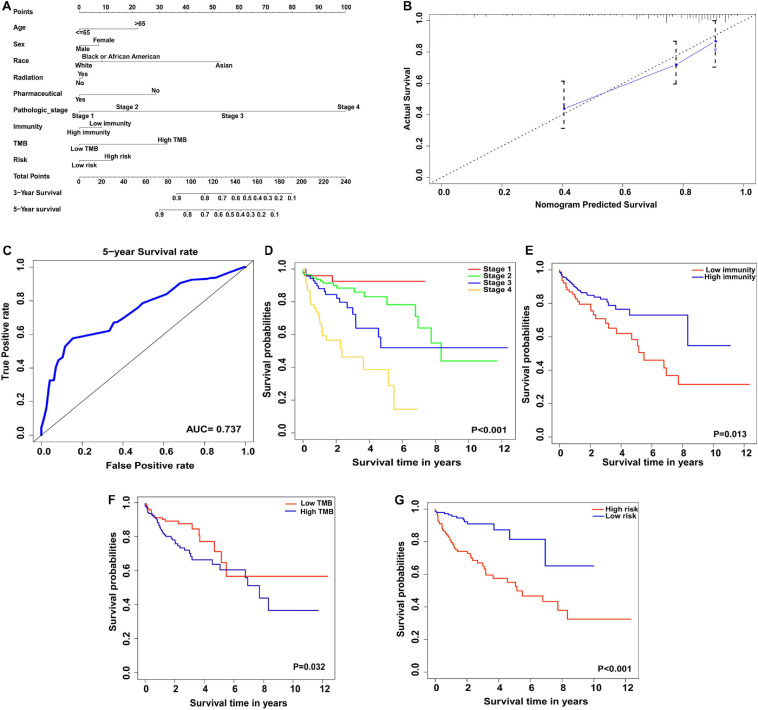
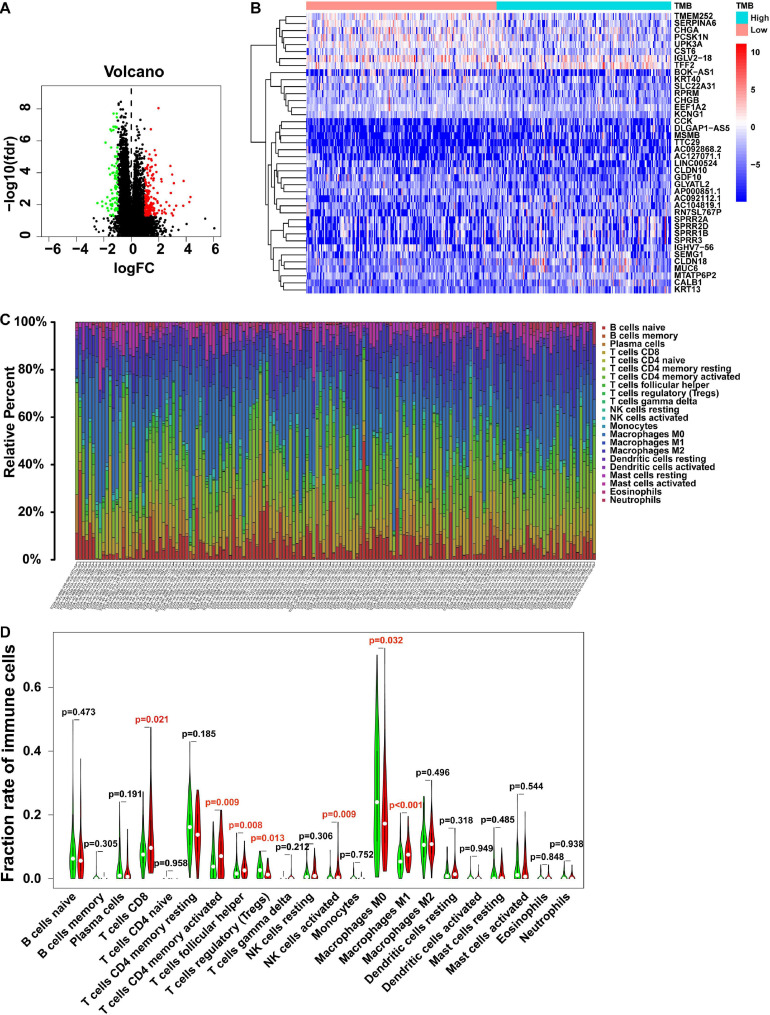
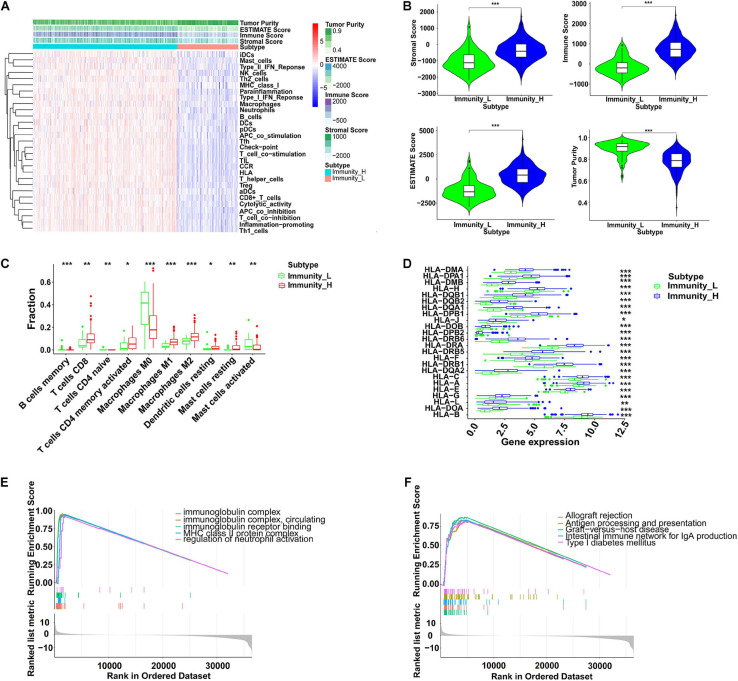
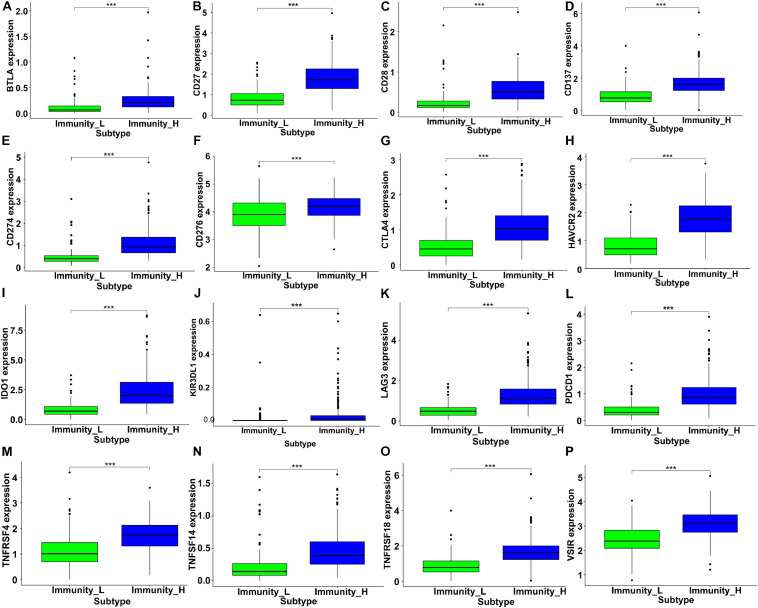
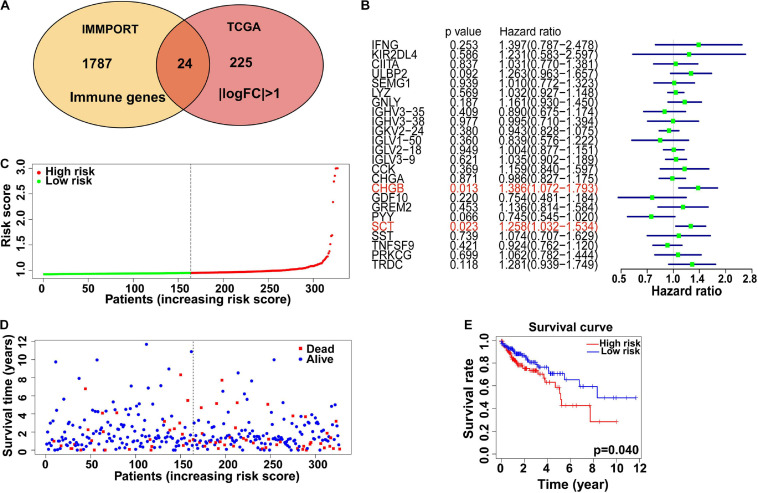
The somatic mutation, transcriptome, and clinical data of patients with colon cancer were obtained from the TCGA database. Patients were divided into low or high TMB groups using the median TMB value. Somatic mutation landscape, differentially expressed genes, and immune-related hub genes, Gene Ontology and KEGG, gene set enrichment, and immune infiltration analyses were investigated between the two TMB groups. Univariate and multivariate Cox analyses were utilized to construct a prognostic gene signature. The differences in immune infiltration, and the expression of HLA-related genes and checkpoint genes were investigated between the two immunity groups based on single sample gene set enrichment analysis. Finally, a nomogram of the prognostic prediction model integrating TMB, immune infiltration, and clinical parameters was established. Calibration plots and receiver operating characteristic curves (ROC) were drawn, and the C-index was calculated to assess the predictive ability.
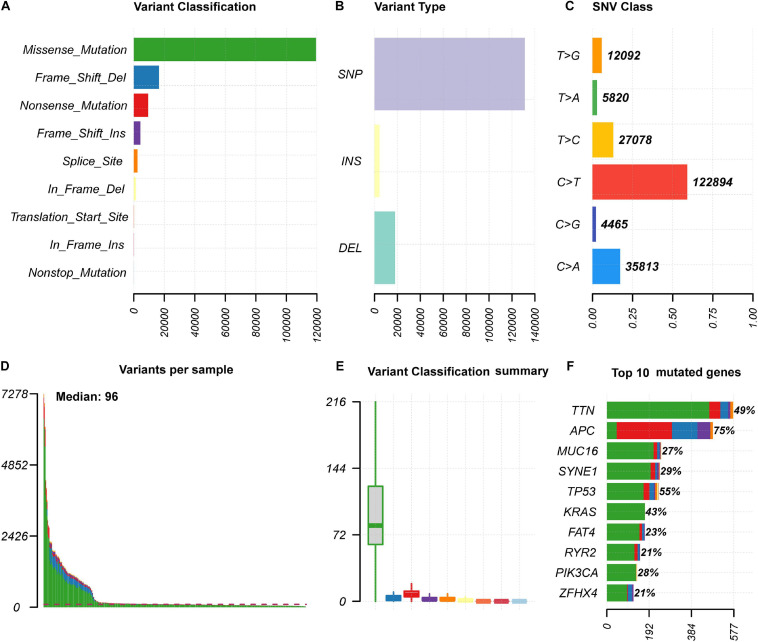
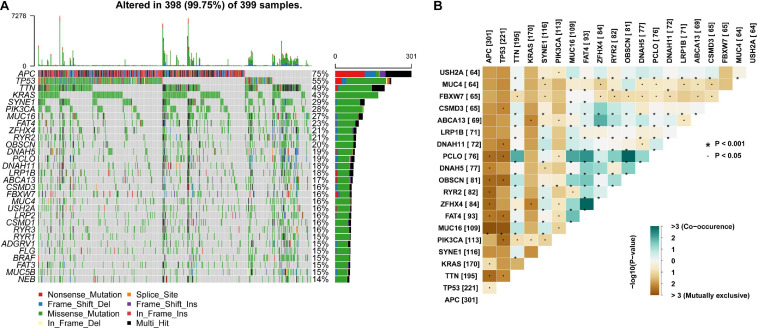
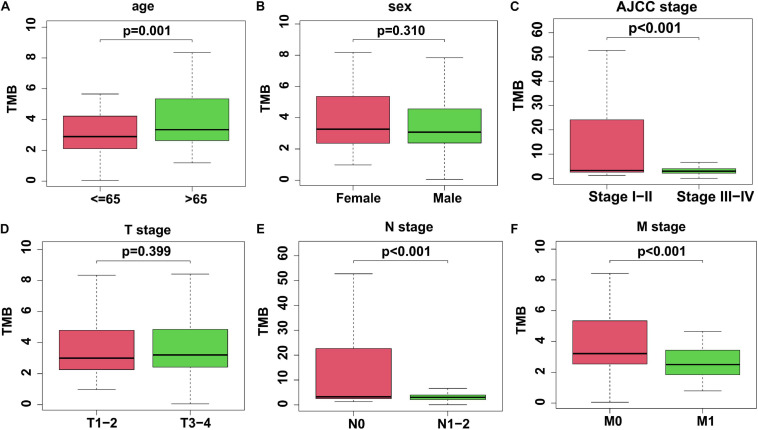
Missense mutations and single nucleotide polymorphisms were the major variant characteristics in colon cancer. The TMB level showed significant differences in N stage, M stage, pathological stage, and immune infiltration. CD8 T cells, activated memory CD4 T cells, activated NK cells, and M1 macrophages infiltrated more in the high-TMB group. The antigen processing and presentation signaling pathway was enriched in the high-TMB group. Two immune related genes (CHGB and SCT) were identified to be correlated with colon cancer survival (HR = 1.39, = 0.01; HR = 1.26, = 0.02, respectively). Notably, the expression of SCT was identified as a risk factor in the immune risk model, in which high risk patients showed poorer survival ( = 0.04). High immunity status exhibited significant correlations with immune response pathways, HLA-related genes, and immune checkpoint genes. Finally, including nine factors, our nomogram prediction model showed better calibration (C-index = 0.764) and had an AUC of 0.737.
In this study, we investigated the patterns and prognostic roles of TMB and immune infiltration in colon cancer, which provided new insights into the tumor microenvironment and immunotherapies and the development of a novel nomogram prognostic prediction model for patients with colon cancer.
每年结肠癌在全球范围内的发病率和死亡率都很高。免疫疗法可能是晚期结肠癌患者的一种新的治疗选择。肿瘤突变负荷(TMB)和免疫浸润在免疫疗法中被认为至关重要,但其在结肠癌中的特征仍存在争议。
从TCGA数据库中获取结肠癌患者的体细胞突变、转录组和临床数据。使用中位数TMB值将患者分为低TMB组或高TMB组。研究了两组TMB之间的体细胞突变图谱、差异表达基因、免疫相关枢纽基因、基因本体论和KEGG、基因集富集以及免疫浸润分析。采用单因素和多因素Cox分析构建预后基因特征。基于单样本基因集富集分析,研究了两组免疫组之间免疫浸润、HLA相关基因和检查点基因表达的差异。最后,建立了整合TMB、免疫浸润和临床参数的预后预测模型列线图。绘制校准图和受试者工作特征曲线(ROC),并计算C指数以评估预测能力。
错义突变和单核苷酸多态性是结肠癌的主要变异特征。TMB水平在N分期、M分期、病理分期和免疫浸润方面存在显著差异。高TMB组中CD8 T细胞、活化记忆CD4 T细胞、活化NK细胞和M1巨噬细胞浸润更多。高TMB组中抗原加工和呈递信号通路富集。鉴定出两个免疫相关基因(CHGB和SCT)与结肠癌生存相关(HR = 1.39,P = 0.01;HR = 1.26,P = 0.02)。值得注意的是,SCT的表达被确定为免疫风险模型中的一个危险因素,其中高风险患者的生存率较差(P = 0.04)。高免疫状态与免疫反应通路、HLA相关基因和免疫检查点基因显著相关。最后,我们的列线图预测模型包括九个因素,显示出更好的校准(C指数 = 0.764),AUC为0.737。
在本研究中,我们研究了TMB和免疫浸润在结肠癌中的模式和预后作用,这为肿瘤微环境和免疫疗法以及为结肠癌患者开发新的列线图预后预测模型提供了新的见解。