Kaviyarasan Vaishak, Das Alakesh, Deka Dikshita, Saha Biki, Banerjee Antara, Sharma Neeta Raj, Duttaroy Asim K, Pathak Surajit
Faculty of Allied Health Sciences, Chettinad Hospital and Research Institute (CHRI), Chettinad Academy of Research and Education (CARE), Kelambakkam, Chennai, Tamil Nadu, 603103, India.
School of Bioengineering and Biosciences, Lovely Professional University, Phagwara, Punjab, India.
Int J Colorectal Dis. 2024 Dec 28;40(1):1. doi: 10.1007/s00384-024-04790-w.
Colorectal cancer (CRC) remains one of the leading causes of cancer-related mortality worldwide. Metastatic colorectal cancer (mCRC) continues to present significant challenges, particularly in patients with proficient mismatch repair/microsatellite stable (pMMR/MSS) tumors. This narrative review aims to provide recent developments in immunotherapy for CRC treatment, focusing on its efficacy and challenges.
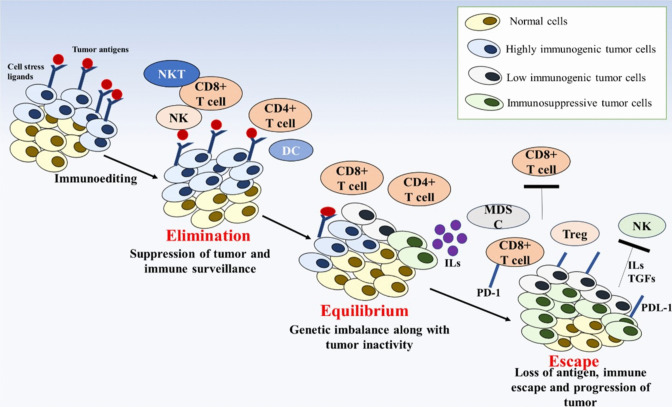
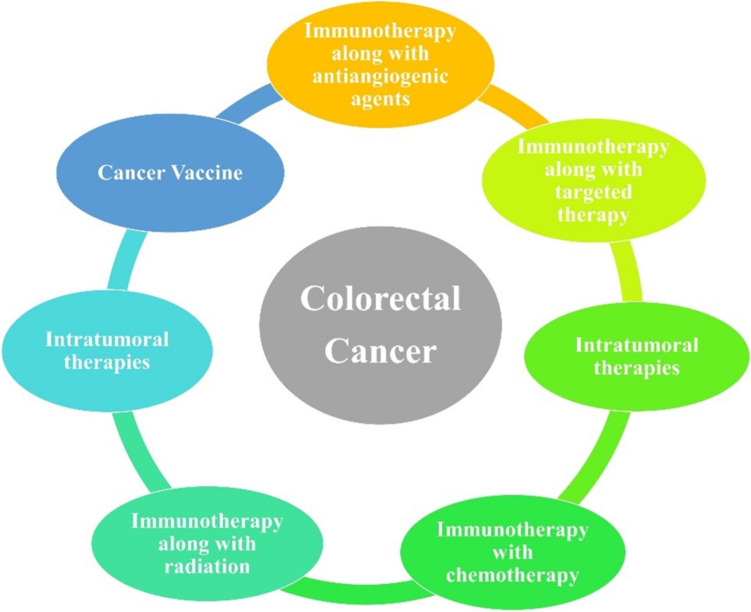
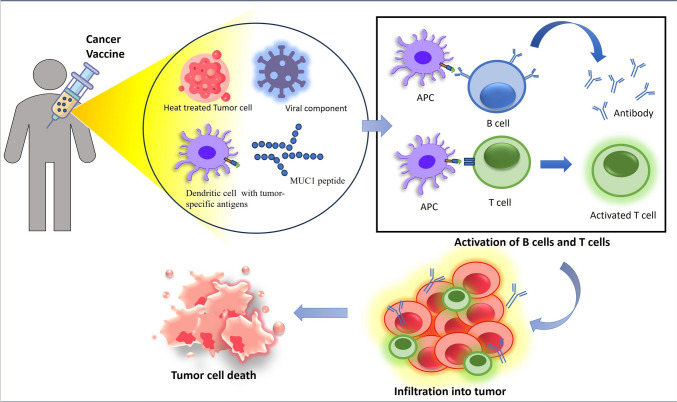
This review discussed the various immunotherapeutic strategies for CRC treatment, including immune checkpoint inhibitors (ICIs) targeting PD-1 and PD-L1, combination therapies involving ICIs with other modalities, chimeric antigen receptor T-cell (CAR-T) cell therapy, and cancer vaccines. The role of the tumor microenvironment and immune evasion mechanisms was also explored to understand their impact on the effectiveness of these therapies.
This review provides a comprehensive update of recent advancements in immunotherapy for CRC, highlighting the potential of various immunotherapeutic approaches, including immune checkpoint inhibitors, combination therapies, CAR-T therapy, and vaccination strategies. The results of checkpoint inhibitors, particularly in patients with MSI-H/dMMR tumors, which have significant improvements in survival rates have been observed. Furthermore, this review also addresses the challenges faced in treating pMMR/MSS CRC, which remains resistant to immunotherapy.
Immunotherapy plays a significant role in the treatment of CRC, particularly in patients with MSI-H/dMMR tumors. However, many challenges remain, especially in treating pMMR/MSS CRC. This review discussed the need for further research into combination therapies, biomarker development, CAR-T cell therapy, and a deeper understanding of immune evasion mechanisms for CRC treatment.
结直肠癌(CRC)仍是全球癌症相关死亡的主要原因之一。转移性结直肠癌(mCRC)仍然带来重大挑战,尤其是在错配修复功能正常/微卫星稳定(pMMR/MSS)肿瘤患者中。本叙述性综述旨在介绍结直肠癌免疫治疗的最新进展,重点关注其疗效和挑战。
本综述讨论了结直肠癌治疗的各种免疫治疗策略,包括靶向PD-1和PD-L1的免疫检查点抑制剂(ICI)、ICI与其他方式的联合疗法、嵌合抗原受体T细胞(CAR-T)疗法以及癌症疫苗。还探讨了肿瘤微环境和免疫逃逸机制的作用,以了解它们对这些疗法有效性的影响。
本综述全面更新了结直肠癌免疫治疗的最新进展,强调了各种免疫治疗方法的潜力,包括免疫检查点抑制剂、联合疗法、CAR-T疗法和疫苗接种策略。已观察到检查点抑制剂的结果,特别是在微卫星高度不稳定/错配修复缺陷(MSI-H/dMMR)肿瘤患者中,生存率有显著提高。此外,本综述还讨论了治疗pMMR/MSS结直肠癌所面临的挑战,这类肿瘤对免疫治疗仍具有抗性。
免疫治疗在结直肠癌治疗中发挥着重要作用,特别是在MSI-H/dMMR肿瘤患者中。然而,仍然存在许多挑战,尤其是在治疗pMMR/MSS结直肠癌方面。本综述讨论了进一步研究联合疗法、生物标志物开发、CAR-T细胞疗法以及更深入了解结直肠癌治疗中免疫逃逸机制的必要性。