Section of Cell and Developmental Biology, University of California, San Diego, San Diego, United States.
Biophysics Graduate Group, University of California, Berkeley, Berkeley, United States.
Elife. 2021 Mar 5;10:e65939. doi: 10.7554/eLife.65939.
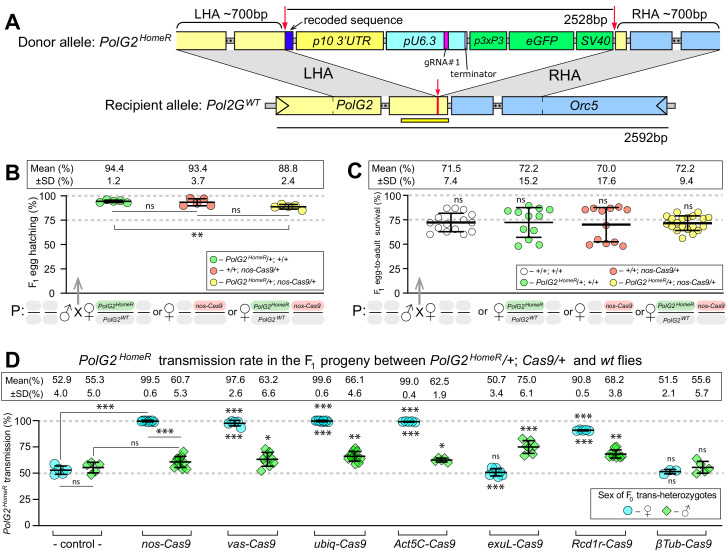
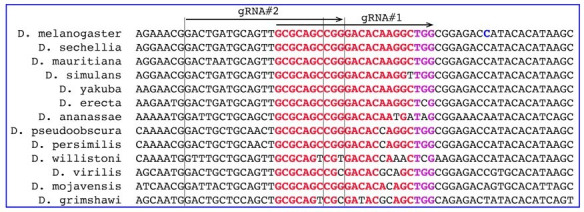
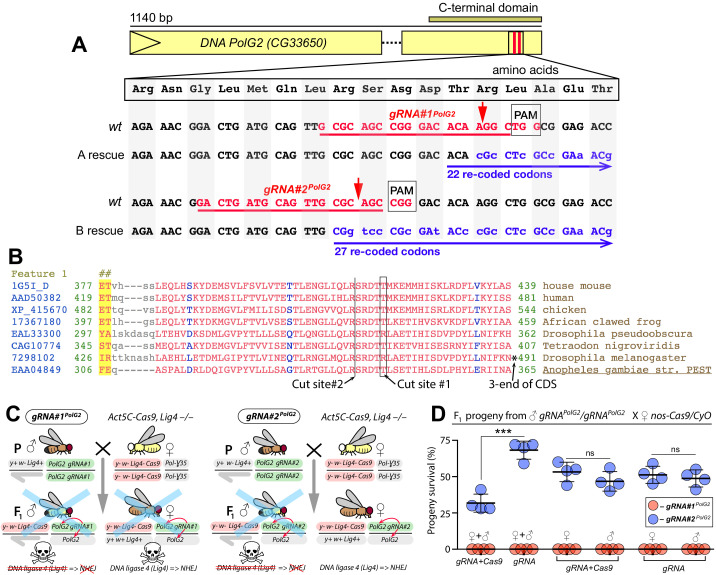
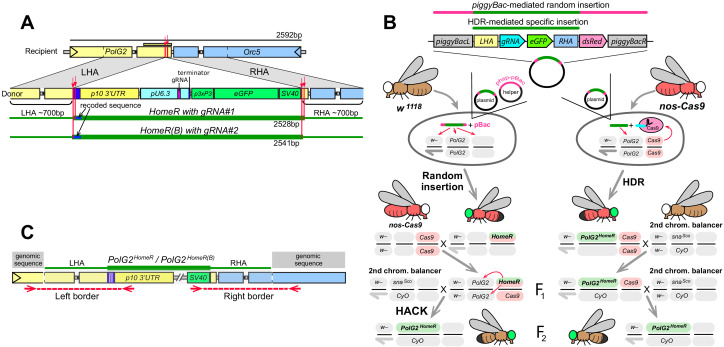
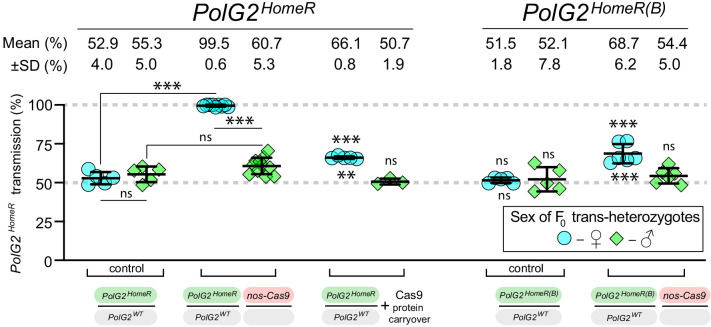
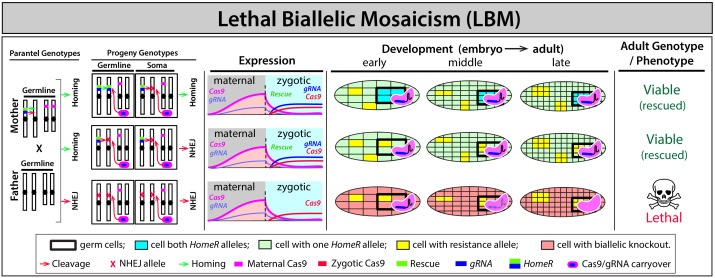
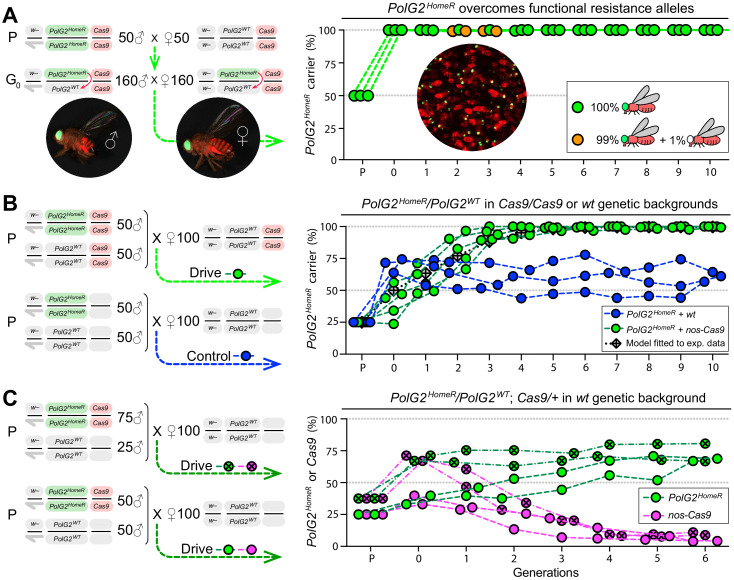
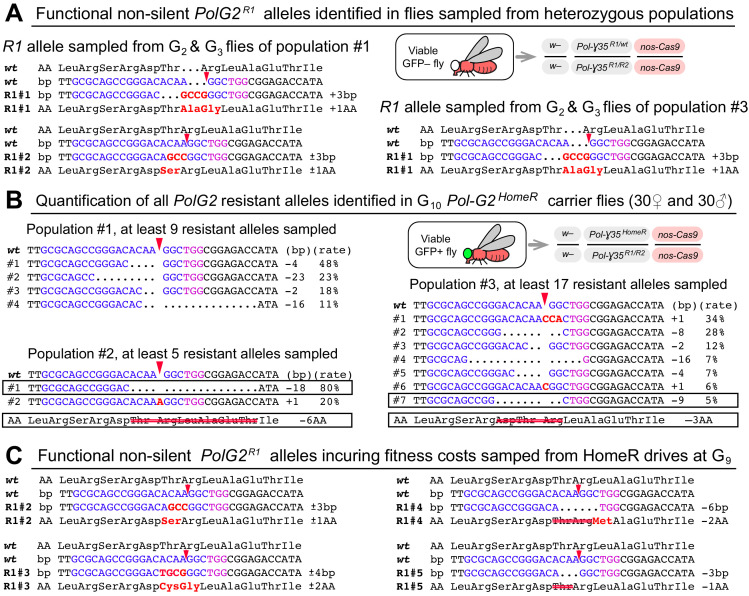
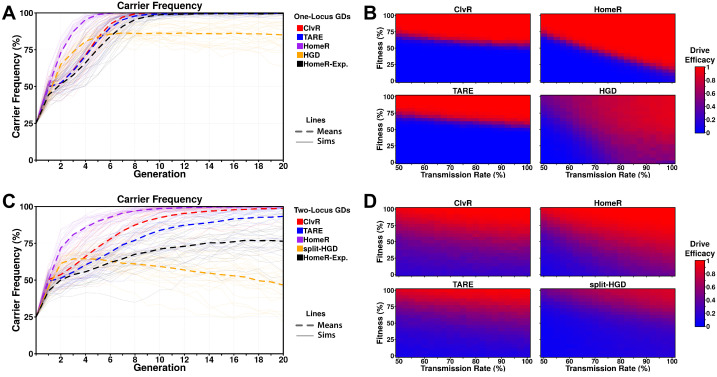
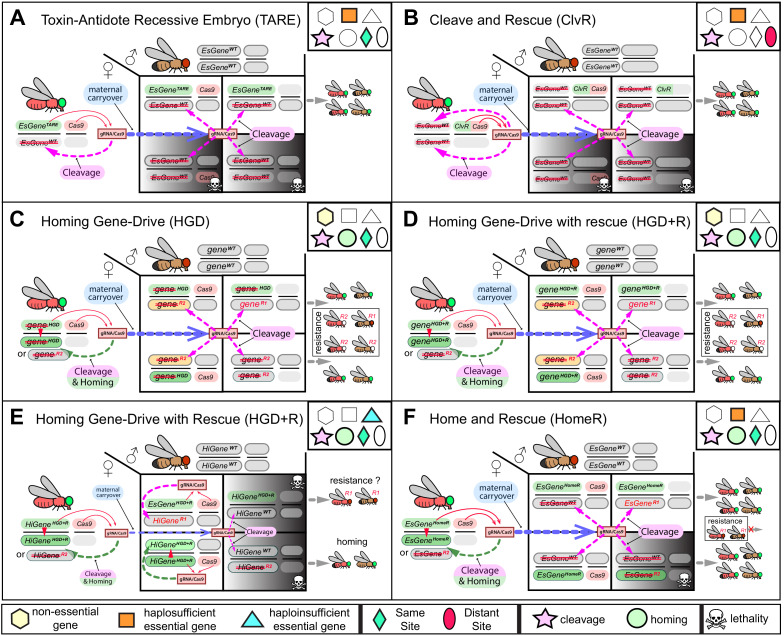
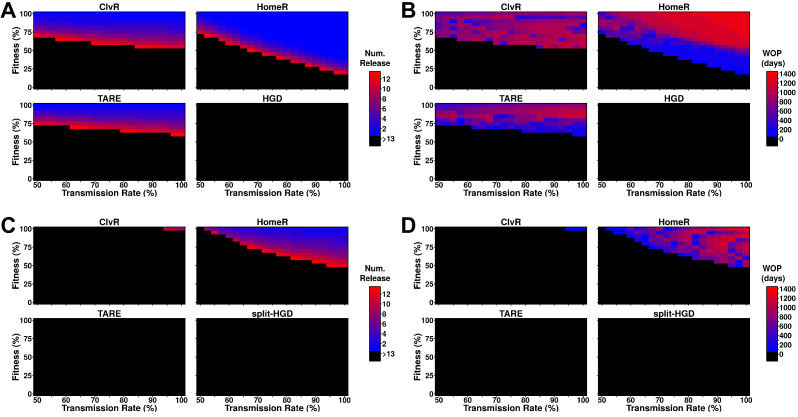
Homing-based gene drives, engineered using CRISPR/Cas9, have been proposed to spread desirable genes throughout populations. However, invasion of such drives can be hindered by the accumulation of resistant alleles. To limit this obstacle, we engineer a confinable population modification home-and-rescue (HomeR) drive in targeting an essential gene. In our experiments, resistant alleles that disrupt the target gene function were recessive lethal and therefore disadvantaged. We demonstrate that HomeR can achieve an increase in frequency in population cage experiments, but that fitness costs due to the Cas9 insertion limit drive efficacy. Finally, we conduct mathematical modeling comparing HomeR to contemporary gene drive architectures for population modification over wide ranges of fitness costs, transmission rates, and release regimens. HomeR could potentially be adapted to other species, as a means for safe, confinable, modification of wild populations.
基于同源重组的基因驱动系统,利用 CRISPR/Cas9 技术进行设计,可以在种群中传播理想的基因。然而,这种驱动系统的入侵可能会受到抗性等位基因积累的阻碍。为了限制这一障碍,我们设计了一种针对必需基因的可限制种群修饰的同源和救援(HomeR)驱动系统。在我们的实验中,破坏靶基因功能的抗性等位基因是隐性致死的,因此处于劣势。我们证明 HomeR 可以在种群笼实验中增加频率,但由于 Cas9 插入导致的适应度成本限制了驱动效率。最后,我们进行了数学建模,比较了 HomeR 与当代基因驱动系统在广泛的适应度成本、传播率和释放方案下对种群修饰的效果。HomeR 可能适用于其他物种,作为一种安全、可限制、对野生种群进行修饰的手段。