Department of Plant Breeding and Biotechnology, Faculty of Agricultural Sciences and Food Industries, Science and Research Branch, Islamic Azad University, Tehran, Iran.
Department of Agronomy and Plant Breeding, Faculty of Agricultural Sciences and Engineering, College of Agriculture and Natural Resources, University of Tehran, Tehran, Alborz, Iran.
PLoS One. 2021 Mar 5;16(3):e0247824. doi: 10.1371/journal.pone.0247824. eCollection 2021.
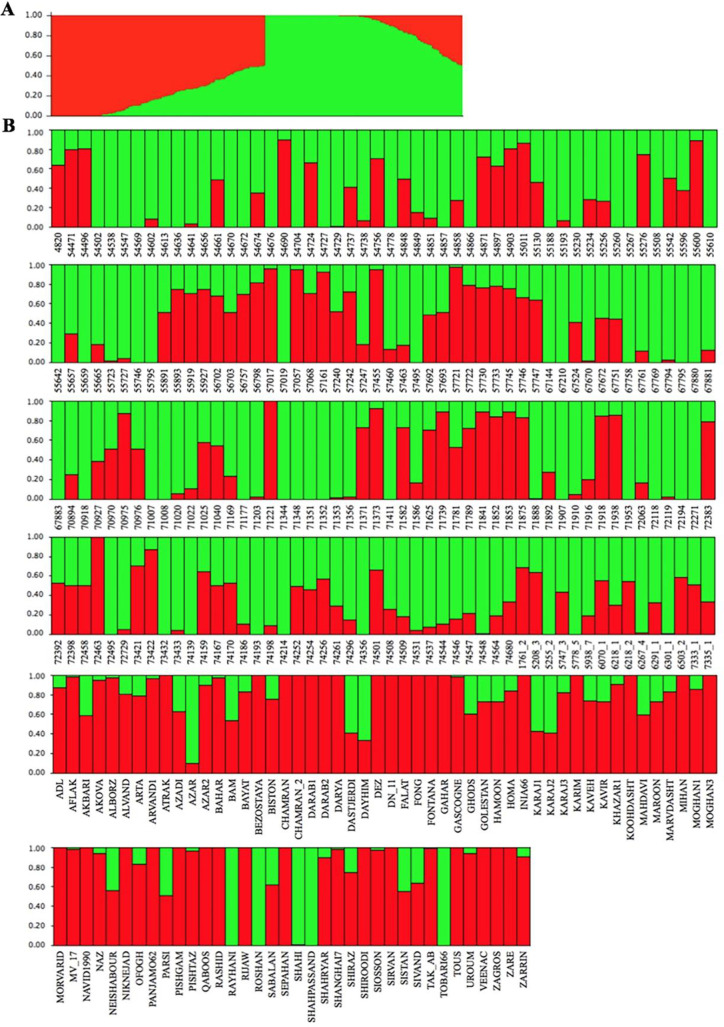
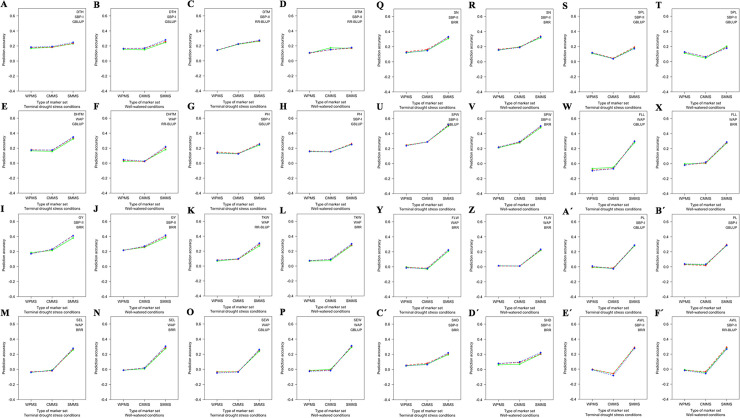
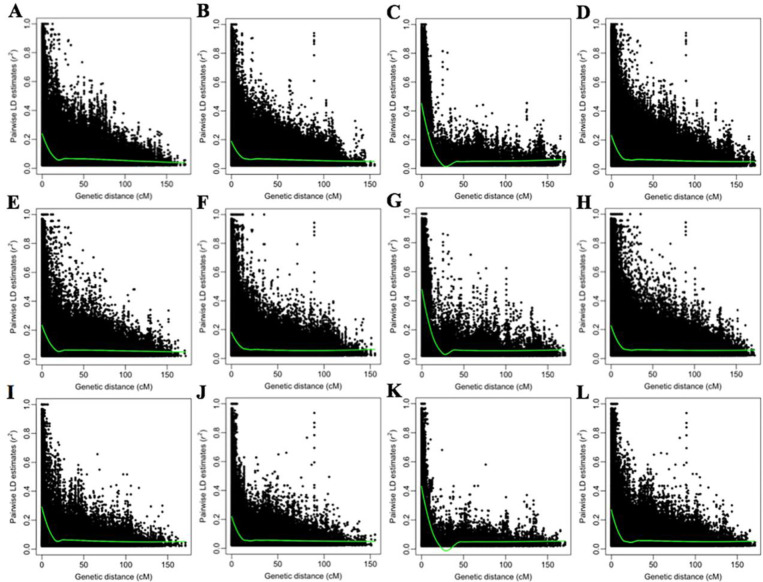
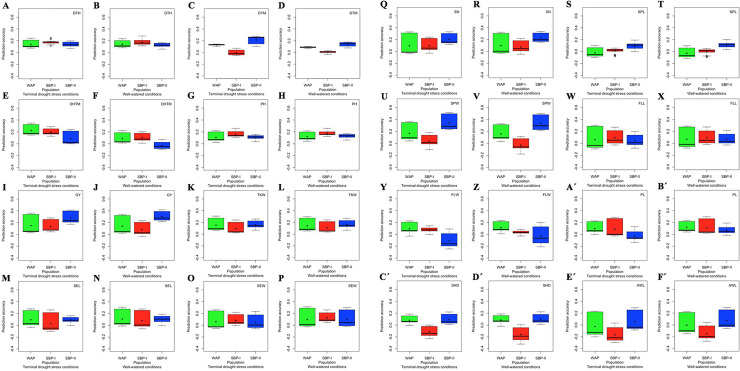
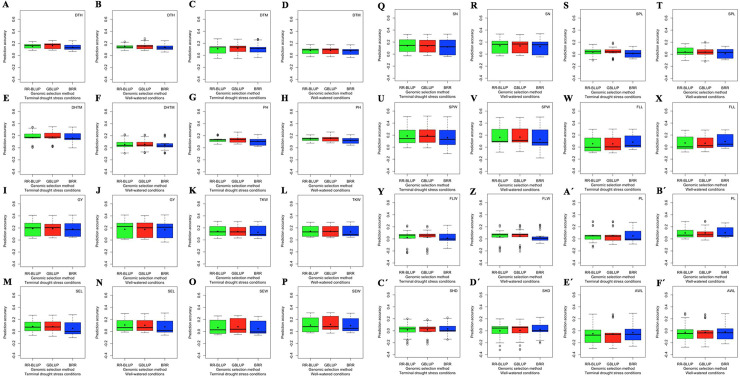
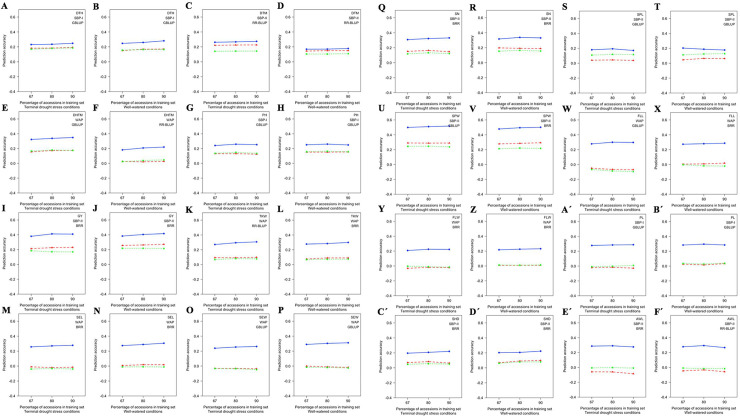
The present study aimed to improve the accuracy of genomic prediction of 16 agronomic traits in a diverse bread wheat (Triticum aestivum L.) germplasm under terminal drought stress and well-watered conditions in semi-arid environments. An association panel including 87 bread wheat cultivars and 199 landraces from Iran bread wheat germplasm was planted under two irrigation systems in semi-arid climate zones. The whole association panel was genotyped with 9047 single nucleotide polymorphism markers using the genotyping-by-sequencing method. A number of 23 marker-trait associations were selected for traits under each condition, whereas 17 marker-trait associations were common between terminal drought stress and well-watered conditions. The identified marker-trait associations were mostly single nucleotide polymorphisms with minor allele effects. This study examined the effect of population structure, genomic selection method (ridge regression-best linear unbiased prediction, genomic best-linear unbiased predictions, and Bayesian ridge regression), training set size, and type of marker set on genomic prediction accuracy. The prediction accuracies were low (-0.32) to moderate (0.52). A marker set including 93 significant markers identified through genome-wide association studies with P values ≤ 0.001 increased the genomic prediction accuracy for all traits under both conditions. This study concluded that obtaining the highest genomic prediction accuracy depends on the extent of linkage disequilibrium, the genetic architecture of trait, genetic diversity of the population, and the genomic selection method. The results encouraged the integration of genome-wide association study and genomic selection to enhance genomic prediction accuracy in applied breeding programs.
本研究旨在提高在半干旱环境下终端干旱胁迫和充分灌溉条件下,对来自伊朗小麦种质资源的 87 个小麦品种和 199 个地方品种的 16 个农艺性状进行基因组预测的准确性。在半干旱气候带,采用两种灌溉制度种植了包括 87 个小麦品种和 199 个地方品种的关联群体。利用全基因组关联分析方法,对整个关联群体进行了 9047 个单核苷酸多态性标记的基因分型。在每种条件下,选择了 23 个与性状相关的标记-性状关联,而在终端干旱胁迫和充分灌溉条件下有 17 个标记-性状关联是共同的。鉴定的标记-性状关联大多是具有次要等位基因效应的单核苷酸多态性。本研究考察了群体结构、基因组选择方法(岭回归-最佳线性无偏预测、基因组最佳线性无偏预测和贝叶斯岭回归)、训练集大小和标记集类型对基因组预测准确性的影响。预测准确性较低(-0.32)到中等(0.52)。通过全基因组关联研究,确定了 93 个具有 P 值≤0.001 的显著标记,增加了两种条件下所有性状的基因组预测准确性。本研究得出结论,获得最高的基因组预测准确性取决于连锁不平衡程度、性状的遗传结构、群体的遗传多样性和基因组选择方法。结果鼓励整合全基因组关联研究和基因组选择,以提高应用育种计划中的基因组预测准确性。