Faculty of Medicine, University of Algiers, Algiers 16000, Algeria.
Faculty of Medicine, Ain Shams University, Cairo 11591, Egypt.
Int J Mol Sci. 2021 Feb 24;22(5):2258. doi: 10.3390/ijms22052258.
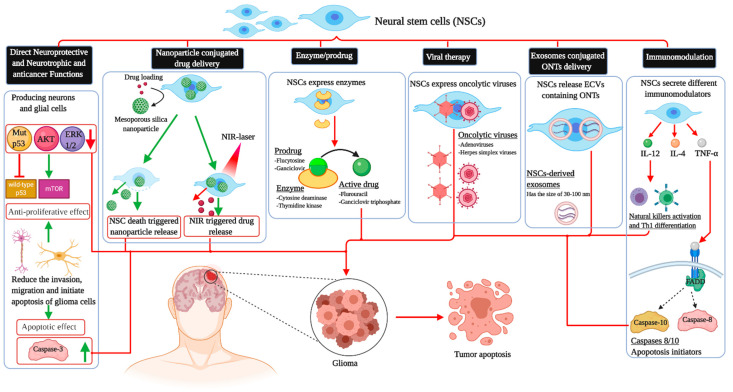
Gliomas, which account for nearly a quarter of all primary CNS tumors, present significant contemporary therapeutic challenges, particularly the highest-grade variant (glioblastoma multiforme), which has an especially poor prognosis. These difficulties are due to the tumor's aggressiveness and the adverse effects of radio/chemotherapy on the brain. Stem cell therapy is an exciting area of research being explored for several medical issues. Neural stem cells, normally present in the subventricular zone and the hippocampus, preferentially migrate to tumor masses. Thus, they have two main advantages: They can minimize the side effects associated with systemic radio/chemotherapy while simultaneously maximizing drug delivery to the tumor site. Another feature of stem cell therapy is the variety of treatment approaches it allows. Stem cells can be genetically engineered into expressing a wide variety of immunomodulatory substances that can inhibit tumor growth. They can also be used as delivery vehicles for oncolytic viral vectors, which can then be used to combat the tumorous mass. An alternative approach would be to combine stem cells with prodrugs, which can subsequently convert them into the active form upon migration to the tumor mass. As with any therapeutic modality still in its infancy, much of the research regarding their use is primarily based upon knowledge gained from animal studies, and a number of ongoing clinical trials are currently investigating their effectiveness in humans. The aim of this review is to highlight the current state of stem cell therapy in the treatment of gliomas, exploring the different mechanistic approaches, clinical applicability, and the existing limitations.
神经胶质瘤占所有原发性中枢神经系统肿瘤的近四分之一,目前存在重大的治疗挑战,尤其是最高级别变体(多形性胶质母细胞瘤),其预后尤其差。这些困难是由于肿瘤的侵袭性和放射/化疗对大脑的不良影响。干细胞治疗是正在探索的几个医学问题的一个令人兴奋的研究领域。神经干细胞通常存在于侧脑室区和海马区,优先迁移到肿瘤部位。因此,它们有两个主要优点:它们可以最大限度地减少与全身放射/化疗相关的副作用,同时最大限度地将药物输送到肿瘤部位。干细胞治疗的另一个特点是它允许多种治疗方法。可以将干细胞基因工程改造为表达多种免疫调节物质,从而抑制肿瘤生长。它们也可以用作溶瘤病毒载体的传递载体,然后可以用于对抗肿瘤。另一种方法是将干细胞与前药结合,当它们迁移到肿瘤部位时,前药可以将它们转化为活性形式。与任何仍处于起步阶段的治疗方式一样,关于其用途的大部分研究主要基于从动物研究中获得的知识,目前正在进行多项临床试验来研究它们在人类中的有效性。本文旨在强调干细胞治疗在治疗神经胶质瘤中的现状,探讨不同的机制方法、临床适用性和现有的局限性。