MOA Key Laboratory of Crop Ecophysiology and Farming System in the Middle Reaches of the Yangtze River, College of Plant Science and Technology, Huazhong Agricultural University, Wuhan 430070, China.
Int J Mol Sci. 2021 Feb 24;22(5):2260. doi: 10.3390/ijms22052260.
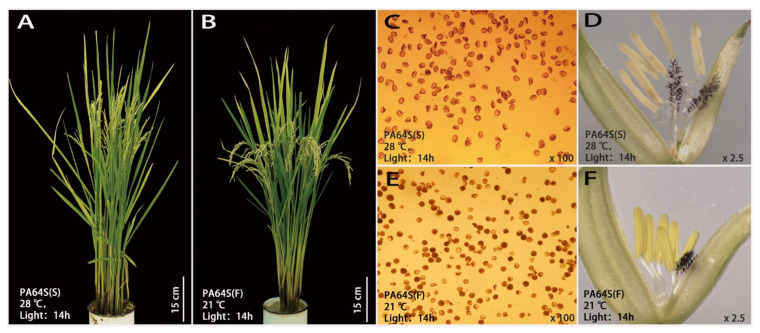
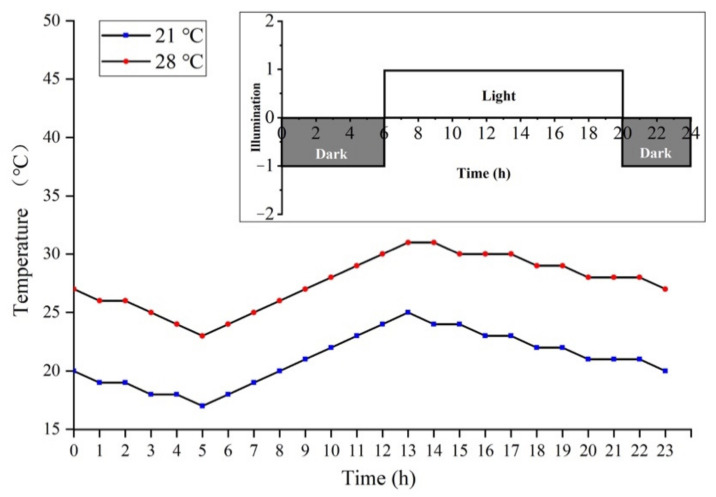
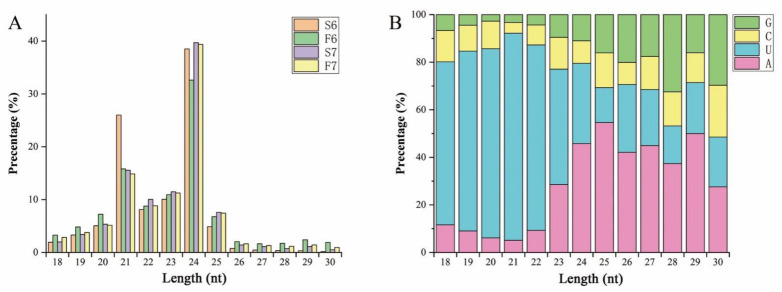
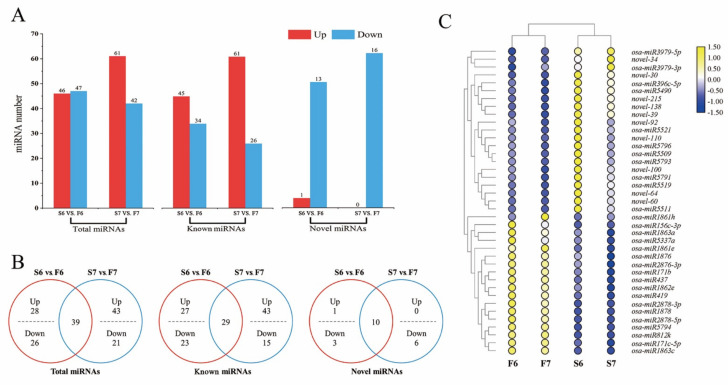
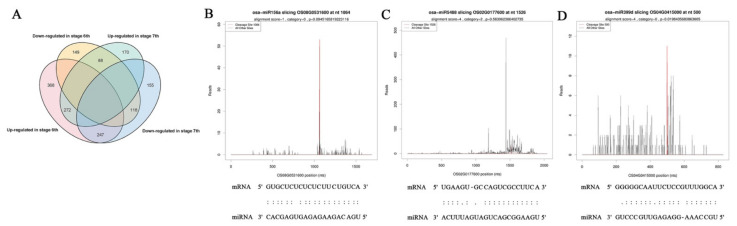
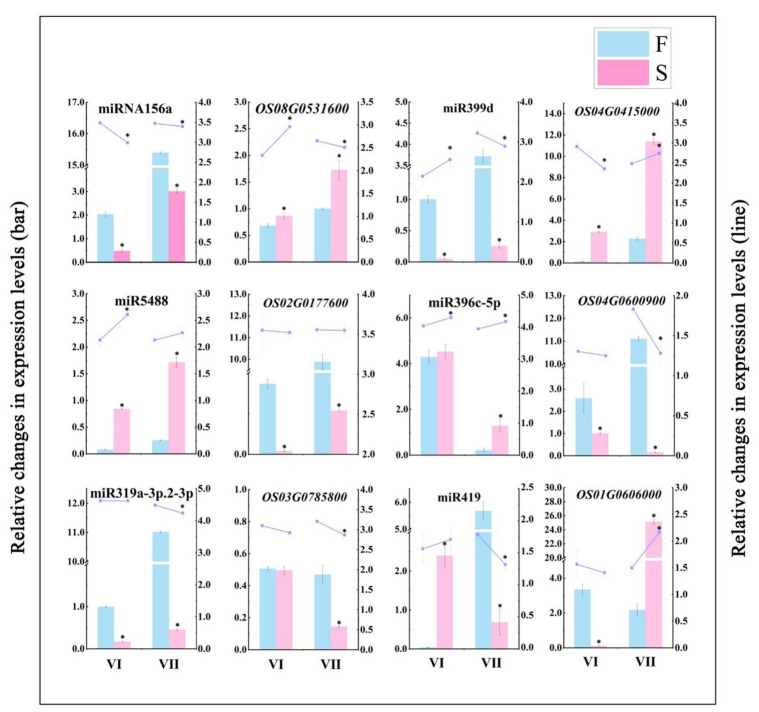
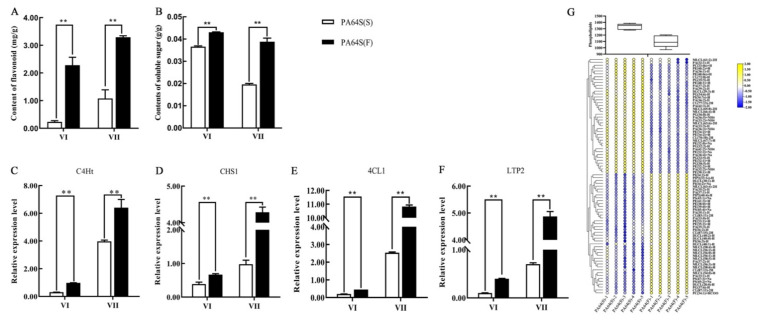
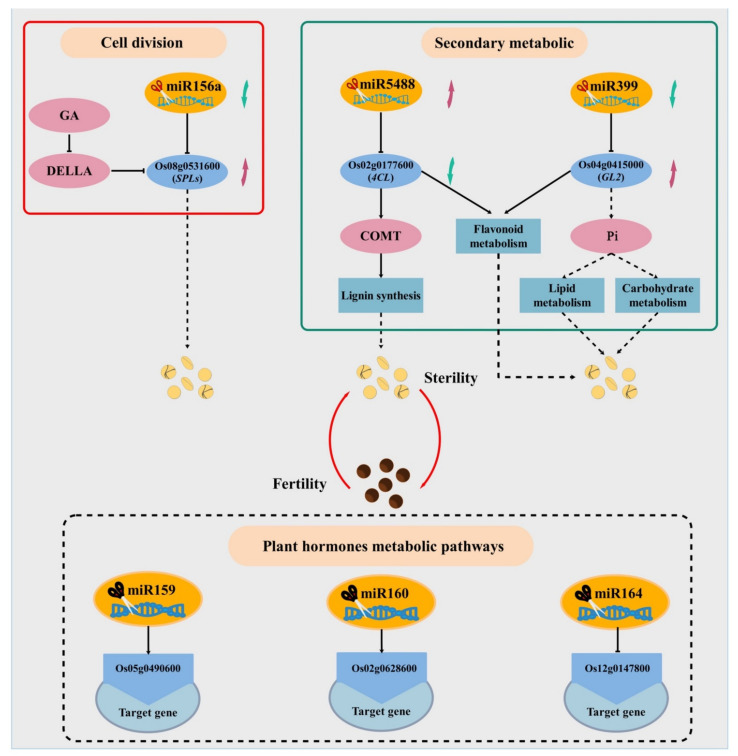
A photoperiod- and thermo-sensitive genic male sterile (PTGMS) line is the basic material for two-hybrid rice and is an important genetic breeding resource. Peiai64S (PA64S) is an important germplasm resource of PTGMS rice, and it has been applied to two-line hybrid rice systems in China. Pollen fertility in PA64S is regulated by the temperature and photoperiod, but the mechanism of the fertility transition is unclear. In this study, we obtained the male fertile plant PA64S(F) and the male sterile plant PA64S(S) by controlling different temperatures under long light conditions and used the male fertile and sterile plants to investigate the role of microRNAs (miRNAs) in regulating male fertility in rice. We performed the small RNA library sequencing of anthers from PA64S(S) and PA64S(F). A total of 196 miRNAs were identified-166 known miRNAs among 27 miRNA families and 30 novel miRNAs. In the transcriptome analysis, the Gene Ontology (GO) and Kyoto Encyclopedia of Genes and Genomes (KEGG) pathway analysis of differentially expressed genes revealed significant enrichment in the synthesis and metabolism of fatty acids and some secondary metabolism pathways such as fatty acid metabolism and phenylalanine metabolism. With a comprehensive analysis of miRNA, transcriptome, and degradome sequencing, we identified that 13 pairs of miRNA/target genes regulated male fertility in rice by responding to temperature change, among which the miR156, miR5488, and miR399 affect the male fertility of PA64S by influencing SPLs, the lignin synthesis of anther walls, and the flavonoid metabolism pathway. The results provide a new understanding of PTGMS rice, which will help us better understand the potential regulatory mechanisms of male sterility in the future.
光温敏核雄性不育(PTGMS)系是两系杂交稻的基础材料,是重要的遗传育种资源。培矮 64S(PA64S)是 PTGMS 水稻的重要种质资源,已在中国应用于两系杂交稻系统。PA64S 的花粉育性受温度和光周期调控,但育性转换的机制尚不清楚。本研究通过长光照条件下控制不同温度获得了雄性可育植物 PA64S(F)和雄性不育植物 PA64S(S),并利用雄性可育和不育植株研究了 microRNAs(miRNAs)在调控水稻雄性育性中的作用。我们对 PA64S(S)和 PA64S(F)的花药进行了小 RNA 文库测序。共鉴定出 196 个 miRNA-27 个 miRNA 家族中的 166 个已知 miRNA 和 30 个新 miRNA。在转录组分析中,差异表达基因的基因本体论(GO)和京都基因与基因组百科全书(KEGG)通路分析显示,脂肪酸的合成和代谢以及一些次级代谢途径(如脂肪酸代谢和苯丙氨酸代谢)显著富集。通过对 miRNA、转录组和降解组测序的综合分析,我们鉴定出 13 对 miRNA/靶基因通过响应温度变化调控水稻的雄性育性,其中 miR156、miR5488 和 miR399 通过影响 SPLs、花药壁木质素合成和类黄酮代谢途径影响 PA64S 的雄性育性。这些结果为 PTGMS 水稻提供了新的认识,有助于我们更好地理解未来雄性不育的潜在调控机制。