Department of Veterinary Preventive Medicine, Food Animal Health Research Program (FAHRP), Wooster, OH 44691, USA.
The Ohio Supercomputer Center (OSC), Columbus, OH 43212, USA.
Viruses. 2021 Feb 13;13(2):292. doi: 10.3390/v13020292.
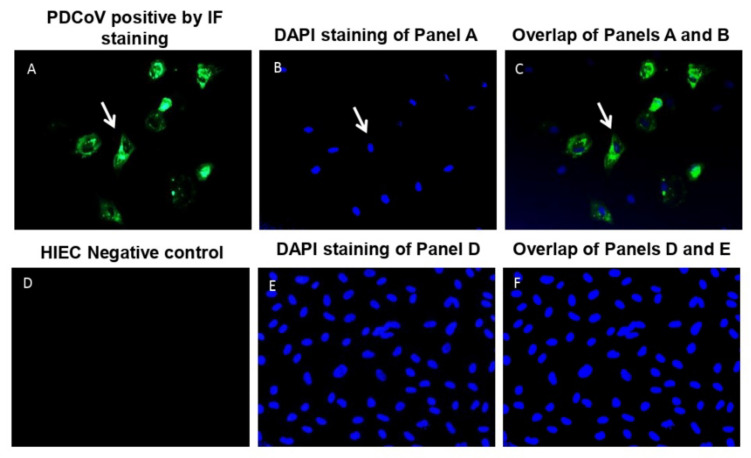
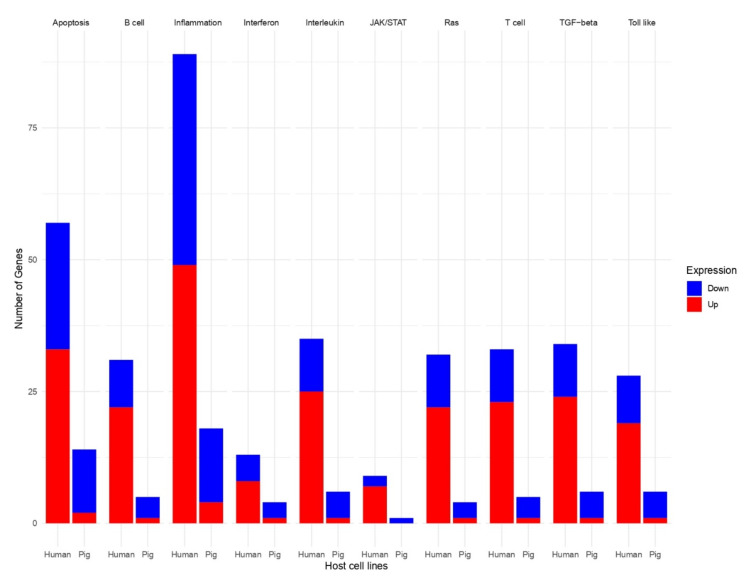
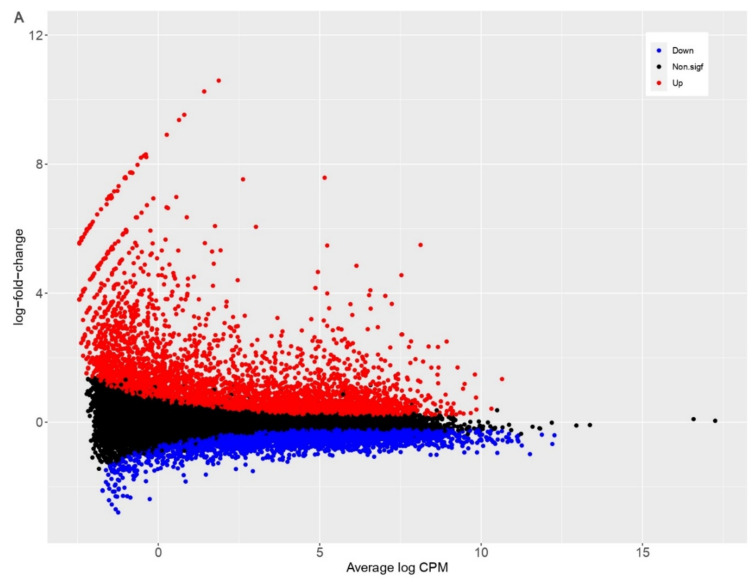
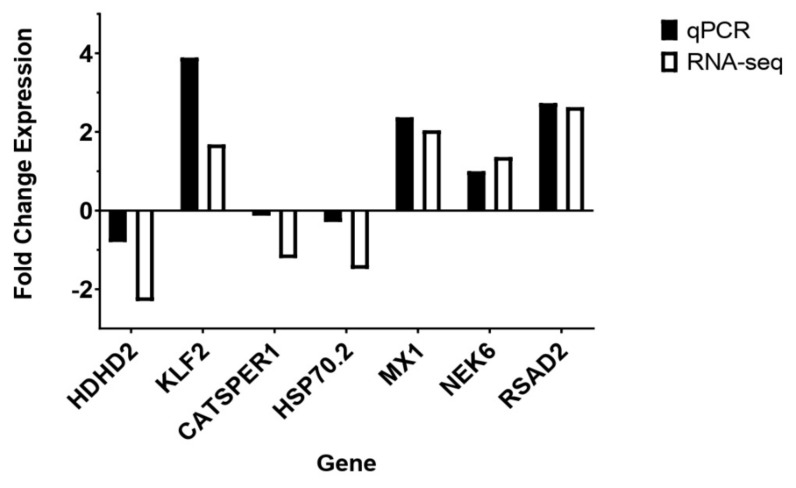
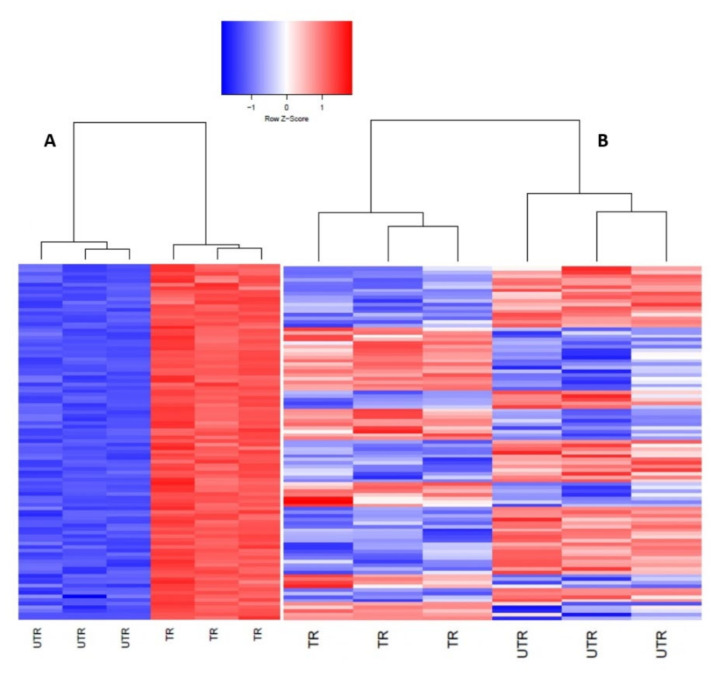
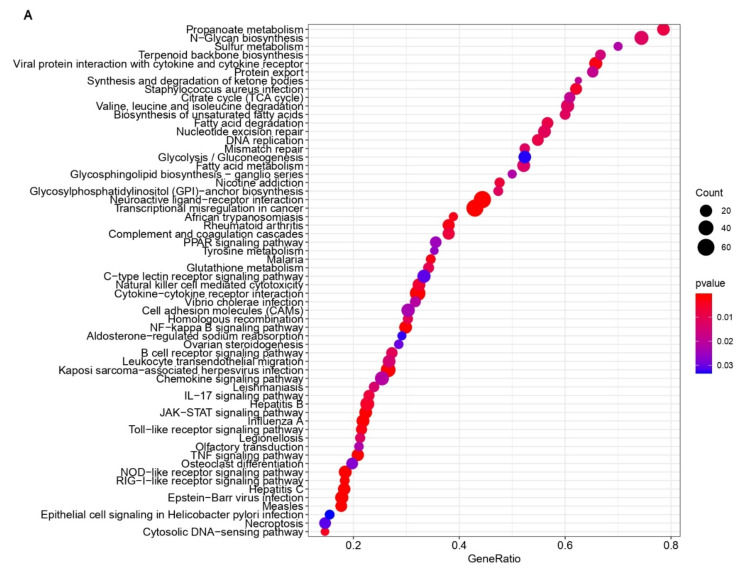
Porcine deltacoronavirus (PDCoV) is an emerging infectious disease of swine with zoonotic potential. Phylogenetic analysis suggests that PDCoV originated recently from a host-switching event between birds and mammals. Little is known about how PDCoV interacts with its differing hosts. Human-derived cell lines are susceptible to PDCoV infection. Herein, we compare the gene expression profiles of an established host swine cells to potential emerging host human cells after infection with PDCoV. Cell lines derived from intestinal lineages were used to reproduce the primary sites of viral infection in the host. Porcine intestinal epithelial cells (IPEC-J2) and human intestinal epithelial cells (HIEC) were infected with PDCoV. RNA-sequencing was performed on total RNA extracted from infected cells. Human cells exhibited a more pronounced response to PDCoV infection in comparison to porcine cells with more differentially expressed genes (DEGs) in human, 7486, in comparison to pig cells, 1134. On the transcriptional level, the adoptive host human cells exhibited more DEGs in response to PDCoV infection in comparison to the primary pig host cells, where different types of cytokines can control PDCoV replication and virus production. Key immune-associated DEGs and signaling pathways are shared between human and pig cells during PDCoV infection. These included genes related to the NF-kappa-B transcription factor family, the interferon (IFN) family, the protein-kinase family, and signaling pathways such as the apoptosis signaling pathway, JAK-STAT signaling pathway, inflammation/cytokine-cytokine receptor signaling pathway. MAP4K4 was unique in up-regulated DEGs in humans in the apoptosis signaling pathway. While similarities exist between human and pig cells in many pathways, our research suggests that the adaptation of PDCoV to the porcine host required the ability to down-regulate many response pathways including the interferon pathway. Our findings provide an important foundation that contributes to an understanding of the mechanisms of PDCoV infection across different hosts. To our knowledge, this is the first report of transcriptome analysis of human cells infected by PDCoV.
猪德尔塔冠状病毒(PDCoV)是一种具有人畜共患潜力的新兴猪传染病。系统进化分析表明,PDCoV 是由鸟类和哺乳动物之间的宿主转换事件新近产生的。目前对于 PDCoV 如何与不同宿主相互作用知之甚少。人类源性细胞系易受 PDCoV 感染。在此,我们比较了 PDCoV 感染后已建立的宿主猪细胞和潜在新兴宿主人类细胞的基因表达谱。源自肠道谱系的细胞系用于复制宿主中病毒感染的主要部位。猪肠上皮细胞(IPEC-J2)和人肠上皮细胞(HIEC)被 PDCoV 感染。从感染细胞中提取总 RNA 进行 RNA 测序。与猪细胞相比,人类细胞对 PDCoV 感染的反应更为明显,人类细胞中差异表达基因(DEG)有 7486 个,而猪细胞中仅有 1134 个。在转录水平上,与原发性猪宿主细胞相比,适应性宿主人类细胞对 PDCoV 感染的反应表现出更多的 DEG,其中不同类型的细胞因子可以控制 PDCoV 的复制和病毒产生。在 PDCoV 感染过程中,人源和猪源细胞中存在一些关键的免疫相关 DEG 和信号通路。这些通路包括与 NF-kappa-B 转录因子家族、干扰素(IFN)家族、蛋白激酶家族相关的基因,以及凋亡信号通路、JAK-STAT 信号通路、炎症/细胞因子-细胞因子受体信号通路等信号通路。在凋亡信号通路中,MAP4K4 是人类中上调 DEG 的特有基因。虽然人类和猪细胞在许多信号通路中存在相似之处,但我们的研究表明,PDCoV 适应猪宿主需要下调许多反应通路的能力,包括干扰素通路。我们的研究结果为理解 PDCoV 在不同宿主中的感染机制提供了重要基础。据我们所知,这是首次报道 PDCoV 感染人类细胞的转录组分析。