Department of Oral Biology and Diagnostic Sciences, Dental College of Georgia, Augusta University, Augusta, GA 30912, USA.
Department of Head and Neck Surgery and Otorhinolaryngology, A.C. Camargo Cancer Center, São Paulo 01509, Brazil.
Cells. 2021 Feb 13;10(2):389. doi: 10.3390/cells10020389.
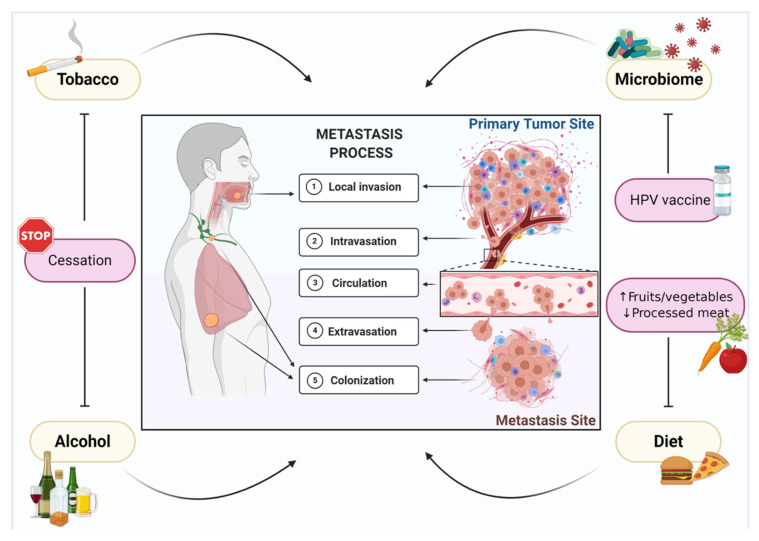
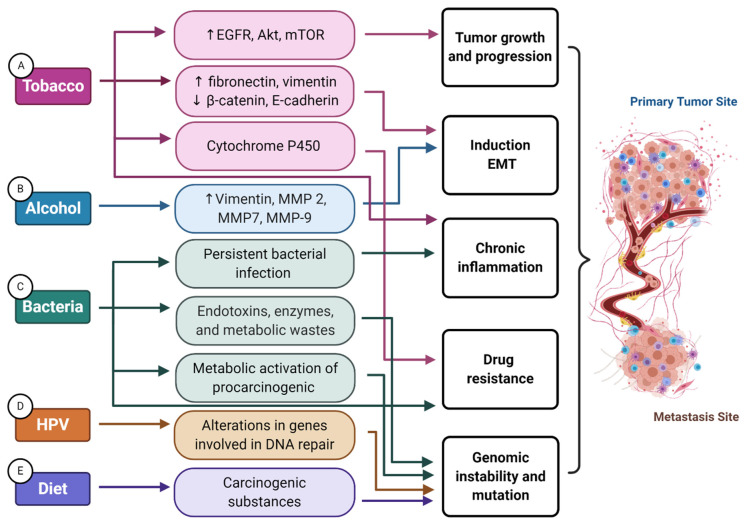
Epidemiological and clinical studies over the past two decades have provided strong evidence that genetic elements interacting with environmental components can individually and collectively influence one's susceptibility to cancer. In addition to tumorigenic properties, numerous environmental factors, such as nutrition, chemical carcinogens, and tobacco/alcohol consumption, possess pro-invasive and pro-metastatic cancer features. In contrast to traditional cancer treatment, modern therapeutics not only take into account an individual's genetic makeup but also consider gene-environment interactions. The current review sharpens the focus by elaborating on the impact that environmental factors have on the pathogenesis and progression of head and neck cancer and the underlying molecular mechanisms involved. Recent advances, challenges, and future perspectives in this area of research are also discussed. Inhibiting key environmental drivers of tumor progression should yield survival benefits for patients at any stage of head and neck cancer.
过去二十年来的流行病学和临床研究提供了强有力的证据,表明遗传因素与环境因素相互作用可以单独或共同影响一个人对癌症的易感性。除了致癌特性外,许多环境因素,如营养、化学致癌物和烟草/酒精消费,具有促进侵袭和转移的癌症特征。与传统的癌症治疗方法不同,现代治疗方法不仅考虑到个体的遗传构成,还考虑到基因-环境相互作用。本综述通过详细阐述环境因素对头颈癌发病机制和进展的影响以及所涉及的潜在分子机制,进一步聚焦于此。还讨论了该研究领域的最新进展、挑战和未来展望。抑制肿瘤进展的关键环境驱动因素应该为任何阶段的头颈癌患者带来生存获益。