Dumas Lucy, Bowen Rebecca, Butler John, Banerjee Susana
Gynaecology Unit, Royal Marsden NHS Foundation Trust, London SW3 6JJ, UK.
Institute of Cancer Research, 15 Cotswold Road, Sutton, London SM2 5NG, UK.
Cancers (Basel). 2021 Feb 25;13(5):952. doi: 10.3390/cancers13050952.
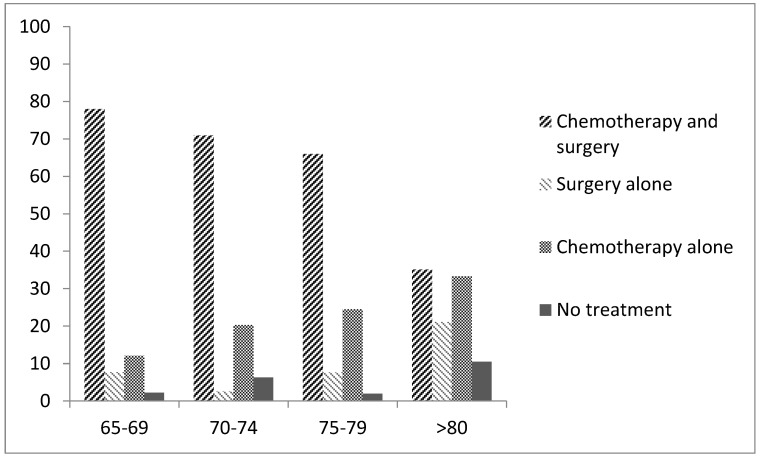
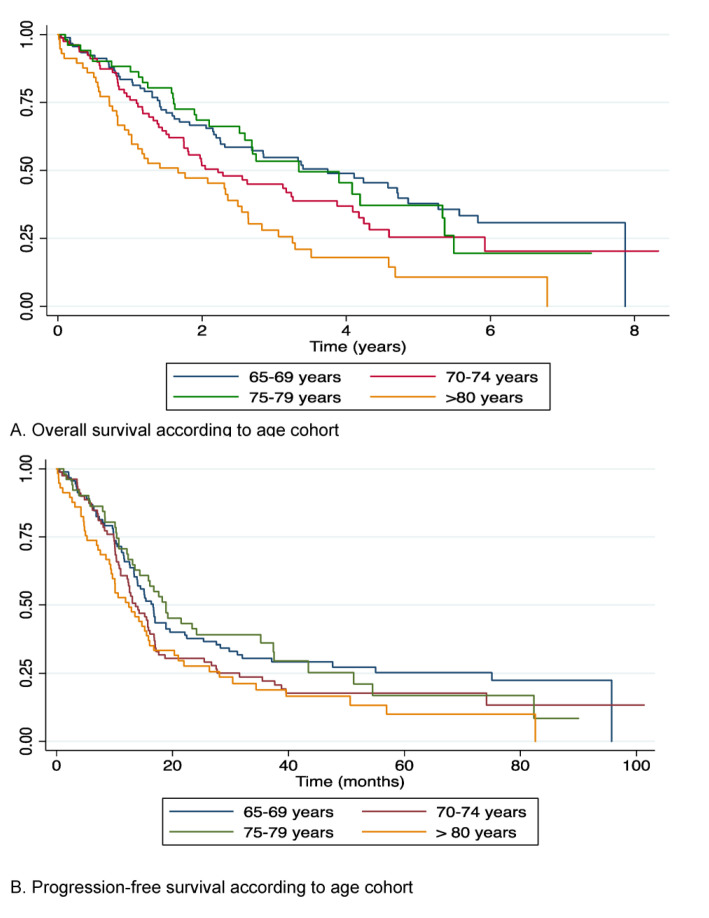
Older women with ovarian cancer have disproportionately poorer survival outcomes than their younger counterparts and receive less treatment. In order to understand where the gaps lie in the treatment of older patients, studies incorporating more detailed assessment of baseline characteristics and treatment delivery beyond the scope of most cancer registries are required. We aimed to assess the proportion of women over the age of 65 who are offered and receive standard of care for first-line ovarian cancer at two UK NHS Cancer Centres over a 5-year period (December 2009 to August 2015). Standard of care treatment was defined as a combination of cytoreductive surgery and if indicated platinum-based chemotherapy (combination or single-agent). Sixty-five percent of patients aged 65 and above received standard of care treatment. Increasing age was associated with lower rates of receiving standard of care (35% > 80 years old versus 78% of 65-69-year-olds, = 0.000). Older women were less likely to complete the planned chemotherapy course ( = 0.034). The oldest women continue to receive lower rates of standard care compared to younger women. Once adjusted for Federation of Gynaecology and Obstetrics (FIGO) stage, Eastern Cooperative Oncology Group (ECOG) performance status and first-line treatment received, age was no longer an independent risk factor for poorer overall survival. Optimisation of vulnerable patients utilising a comprehensive geriatric assessment and directed interventions to facilitate the delivery of standard of care treatment could help narrow the survival discrepancy between the oldest patients and their younger counterparts.
老年卵巢癌患者的生存结局比年轻患者差得多,且接受的治疗也较少。为了了解老年患者治疗中的差距所在,需要开展一些研究,纳入比大多数癌症登记范围更详细的基线特征评估和治疗实施情况。我们旨在评估在5年期间(2009年12月至2015年8月),英国两家国民保健服务(NHS)癌症中心为65岁以上一线卵巢癌女性提供并接受标准治疗的比例。标准治疗定义为细胞减灭术联合(如有指征)铂类化疗(联合或单药)。65岁及以上患者中有65%接受了标准治疗。年龄越大,接受标准治疗的比例越低(80岁以上为35%,65 - 69岁为78%,P = 0.000)。老年女性完成计划化疗疗程的可能性较小(P = 0.034)。与年轻女性相比,年龄最大的女性接受标准治疗的比例仍然较低。在对国际妇产科联盟(FIGO)分期、东部肿瘤协作组(ECOG)体能状态和接受的一线治疗进行调整后,年龄不再是总体生存较差的独立危险因素。利用综合老年评估和针对性干预措施来优化脆弱患者,以促进标准治疗的实施,可能有助于缩小年龄最大患者与年轻患者之间的生存差异。