Gatti Milo, De Ponti Fabrizio
Pharmacology Unit, Department of Medical and Surgical Sciences, Alma Mater Studiorum University of Bologna, 40126 Bologna, Italy.
Pharmaceutics. 2021 Feb 25;13(3):302. doi: 10.3390/pharmaceutics13030302.
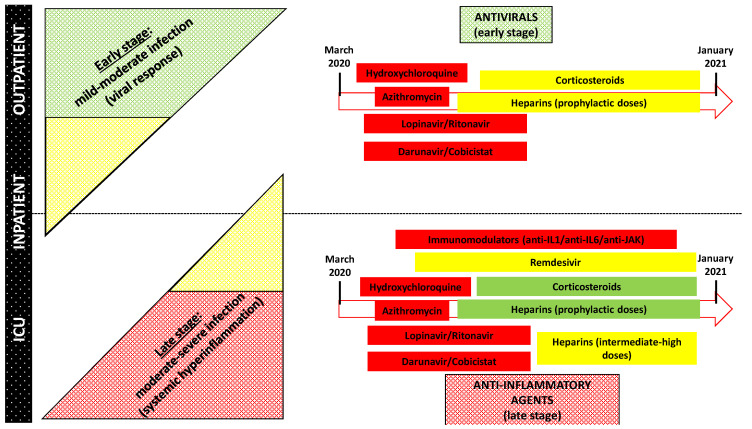
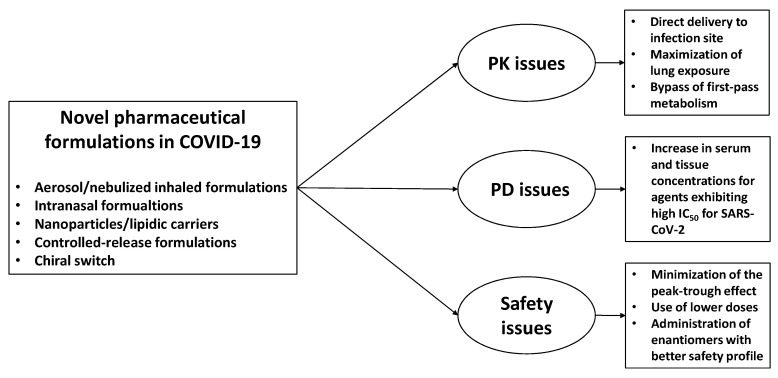
COVID-19 may lead to severe respiratory distress syndrome and high risk of death in some patients. So far (January 2021), only the antiviral remdesivir has been approved, although no significant benefits in terms of mortality and clinical improvement were recently reported. In a setting where effective and safe treatments for COVID-19 are urgently needed, drug repurposing may take advantage of the fact that the safety profile of an agent is already well known and allows rapid investigation of the efficacy of potential treatments, at lower costs and with reduced risk of failure. Furthermore, novel pharmaceutical formulations of older agents (e.g., aerosolized administration of chloroquine/hydroxychloroquine, remdesivir, heparin, pirfenidone) have been tested in order to increase pulmonary delivery and/or antiviral effects of potentially active drugs, thus overcoming pharmacokinetic issues. In our review, we will highlight the importance of the drug repurposing strategy in the context of COVID-19, including regulatory and ethical aspects, with a specific focus on novel pharmaceutical formulations and routes of administration.
新型冠状病毒肺炎可能导致严重呼吸窘迫综合征,部分患者死亡风险较高。截至2021年1月,尽管最近未报告在死亡率和临床改善方面有显著益处,但只有抗病毒药物瑞德西韦获得了批准。在迫切需要针对新型冠状病毒肺炎的有效且安全治疗方法的情况下,药物重新利用可能会利用这样一个事实,即一种药物的安全性已为人熟知,从而能够以较低成本、降低失败风险快速研究潜在治疗方法的疗效。此外,为了增加潜在活性药物的肺部递送和/或抗病毒效果,克服药代动力学问题,已经对老药的新型药物制剂(例如雾化吸入氯喹/羟氯喹、瑞德西韦、肝素、吡非尼酮)进行了测试。在我们的综述中,我们将强调在新型冠状病毒肺炎背景下药物重新利用策略的重要性,包括监管和伦理方面,特别关注新型药物制剂和给药途径。