Bella Ángela, Di Trani Claudia Augusta, Fernández-Sendin Myriam, Arrizabalaga Leire, Cirella Assunta, Teijeira Álvaro, Medina-Echeverz José, Melero Ignacio, Berraondo Pedro, Aranda Fernando
Program of Immunology and Immunotherapy, Cima Universidad de Navarra, 31008 Pamplona, Spain.
Navarra Institute for Health Research (IDISNA), 31008 Pamplona, Spain.
Cancers (Basel). 2021 Feb 25;13(5):963. doi: 10.3390/cancers13050963.
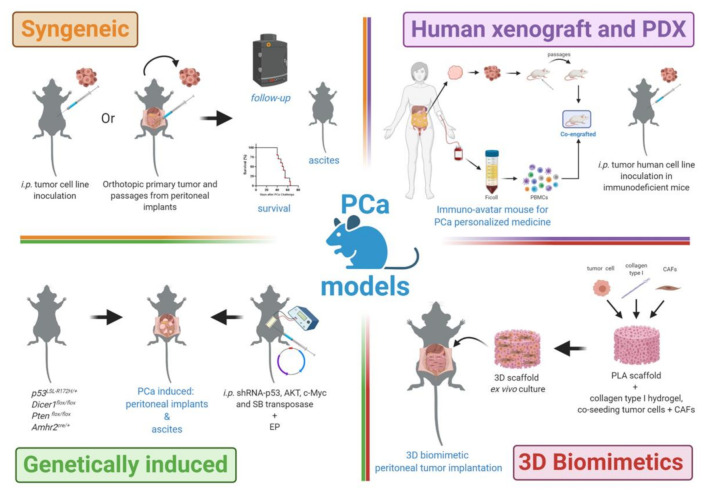
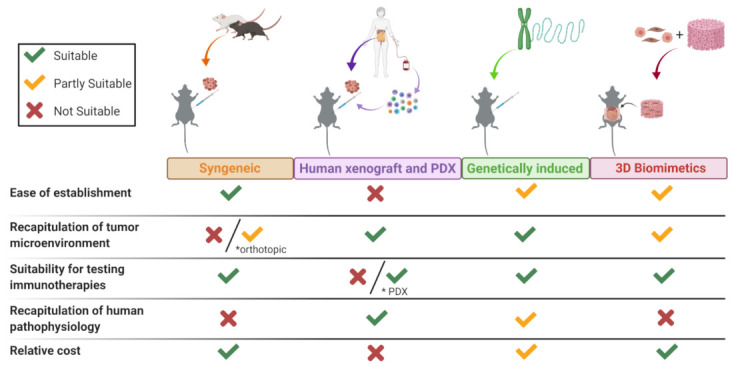
Peritoneal carcinomatosis of primary tumors originating in gastrointestinal (e.g., colorectal cancer, gastric cancer) or gynecologic (e.g., ovarian cancer) malignancies is a widespread type of tumor dissemination in the peritoneal cavity for which few therapeutic options are available. Therefore, reliable preclinical models are crucial for research and development of efficacious treatments for this condition. To date, a number of animal models have attempted to reproduce as accurately as possible the complexity of the tumor microenvironment of human peritoneal carcinomatosis. These include: Syngeneic tumor cell lines, human xenografts, patient-derived xenografts, genetically induced tumors, and 3D scaffold biomimetics. Each experimental model has its own strengths and limitations, all of which can influence the subsequent translational results concerning anticancer and immunomodulatory drugs under exploration. This review highlights the current status of peritoneal carcinomatosis mouse models for preclinical development of anticancer drugs or immunotherapeutic agents.
源自胃肠道(如结直肠癌、胃癌)或妇科(如卵巢癌)恶性肿瘤的原发性肿瘤的腹膜癌是腹腔内广泛存在的一种肿瘤播散类型,针对这种情况几乎没有可用的治疗选择。因此,可靠的临床前模型对于研究和开发针对这种病症的有效治疗方法至关重要。迄今为止,许多动物模型都试图尽可能准确地再现人类腹膜癌肿瘤微环境的复杂性。这些模型包括:同基因肿瘤细胞系、人异种移植物、患者来源的异种移植物、基因诱导肿瘤和3D支架仿生模型。每个实验模型都有其自身的优点和局限性,所有这些都会影响正在探索的抗癌和免疫调节药物的后续转化结果。本综述重点介绍了用于抗癌药物或免疫治疗药物临床前开发的腹膜癌小鼠模型的现状。