Grzywa Tomasz M, Justyniarska Magdalena, Nowis Dominika, Golab Jakub
Department of Immunology, Medical University of Warsaw, 02-097 Warsaw, Poland.
Doctoral School, Medical University of Warsaw, 02-091 Warsaw, Poland.
Cancers (Basel). 2021 Feb 19;13(4):870. doi: 10.3390/cancers13040870.
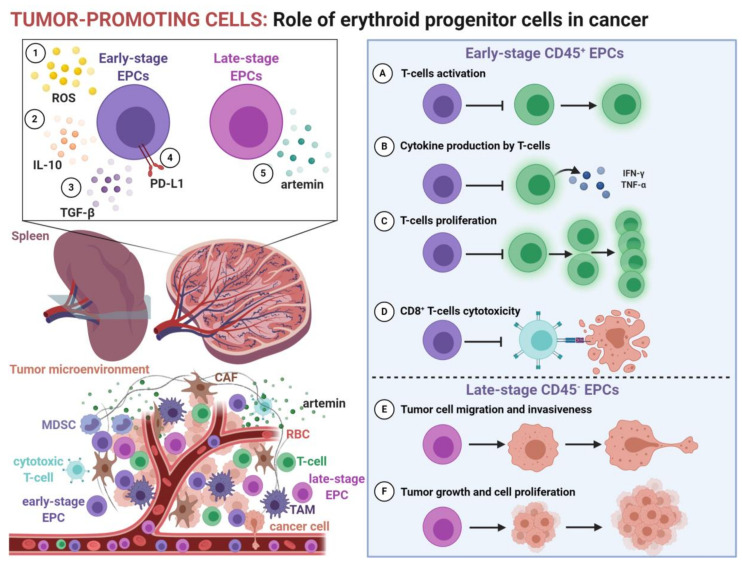
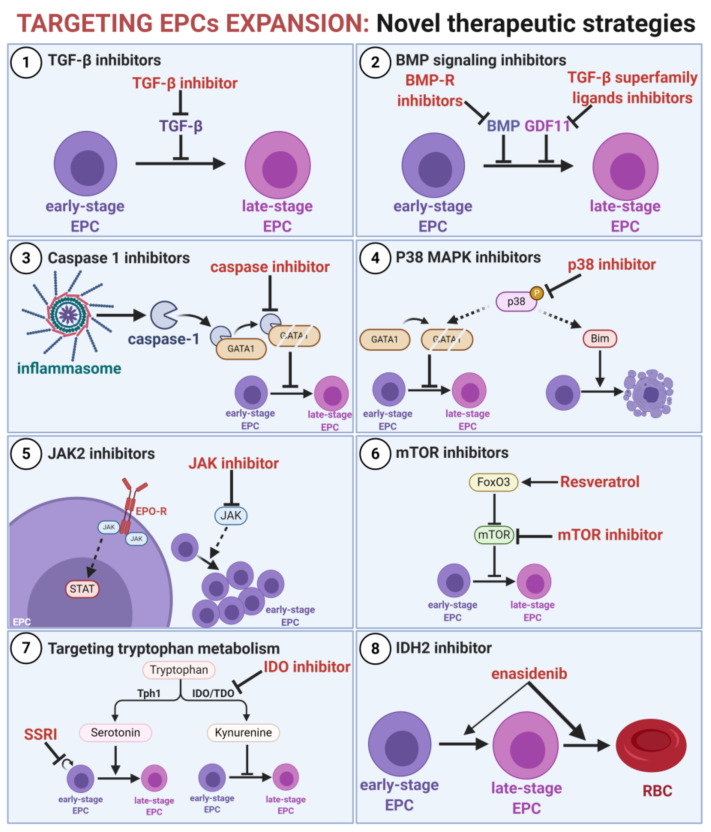
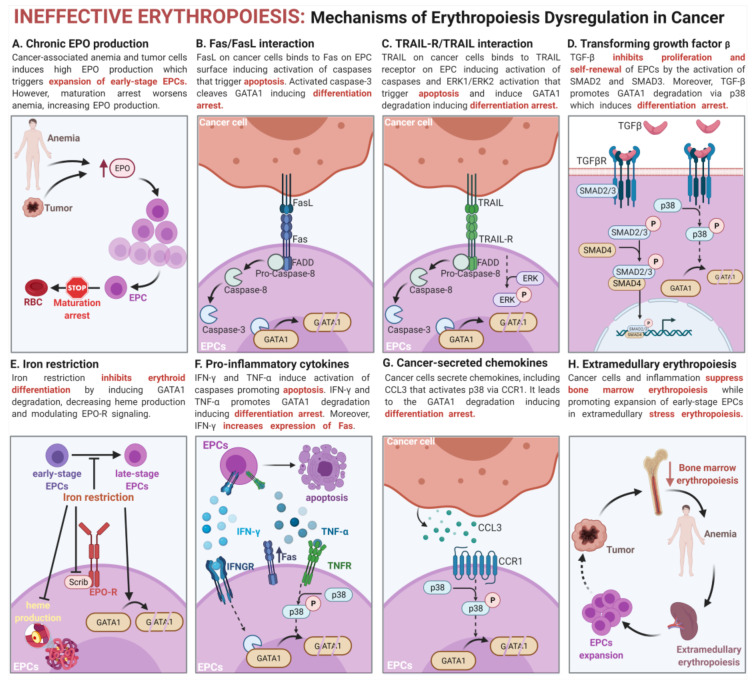
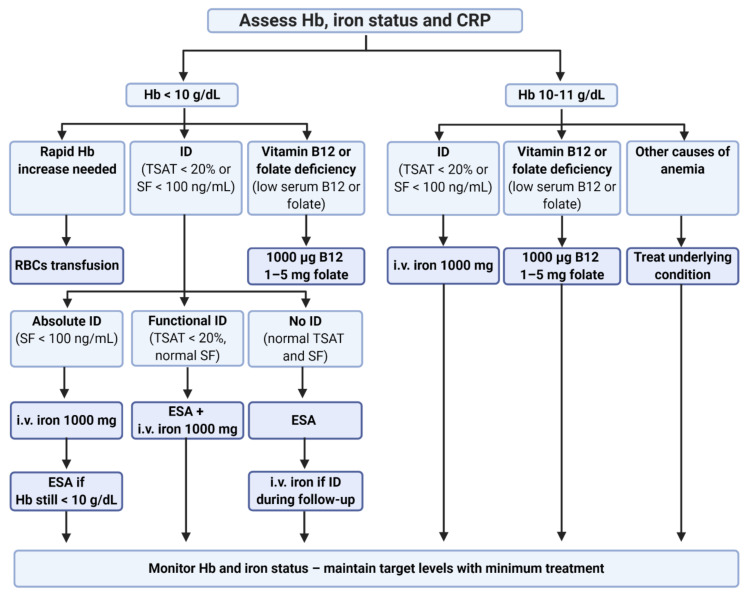
Cancer cells harness normal cells to facilitate tumor growth and metastasis. Within this complex network of interactions, the establishment and maintenance of immune evasion mechanisms are crucial for cancer progression. The escape from the immune surveillance results from multiple independent mechanisms. Recent studies revealed that besides well-described myeloid-derived suppressor cells (MDSCs), tumor-associated macrophages (TAMs) or regulatory T-cells (Tregs), erythroid progenitor cells (EPCs) play an important role in the regulation of immune response and tumor progression. EPCs are immature erythroid cells that differentiate into oxygen-transporting red blood cells. They expand in the extramedullary sites, including the spleen, as well as infiltrate tumors. EPCs in cancer produce reactive oxygen species (ROS), transforming growth factor β (TGF-β), interleukin-10 (IL-10) and express programmed death-ligand 1 (PD-L1) and potently suppress T-cells. Thus, EPCs regulate antitumor, antiviral, and antimicrobial immunity, leading to immune suppression. Moreover, EPCs promote tumor growth by the secretion of growth factors, including artemin. The expansion of EPCs in cancer is an effect of the dysregulation of erythropoiesis, leading to the differentiation arrest and enrichment of early-stage EPCs. Therefore, anemia treatment, targeting ineffective erythropoiesis, and the promotion of EPC differentiation are promising strategies to reduce cancer-induced immunosuppression and the tumor-promoting effects of EPCs.
癌细胞利用正常细胞促进肿瘤生长和转移。在这个复杂的相互作用网络中,免疫逃逸机制的建立和维持对癌症进展至关重要。免疫监视的逃逸源于多种独立机制。最近的研究表明,除了已被充分描述的髓系来源的抑制细胞(MDSCs)、肿瘤相关巨噬细胞(TAMs)或调节性T细胞(Tregs)外,红系祖细胞(EPCs)在免疫反应调节和肿瘤进展中也发挥着重要作用。EPCs是未成熟的红系细胞,可分化为运输氧气的红细胞。它们在包括脾脏在内的髓外部位扩增,并浸润肿瘤。癌症中的EPCs产生活性氧(ROS)、转化生长因子β(TGF-β)、白细胞介素-10(IL-10),并表达程序性死亡配体1(PD-L1),从而有效抑制T细胞。因此,EPCs调节抗肿瘤、抗病毒和抗菌免疫,导致免疫抑制。此外,EPCs通过分泌生长因子(包括Artemin)促进肿瘤生长。癌症中EPCs的扩增是红细胞生成失调的结果,导致分化停滞和早期EPCs富集。因此,针对无效红细胞生成的贫血治疗以及促进EPCs分化是减少癌症诱导的免疫抑制和EPCs的肿瘤促进作用的有前景的策略。