Kaseem Mosab, Ramachandraiah Karna, Hossain Shakhawat, Dikici Burak
Department of Nanotechnology and Advanced Materials Engineering, Sejong University, Seoul 05006, Korea.
Department of Food Science and Biotechnology, College of Life Science, Sejong University, Seoul 05006, Korea.
Nanomaterials (Basel). 2021 Feb 19;11(2):536. doi: 10.3390/nano11020536.
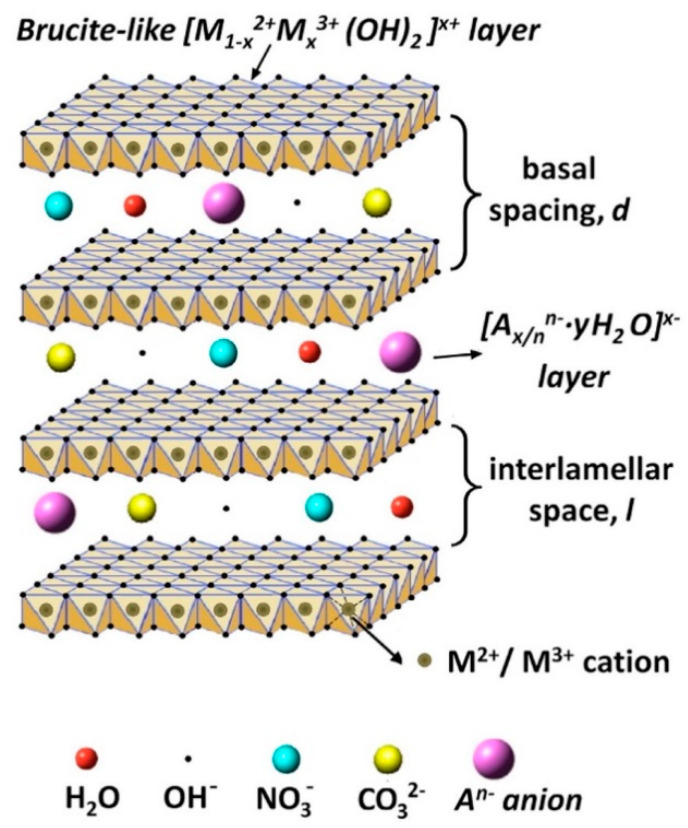
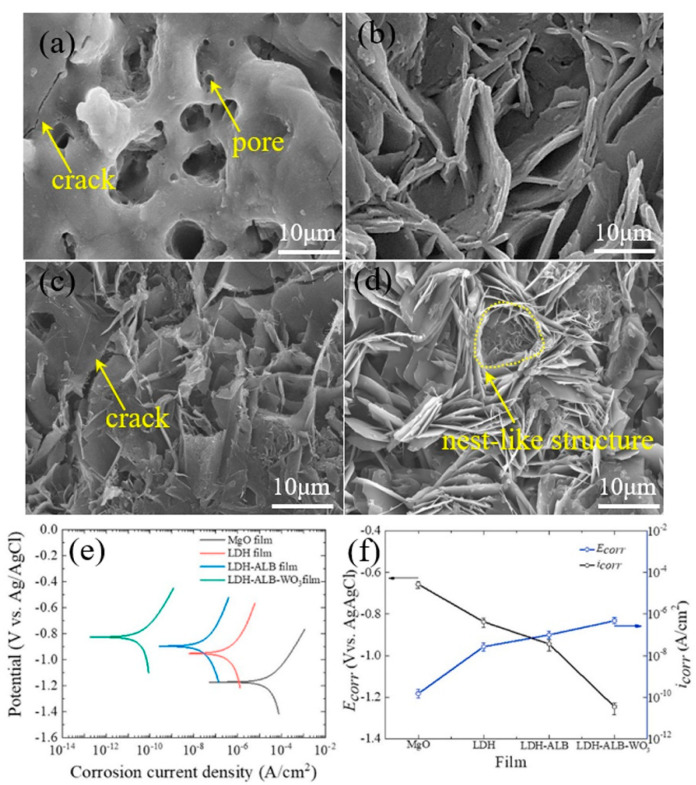
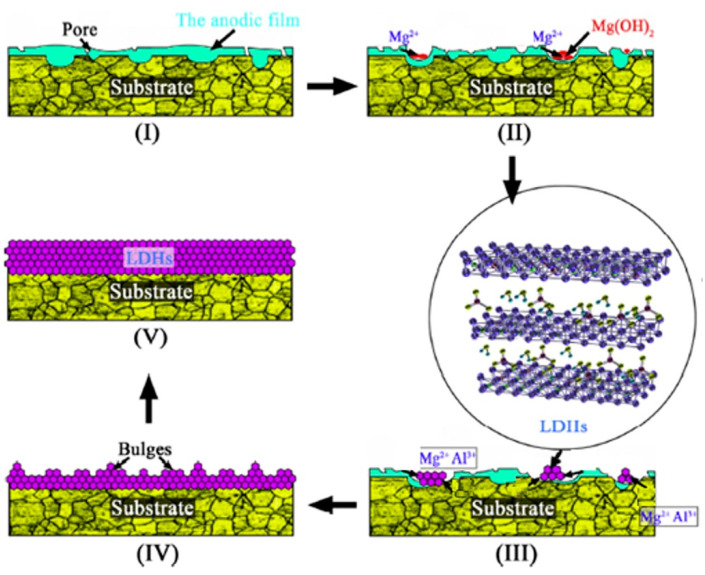
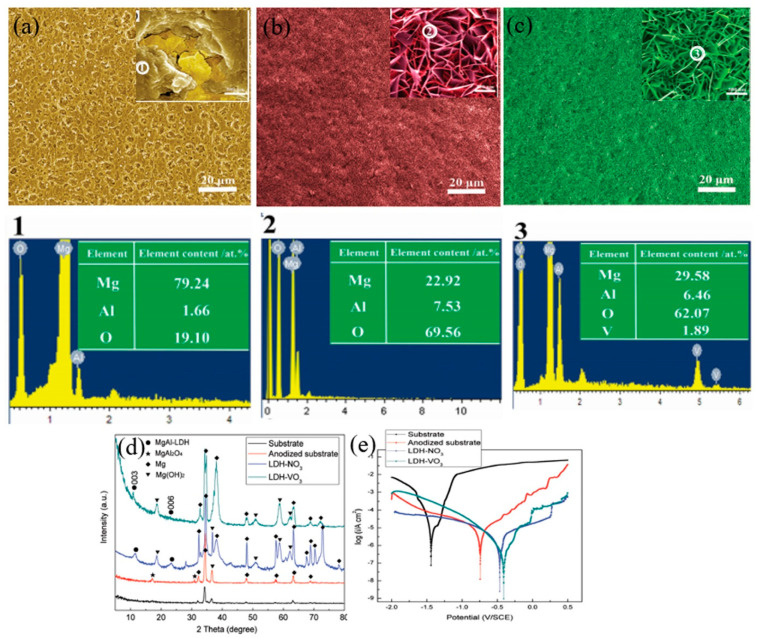
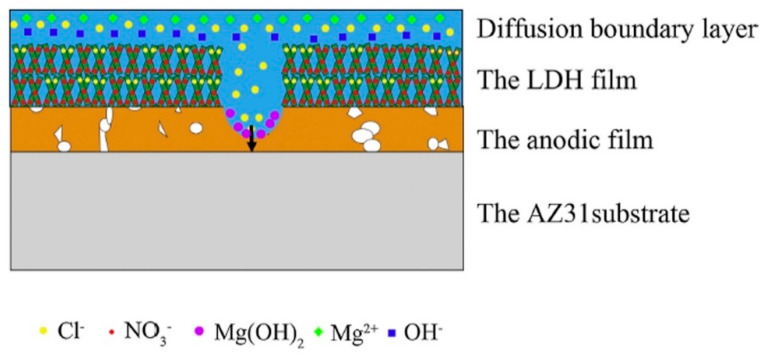
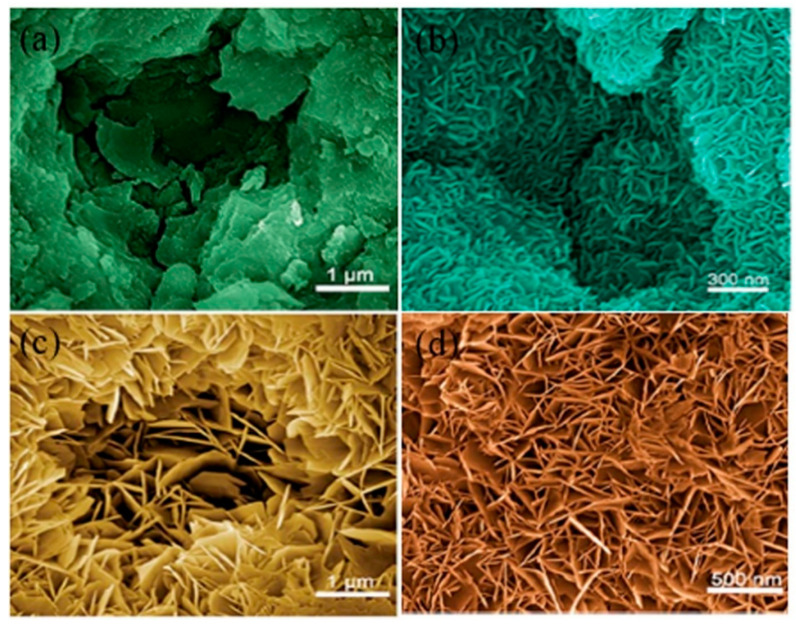
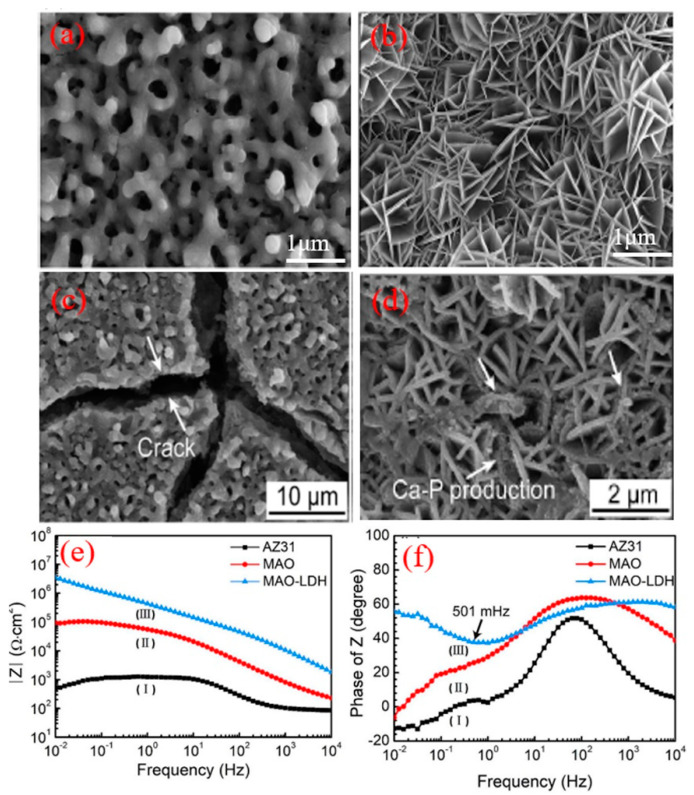
This review presents an overview of the recent developments in the synthesis of layered double hydroxide (LDH) on the anodized films of Mg alloys prepared by either conventional anodizing or plasma electrolytic oxidation (PEO) and the applications of the formed composite ceramics as smart chloride traps in corrosive environments. In this work, the main fabrication approaches including co-precipitation, in situ hydrothermal, and an anion exchange reaction are outlined. The unique structure of LDH nanocontainers enables them to intercalate several corrosion inhibitors and release them when required under the action of corrosion-relevant triggers. The influences of different variables, such as type of cations, the concentration of salts, pH, and temperature, immersion time during the formation of LDH/anodic film composites, on the electrochemical response are also highlighted. The correlation between the dissolution rate of PEO coating and the growth rate of the LDH film was discussed. The challenges and future development strategies of LDH/anodic films are also highlighted in terms of industrial applications of these materials.
本综述概述了通过传统阳极氧化或等离子体电解氧化(PEO)制备的镁合金阳极氧化膜上合成层状双氢氧化物(LDH)的最新进展,以及所形成的复合陶瓷作为腐蚀性环境中智能氯化物捕获剂的应用。在这项工作中,概述了包括共沉淀、原位水热和阴离子交换反应在内的主要制备方法。LDH纳米容器的独特结构使其能够插入几种缓蚀剂,并在腐蚀相关触发因素的作用下在需要时释放它们。还强调了不同变量,如阳离子类型、盐浓度、pH值和温度、LDH/阳极膜复合材料形成过程中的浸泡时间,对电化学响应的影响。讨论了PEO涂层的溶解速率与LDH膜生长速率之间的相关性。还从这些材料的工业应用角度强调了LDH/阳极膜面临的挑战和未来发展策略。