Department of Biological Environmental and Occupational Health Sciences, School of Public Health, University of Ghana, Accra 00233, Ghana.
Center for Ergonomics, Department of Industrial and Operations Engineering, University of Michigan, Ann Arbor, MI 48109-2117, USA.
Int J Environ Res Public Health. 2021 Feb 19;18(4):2055. doi: 10.3390/ijerph18042055.
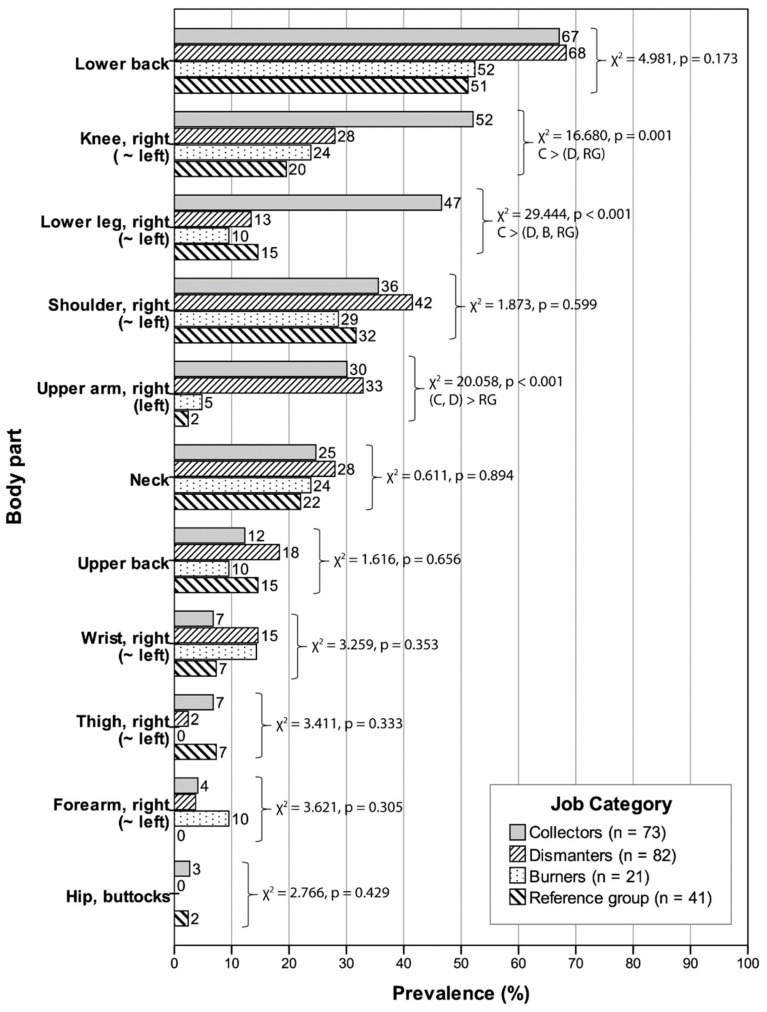
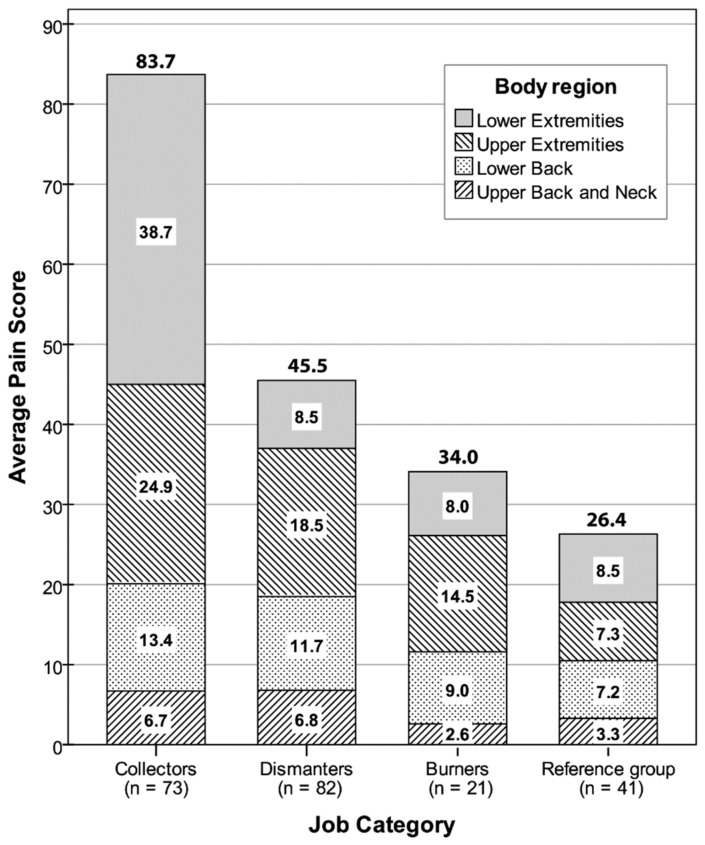
Informal recycling of electrical and electronic waste (e-waste) has myriad environmental and occupational health consequences, though information about the chronic musculoskeletal health effects on workers is limited. The aim of this study was to examine the prevalence and intensity of self-reported musculoskeletal disorder (MSD) symptoms among e-waste workers at Agbogbloshie in Ghana-the largest informal e-waste dumpsite in West Africa-relative to workers not engaged in e-waste recycling. A standardized musculoskeletal discomfort questionnaire was administered to 176 e-waste workers (73 collectors, 82 dismantlers, and 21 burners) and 41 workers in a reference group. The number of body parts with musculoskeletal discomfort were 1.62 and 1.39 times higher for collectors and dismantlers than burners, respectively. A 1-week discomfort prevalence was highest for collectors (91.8%) followed by dismantlers (89%), burners (81%), and the reference group (70.7%). The discomfort prevalence for e-waste workers was highest in the lower back (65.9%), shoulders (37.5%), and knees (37.5%). Whole-body pain scores (mean ± SE) were higher for collectors (83.7 ± 10.6) than dismantlers (45.5 ± 7.6), burners (34.0 ± 9.1), and the reference group (26.4 ± 5.9). Differences in prevalence, location, and intensity of MSD symptoms by the e-waste job category suggest specific work-related morbidity. Symptom prevalence and intensity call attention to the high risk for MSDs and work disability among informal e-waste workers, particularly collectors and dismantlers.
电子废物(电子垃圾)的非正式回收会产生无数的环境和职业健康后果,尽管有关工人慢性肌肉骨骼健康影响的信息有限。本研究的目的是调查加纳阿格博格布洛西(Agbogbloshie)的电子垃圾工人(西非最大的非正规电子垃圾倾倒场)中自我报告的肌肉骨骼疾病(MSD)症状的流行率和强度,与不从事电子垃圾回收的工人相比。向 176 名电子垃圾工人(73 名拾荒者,82 名拆解工和 21 名焚烧工)和 41 名参照组工人发放了一份标准化的肌肉骨骼不适问卷。拾荒者和拆解工的肌肉骨骼不适部位数量分别比焚烧工高 1.62 和 1.39 倍。拾荒者的 1 周不适患病率最高(91.8%),其次是拆解工(89%),焚烧工(81%)和参照组(70.7%)。电子垃圾工人的不适患病率以下背部(65.9%),肩部(37.5%)和膝盖(37.5%)最高。拾荒者的全身疼痛评分(均值±SE)(83.7±10.6)高于拆解工(45.5±7.6),焚烧工(34.0±9.1)和参照组(26.4±5.9)。按电子垃圾工作类别划分的 MSD 症状的流行率,位置和强度差异表明存在特定的与工作相关的发病率。症状的流行率和强度引起了人们对非正规电子垃圾工人,尤其是拾荒者和拆解工中肌肉骨骼疾病和工作残疾的高风险的关注。