Division of Clinical Cancer Research, Research Institute, National Cancer Center, Goyang 10408, Korea.
Department of Pediatrics, University of Texas Medical Branch, Galveston, TX 77555, USA.
Int J Mol Sci. 2021 Feb 18;22(4):2003. doi: 10.3390/ijms22042003.
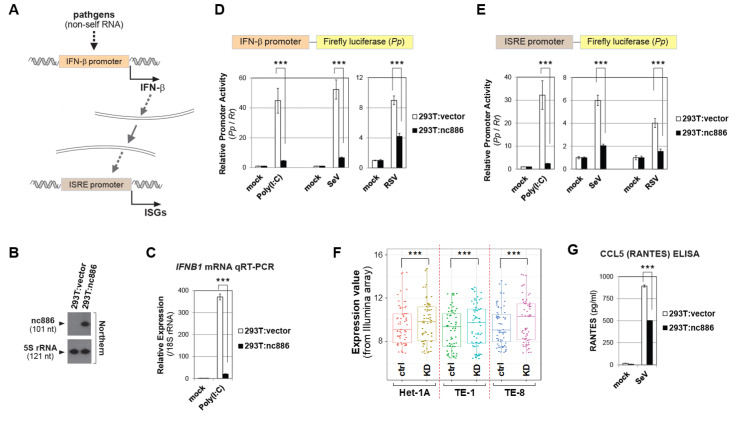
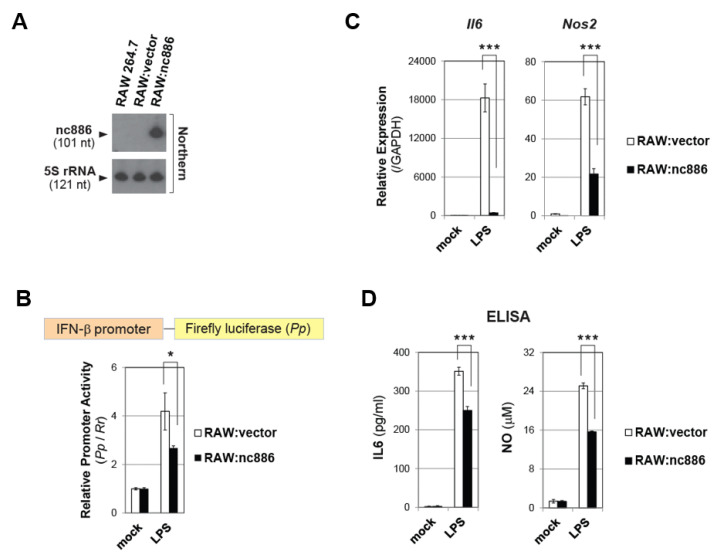
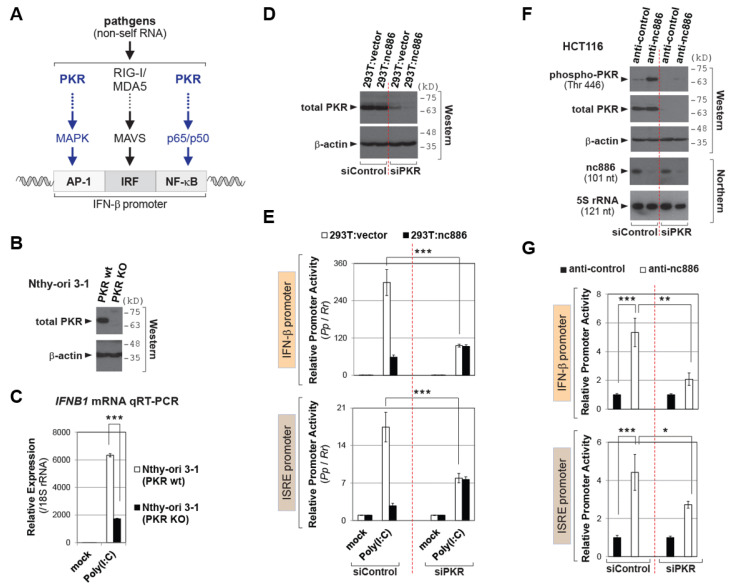
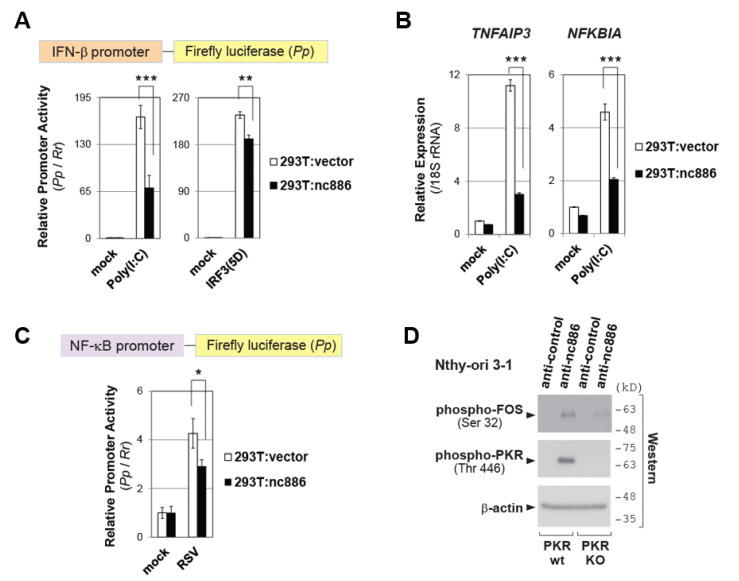
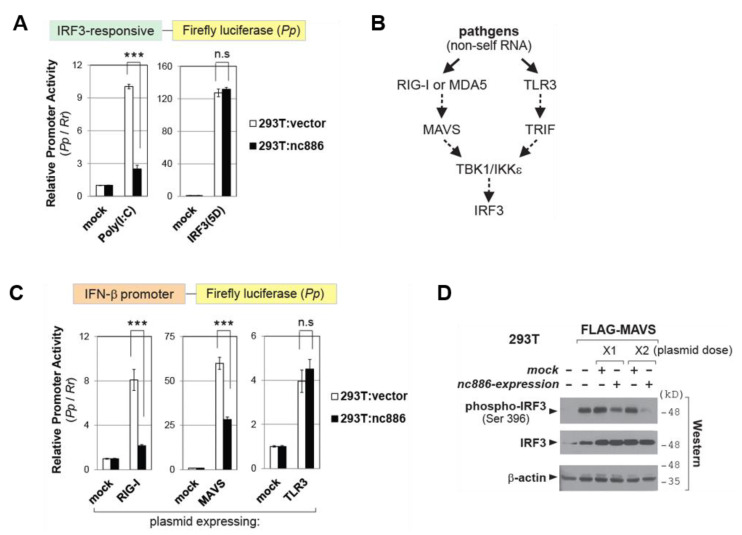
Interferons (IFNs) are a crucial component in the innate immune response. Especially the IFN-β signaling operates in most cell types and plays a key role in the first line of defense upon pathogen intrusion. The induction of IFN-β should be tightly controlled, because its hyperactivation can lead to tissue damage or autoimmune diseases. Activation of the IFN-β promoter needs Interferon Regulatory Factor 3 (IRF3), together with Nuclear Factor kappa-light-chain-enhancer of activated B cells (NF-κB) and Activator Protein 1 (AP-1). Here we report that a human noncoding RNA, nc886, is a novel suppressor for the IFN-β signaling and inflammation. Upon treatment with several pathogen-associated molecular patterns and viruses, nc886 suppresses the activation of IRF3 and also inhibits NF-κB and AP-1 via inhibiting Protein Kinase R (PKR). These events lead to decreased expression of IFN-β and resultantly IFN-stimulated genes. nc886's role might be to restrict the IFN-β signaling from hyperactivation. Since nc886 expression is regulated by epigenetic and environmental factors, nc886 might explain why innate immune responses to pathogens are variable depending on biological settings.
干扰素(IFNs)是先天免疫反应的重要组成部分。特别是 IFN-β 信号转导在大多数细胞类型中起作用,在病原体入侵时作为第一道防线发挥关键作用。IFN-β 的诱导应该受到严格控制,因为其过度激活会导致组织损伤或自身免疫性疾病。IFN-β 启动子的激活需要干扰素调节因子 3(IRF3),与核因子 kappa-轻链增强子的 B 细胞激活(NF-κB)和激活蛋白 1(AP-1)一起。在这里,我们报告一种人类非编码 RNA,nc886,是 IFN-β 信号和炎症的新型抑制剂。在用几种病原体相关分子模式和病毒处理后,nc886 抑制了 IRF3 的激活,并通过抑制蛋白激酶 R(PKR)抑制了 NF-κB 和 AP-1。这些事件导致 IFN-β 和随后的 IFN 刺激基因的表达减少。nc886 的作用可能是限制 IFN-β 信号从过度激活。由于 nc886 的表达受表观遗传和环境因素的调节,nc886 可能解释了为什么先天免疫反应对病原体的反应因生物环境而异。