Gombos Katalin, Gálik Bence, Kalács Krisztina Ildikó, Gödöny Krisztina, Várnagy Ákos, Alpár Donát, Bódis József, Gyenesei Attila, Kovács Gábor L
Szentágothai Research Center, University of Pécs, Ifjúság útja 20., 7624 Pécs, Hungary.
Department of Laboratory Medicine, Medical School, University of Pécs, Ifjúság útja 13., 7624 Pécs, Hungary.
Int J Mol Sci. 2021 Feb 28;22(5):2443. doi: 10.3390/ijms22052443.
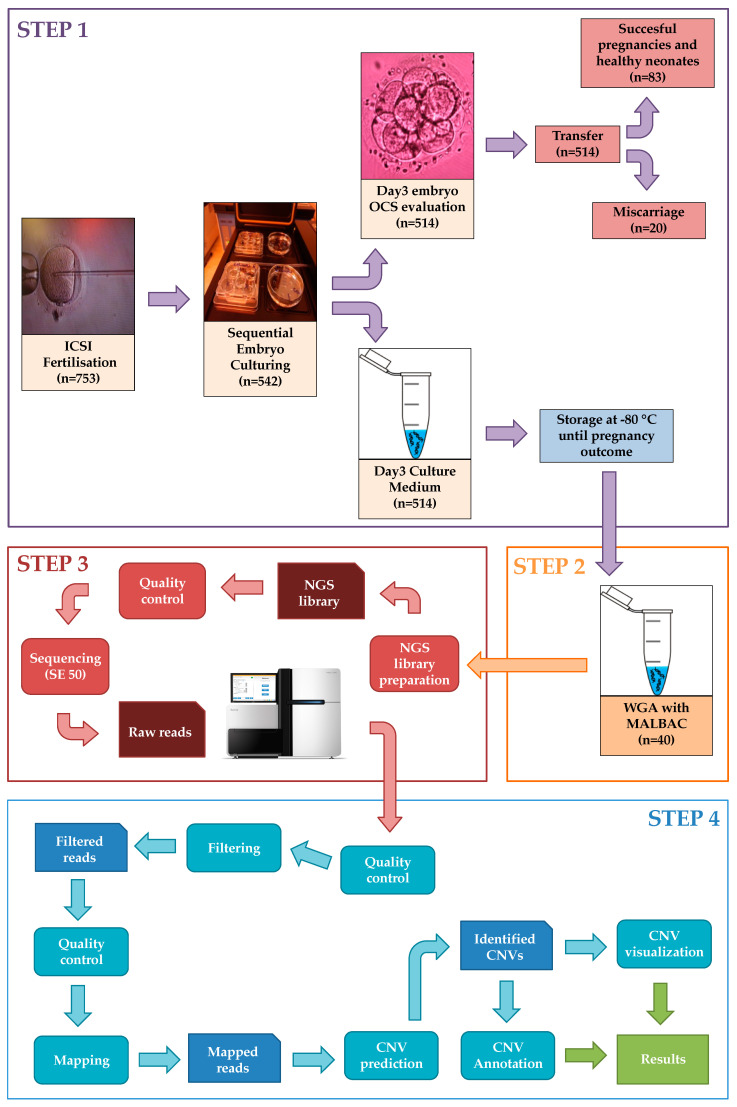
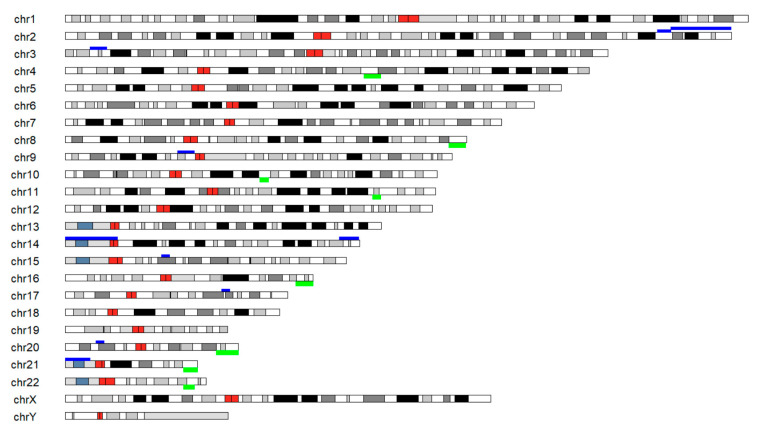
Although non-invasive pre-implantation genetic testing for aneuploidy (NIPGT-A) is potentially appropriate to assess chromosomal ploidy of the embryo, practical application of it in a routine IVF centre have not been started in the absence of a recommendation. Our objective in this study was to provide a comprehensive workflow for a clinically applicable strategy for NIPGT-A based on next-generation sequencing (NGS) technology with the corresponding bioinformatic pipeline. In a retrospective study, we performed NGS on spent blastocyst culture media of Day 3 embryos fertilised with intracytoplasmic sperm injection (ICSI) with quality score on morphology assessment using the blank culture media as background control. Chromosomal abnormalities were identified by an optimised bioinformatics pipeline applying copy number variation (CNV) detecting algorithm. In this study, we demonstrate a comprehensive workflow covering both wet- and dry-lab procedures supporting a clinically applicable strategy for NIPGT-A that can be carried out within 48 h, which is critical for the same-cycle blastocyst transfer. The described integrated approach of non-invasive evaluation of embryonic DNA content of the culture media can potentially supplement existing pre-implantation genetic screening methods.
尽管非侵入性胚胎植入前非整倍体基因检测(NIPGT-A)可能适合评估胚胎的染色体倍性,但在缺乏相关推荐的情况下,其在常规体外受精中心的实际应用尚未开展。本研究的目的是基于下一代测序(NGS)技术及相应的生物信息学流程,为NIPGT-A提供一种临床适用策略的全面工作流程。在一项回顾性研究中,我们对经卵胞浆内单精子注射(ICSI)受精的第3天胚胎的废弃囊胚培养基进行了NGS检测,并以空白培养基作为背景对照,对形态学评估进行质量评分。通过应用拷贝数变异(CNV)检测算法的优化生物信息学流程来识别染色体异常。在本研究中,我们展示了一个涵盖湿实验室和干实验室程序的全面工作流程,支持一种可在48小时内完成的NIPGT-A临床适用策略,这对于同周期囊胚移植至关重要。所描述的对培养基中胚胎DNA含量进行非侵入性评估的综合方法可能会补充现有的胚胎植入前基因筛查方法。