Laboratory of Ischemic and Neurodegenerative Brain Research, Mossakowski Medical Research Institute, Polish Academy of Sciences, 02-106 Warsaw, Poland.
State Key Laboratory of Biotherapy and Cancer Center, West China Hospital, and Collaborative Innovation Center of Biotherapy, Sichuan University, Chengdu 610041, China.
Int J Mol Sci. 2021 Feb 28;22(5):2460. doi: 10.3390/ijms22052460.
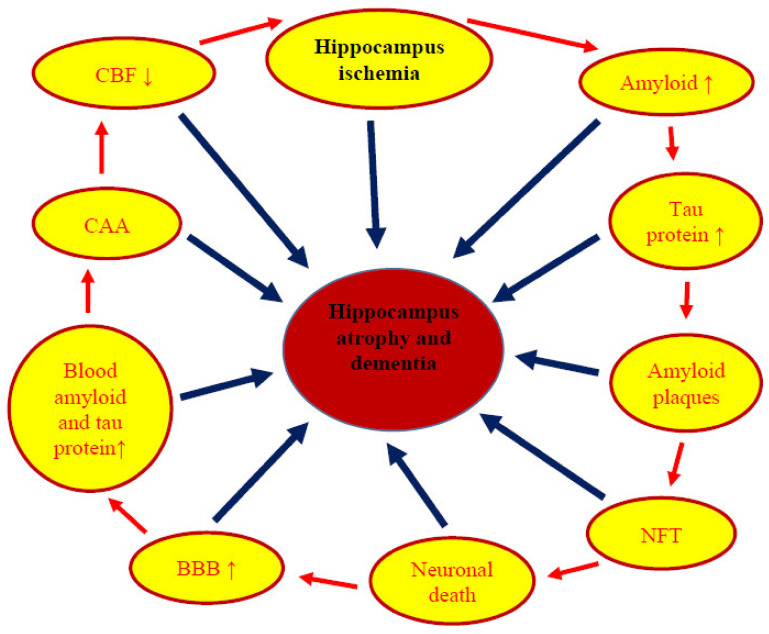
Recent evidence suggests that amyloid and tau protein are of vital importance in post-ischemic death of CA1 pyramidal neurons of the hippocampus. In this review, we summarize protein alterations associated with Alzheimer's disease and their gene expression ( and ) after cerebral ischemia, as well as their roles in post-ischemic hippocampus neurodegeneration. In recent years, multiple studies aimed to elucidate the post-ischemic processes in the development of hippocampus neurodegeneration. Their findings have revealed the dysregulation of genes for , , and , , , and identical in nature to Alzheimer's disease. Herein, we present the latest data showing that amyloid and tau protein associated with Alzheimer's disease and their genes play a key role in post-ischemic neurodegeneration of the hippocampus with subsequent development of dementia. Therefore, understanding the underlying process for the development of post-ischemic CA1 area neurodegeneration in the hippocampus in conjunction with Alzheimer's disease-related proteins and genes will provide the most important therapeutic development goals to date.
最近的证据表明,淀粉样蛋白和tau 蛋白对于海马 CA1 锥体神经元的缺血后死亡至关重要。在这篇综述中,我们总结了与阿尔茨海默病相关的蛋白改变及其脑缺血后的基因表达(和),以及它们在缺血后海马神经元变性中的作用。近年来,多项研究旨在阐明海马神经元变性发展过程中的缺血后过程。他们的发现揭示了与阿尔茨海默病性质相同的基因对于、、、、、、和的失调。在此,我们呈现最新数据,表明与阿尔茨海默病相关的淀粉样蛋白和 tau 蛋白及其基因在缺血后海马神经元变性中发挥关键作用,随后发展为痴呆。因此,了解与阿尔茨海默病相关蛋白和基因相关的缺血后 CA1 区海马神经元变性的潜在过程,将为迄今为止最重要的治疗开发目标提供依据。