Dhaliwal Amritpal, Quinlan Jonathan I, Overthrow Kellie, Greig Carolyn, Lord Janet M, Armstrong Matthew J, Cooper Sheldon C
Institute of Inflammation and Ageing, University of Birmingham, Birmingham B15 2WB, UK.
Liver Unit, Queen Elizabeth Hospital, University Hospitals Birmingham NHS Foundation Trust, Birmingham B15 2TH, UK.
Nutrients. 2021 Feb 17;13(2):656. doi: 10.3390/nu13020656.
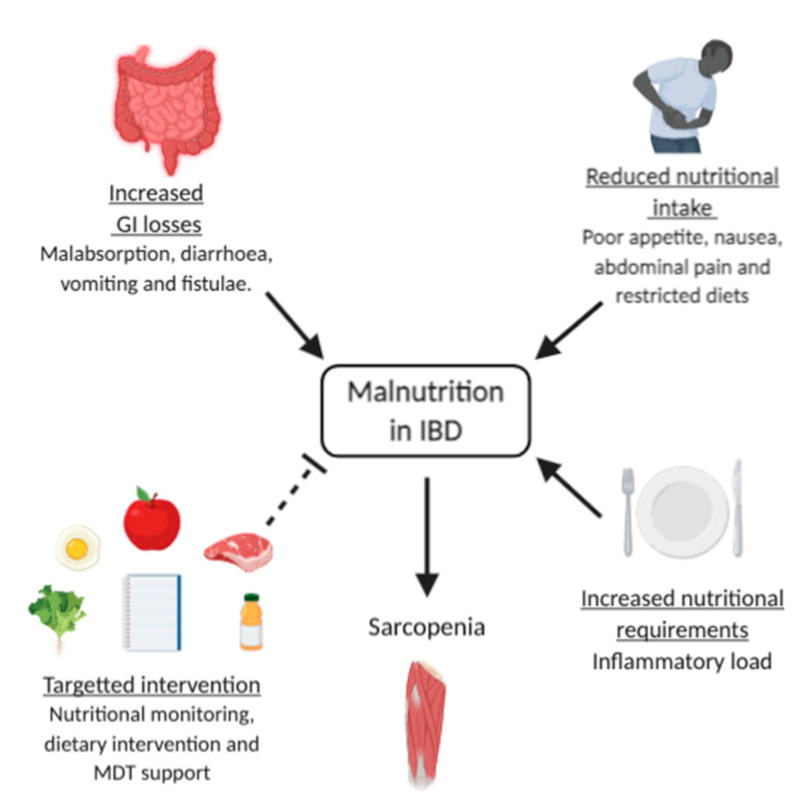
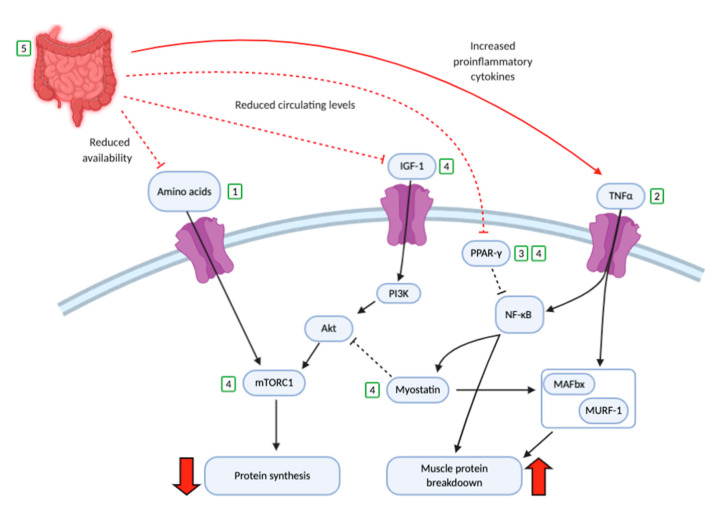
Malnutrition is a common condition encountered in patients with inflammatory bowel disease (IBD) and is often associated with sarcopenia (the reduction of muscle mass and strength) which is an ever-growing consideration in chronic diseases. Recent data suggest the prevalence of sarcopenia is 52% and 37% in Crohn's disease and ulcerative colitis, respectively, however it is challenging to fully appreciate the prevalence of sarcopenia in IBD. Sarcopenia is an important consideration in the management of IBD, including the impact on quality of life, prognostication, and treatment such as surgical interventions, biologics and immunomodulators. There is evolving research in many chronic inflammatory states, such as chronic liver disease and rheumatoid arthritis, whereby interventions have begun to be developed to counteract sarcopenia. The purpose of this review is to evaluate the current literature regarding the impact of sarcopenia in the management of IBD, from mechanistic drivers through to assessment and management.
营养不良是炎症性肠病(IBD)患者中常见的情况,并且常与肌肉减少症(肌肉质量和力量的减少)相关,而肌肉减少症在慢性疾病中日益受到关注。最近的数据表明,克罗恩病和溃疡性结肠炎中肌肉减少症的患病率分别为52%和37%,然而,要全面了解IBD中肌肉减少症的患病率具有挑战性。肌肉减少症是IBD管理中的一个重要考虑因素,包括对生活质量、预后以及手术干预、生物制剂和免疫调节剂等治疗的影响。在许多慢性炎症状态,如慢性肝病和类风湿性关节炎中,正在进行不断发展的研究,由此已开始开发对抗肌肉减少症的干预措施。本综述的目的是评估当前关于肌肉减少症在IBD管理中的影响的文献,从机制驱动因素到评估和管理。