Elahi Miad, Nakayama-Imaohji Haruyuki, Hashimoto Masahito, Tada Ayano, Yamasaki Hisashi, Nagao Tamiko, Kuwahara Tomomi
Department of Microbiology, Faculty of Medicine, Kagawa University, 1750-1 Miki, Kagawa 761-0793, Japan.
Department of Chemistry, Biotechnology, and Chemical Engineering, Kagoshima University, Kagoshima 890-8580, Japan.
Antibiotics (Basel). 2021 Feb 15;10(2):187. doi: 10.3390/antibiotics10020187.
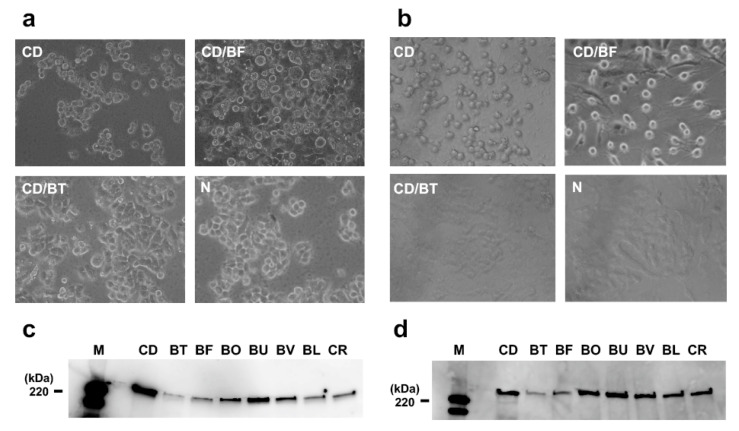
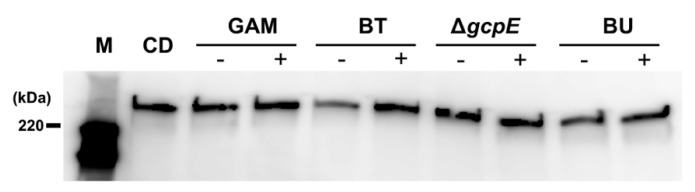
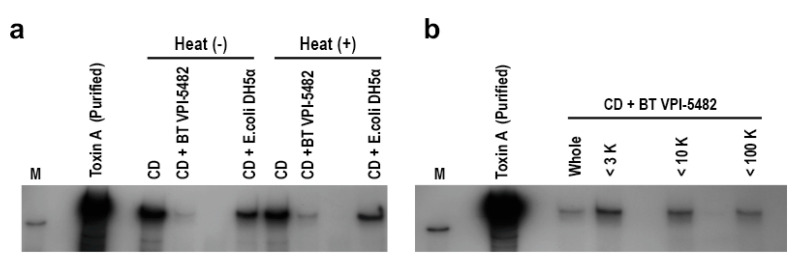
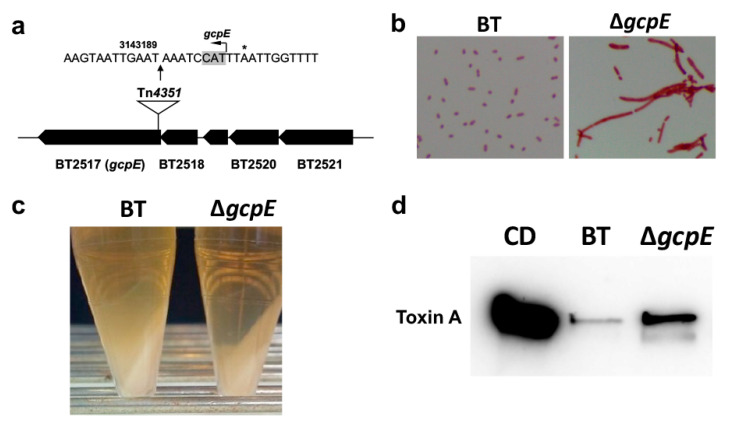
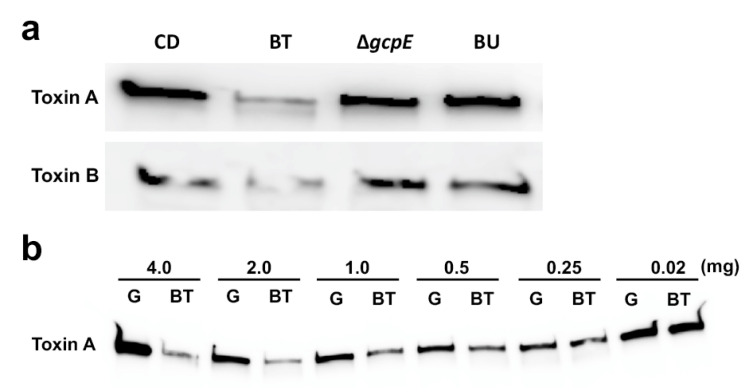
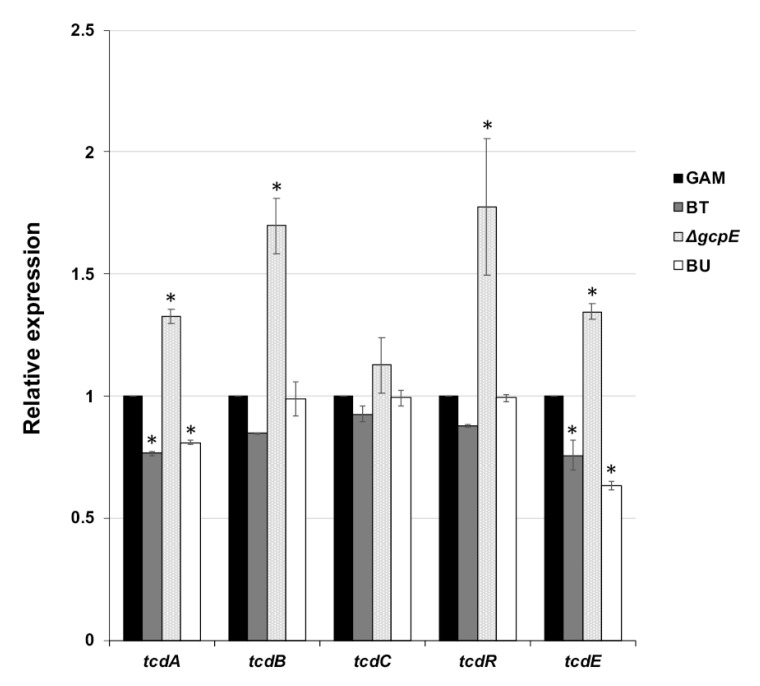
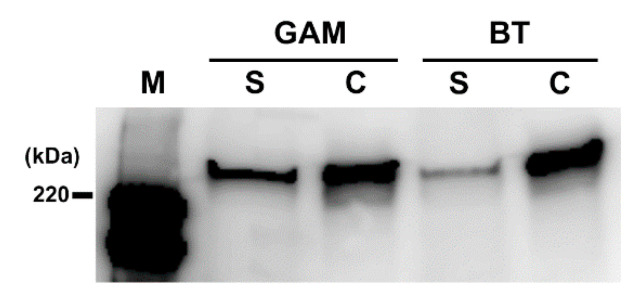
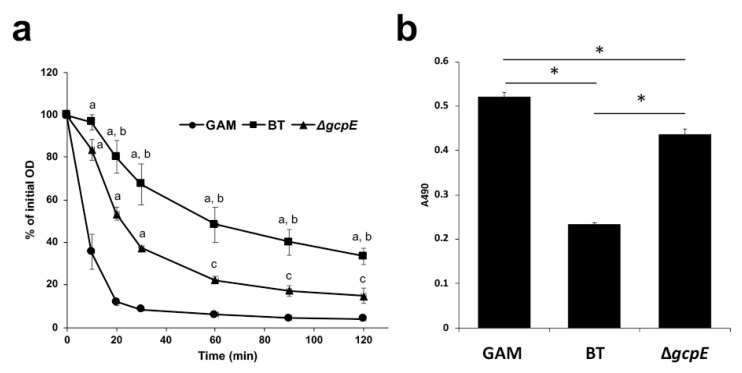
Disruption of the human gut microbiota by antibiotics can lead to (CD)-associated diarrhea. CD overgrowth and elevated CD toxins result in gut inflammation. Herein, we report that a gut symbiont, (BT), suppressed CD toxin production. The suppressive components are present in BT culture supernatant and are both heat- and proteinase K-resistant. Transposon-based mutagenesis indicated that the polysaccharide metabolism of BT is involved in the inhibitory effect. Among the genes identified, we focus on the methylerythritol 4-phosphate pathway gene , which supplies the isoprenoid backbone to produce the undecaprenyl phosphate lipid carrier that transports oligosaccharides across the membrane. Polysaccharide fractions prepared from the BT culture suppressed CD toxin production in vitro; the inhibitory effect of polysaccharide fractions was reduced in the mutant (Δ). The inhibitory effect of BT-derived polysaccharide fraction was abrogated by lysozyme treatment, indicating that cellwall-associated glycans are attributable to the inhibitory effect. BT-derived polysaccharide fraction did not affect CD toxin gene expression or intracellular toxin levels. An autolysis assay showed that CD cell autolysis was suppressed by BT-derived polysaccharide fraction, but the effect was reduced with that of Δ. These results indicate that cell wall-associated glycans of BT suppress CD toxin release by inhibiting cell autolysis.
抗生素对人类肠道微生物群的破坏可导致与艰难梭菌(CD)相关的腹泻。CD过度生长和CD毒素升高会导致肠道炎症。在此,我们报告一种肠道共生菌,嗜黏蛋白阿克曼氏菌(BT),可抑制CD毒素的产生。抑制成分存在于BT培养上清液中,且对热和蛋白酶K均具有抗性。基于转座子的诱变表明,BT的多糖代谢参与了这种抑制作用。在鉴定出的基因中,我们重点关注甲基赤藓糖醇4-磷酸途径基因ispF,它提供类异戊二烯骨架以产生将寡糖转运穿过膜的十一异戊烯磷酸脂质载体。从BT培养物中制备的多糖级分在体外抑制了CD毒素的产生;在ispF突变体(ΔispF)中,多糖级分的抑制作用降低。BT衍生的多糖级分的抑制作用通过溶菌酶处理而消除,表明与细胞壁相关的聚糖是这种抑制作用的原因。BT衍生的多糖级分不影响CD毒素基因表达或细胞内毒素水平。自溶试验表明,BT衍生的多糖级分抑制了CD细胞自溶,但在ΔispF中这种作用减弱。这些结果表明,BT的与细胞壁相关的聚糖通过抑制细胞自溶来抑制CD毒素释放。