Roth Gaël S, Benhamou Maxime, Teyssier Yann, Seigneurin Arnaud, Abousalihac Mélodie, Sengel Christian, Seror Olivier, Ghelfi Julien, Ganne-Carrié Nathalie, Blaise Lorraine, Sutter Olivier, Decaens Thomas, Nault Jean-Charles
Faculty of Medicine, Grenoble-Alpes University, 38043 Grenoble, France.
Department of Hepato-Gastroenterology and Digestive Oncology, CHU Grenoble-Alpes, 38043 Grenoble, France.
Cancers (Basel). 2021 Feb 15;13(4):812. doi: 10.3390/cancers13040812.
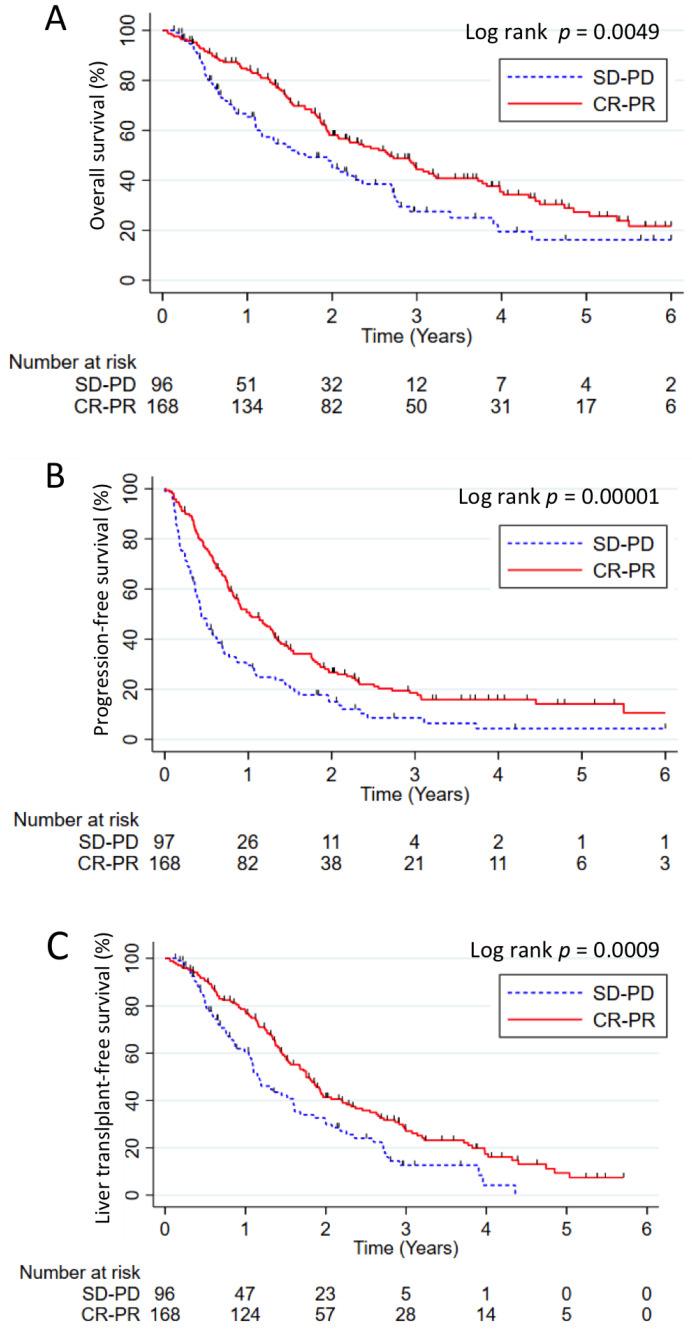
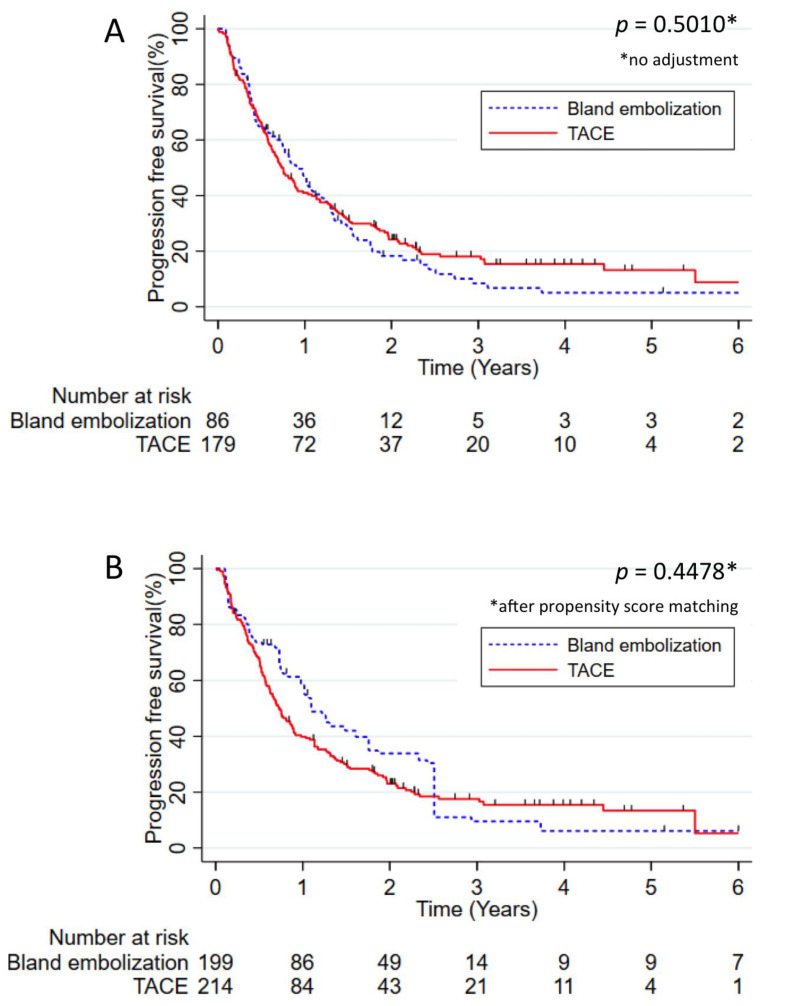
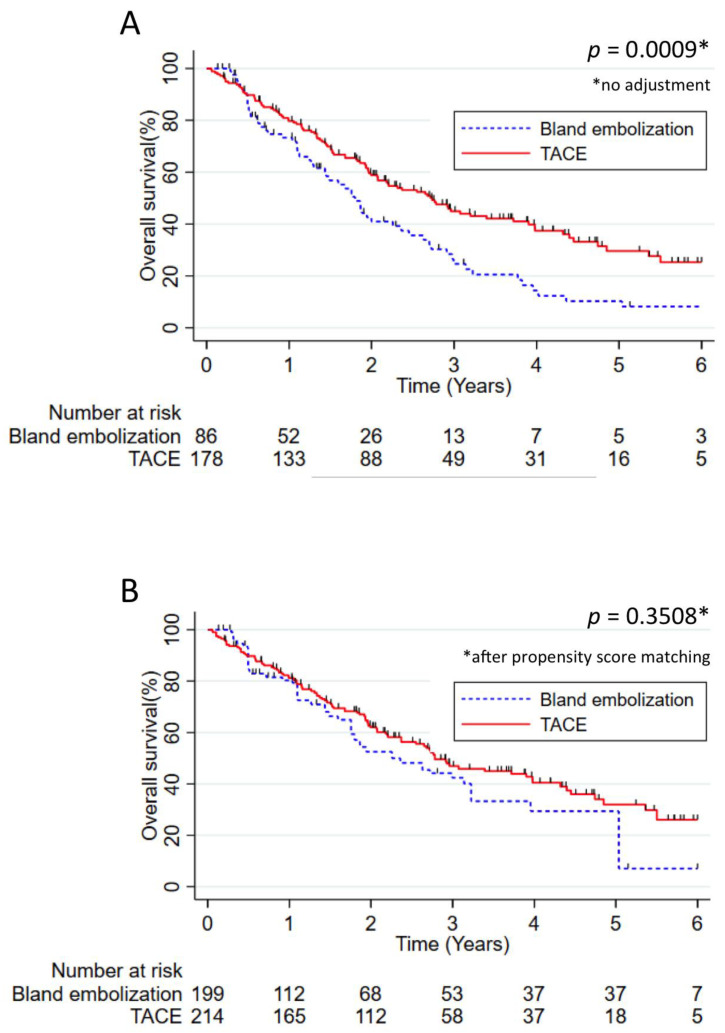
No definitive conclusion could be reached about the role of chemotherapy in adjunction of embolization in the treatment of hepatocellular carcinoma (HCC). We aim to compare radiological response, toxicity and long-term outcomes of patients with hepatocellular carcinoma (HCC) treated by trans-arterial bland embolization (TAE) versus trans-arterial chemoembolization (TACE). We retrospectively included 265 patients with HCC treated by a first session of TACE or TAE in two centers. Clinical and biological features were recorded before the treatment and radiological response was assessed after the first treatment using modified Response Evaluation Criteria in Solid Tumors (mRECIST) criteria. Correlation between the treatment and overall, progression-free and transplantation-free survival was performed after adjustment using a propensity score matching: 86 patients were treated by bland embolization and 179 patients by TACE, including 44 patients with drug-eluting beads and 135 with lipiodol TACE, 89.8% of patients were male with a median age of 65 years old. Cirrhosis was present in 90.9% of patients with a Child Pugh score A in 84% of cases. After adjustment, no difference in the rate of AE, including liver failure, was observed between the two treatments. TACE was associated with a significant increase in complete radiological response (odds ratio (OR) = 8.5 (95% confidence interval (CI): 2.8-25.4)) but not in the overall response rate (OR = 2.2 (95% CI = 0.8-5.8)). No difference in terms of overall survival ( = 0.3905), progression-free survival ( = 0.4478) and transplantation-free survival ( = 0.9020) was observed between TACE and TAE. TACE was associated with a higher rate of complete radiological response but without any impact on overall radiological response, progression-free survival and overall survival compared to TAE.
关于化疗在肝细胞癌(HCC)栓塞治疗中的辅助作用,尚无明确结论。我们旨在比较经动脉单纯栓塞(TAE)与经动脉化疗栓塞(TACE)治疗肝细胞癌(HCC)患者的影像学反应、毒性及长期预后。我们回顾性纳入了两个中心接受首次TACE或TAE治疗的265例HCC患者。在治疗前记录临床和生物学特征,并在首次治疗后使用改良实体瘤疗效评价标准(mRECIST)评估影像学反应。在使用倾向评分匹配进行调整后,分析治疗与总生存、无进展生存及无移植生存之间的相关性:86例患者接受单纯栓塞治疗,179例患者接受TACE治疗,其中44例使用载药微球,135例使用碘油TACE,89.8%的患者为男性,中位年龄65岁。90.9%的患者存在肝硬化,84%的病例为Child Pugh A级。调整后,两种治疗在不良事件发生率(包括肝衰竭)方面无差异。TACE与完全影像学反应显著增加相关(优势比(OR)=8.5(95%置信区间(CI):2.8 - 25.4)),但与总体反应率无关(OR = 2.2(95%CI = 0.8 - 5.8))。TACE与TAE在总生存(P = 0.3905)、无进展生存(P = 0.4478)和无移植生存(P = 0.9020)方面无差异。与TAE相比,TACE与更高的完全影像学反应率相关,但对总体影像学反应、无进展生存和总生存无任何影响。