Division of Gastroenterology and Hepatology, Stanford University, Stanford, California.
Institut National de la Santé et de la Recherche Médicale, Unité Mixte De Recherche 1162, Génomique Fonctionnelle des Tumeurs Solides, Université Paris Descartes, Université Paris Diderot, Université Paris 13, Labex Immuno-Oncology, Paris, France; Liver Unit, Hôpital Jean Verdier, Hôpitaux Universitaires Paris-Seine-Saint-Denis, Assistance-Publique Hôpitaux de Paris, Bondy, France; Unité de Formation et de Recherche Santé Médecine et Biologie Humaine, Université Paris 13, Communauté d'Universités et Etablissements Sorbonne Paris Cité, Paris, France.
Gastroenterology. 2019 Jan;156(2):492-509. doi: 10.1053/j.gastro.2018.11.001. Epub 2018 Nov 4.
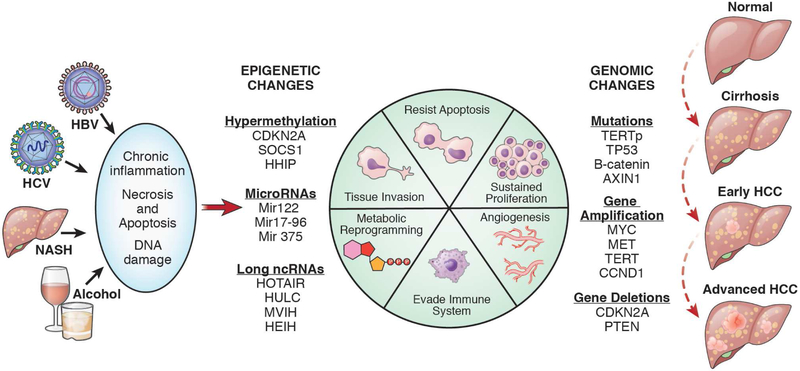
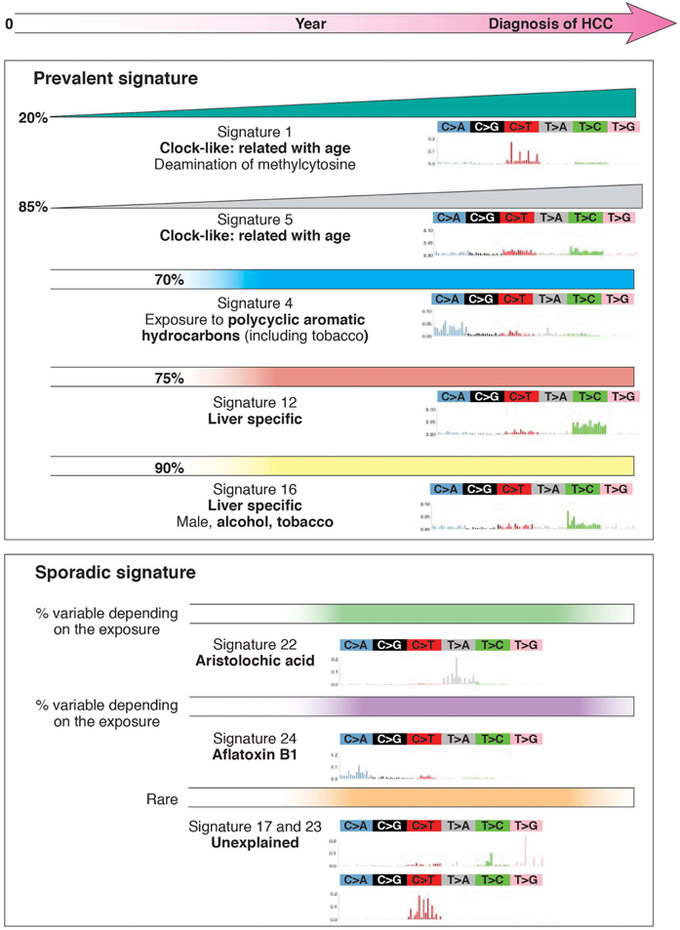
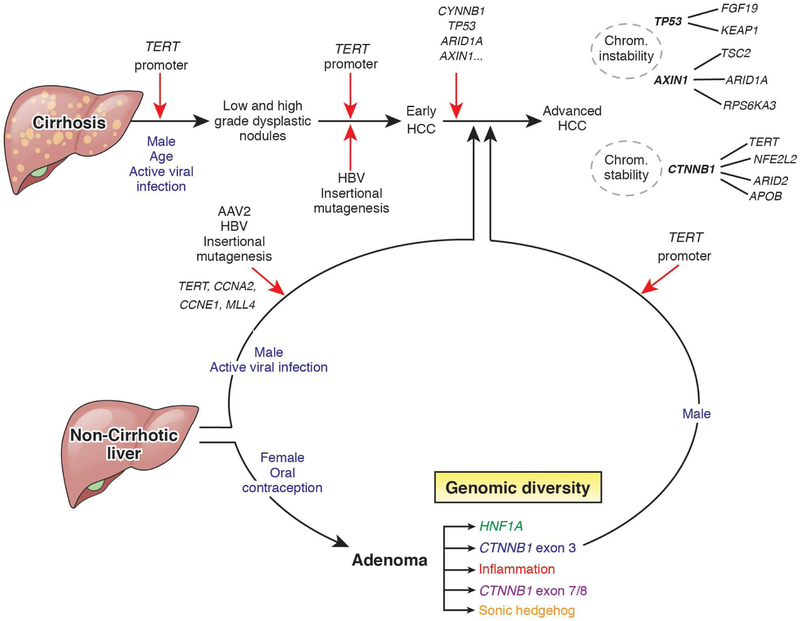
The pathogenesis of hepatocellular carcinoma (HCC) is poorly understood, but recent advances in genomics have increased our understanding of the mechanisms by which hepatitis B virus, hepatitis C virus, alcohol, fatty liver disease, and other environmental factors, such as aflatoxin, cause liver cancer. Genetic analyses of liver tissues from patients have provided important information about tumor initiation and progression. Findings from these studies can potentially be used to individualize the management of HCC. In addition to sorafenib, other multi-kinase inhibitors have been approved recently for treatment of HCC, and the preliminary success of immunotherapy has raised hopes. Continued progress in genomic medicine could improve classification of HCCs based on their molecular features and lead to new treatments for patients with liver cancer.
肝细胞癌(HCC)的发病机制尚不清楚,但基因组学的最新进展增加了我们对乙型肝炎病毒、丙型肝炎病毒、酒精、脂肪肝疾病和黄曲霉毒素等其他环境因素导致肝癌的机制的理解。对患者肝组织的遗传分析为肿瘤的发生和发展提供了重要信息。这些研究的结果可能有助于肝癌的个体化治疗。除索拉非尼外,其他多激酶抑制剂最近也被批准用于 HCC 的治疗,免疫疗法的初步成功带来了新的希望。基因组医学的持续进展可以根据 HCC 的分子特征对其进行更好的分类,并为肝癌患者带来新的治疗方法。