Giesen Beatriz, Nickel Ann-Christin, Barthel Juri, Kahlert Ulf Dietrich, Janiak Christoph
Institut für Anorganische Chemie und Strukturchemie, Heinrich-Heine-Universität Düsseldorf, 40204 Düsseldorf, Germany.
Klinik für Neurochirurgie, Medizinische Fakultät, Universitätsklinikum Düsseldorf, 40225 Düsseldorf, Germany.
Pharmaceutics. 2021 Feb 23;13(2):295. doi: 10.3390/pharmaceutics13020295.
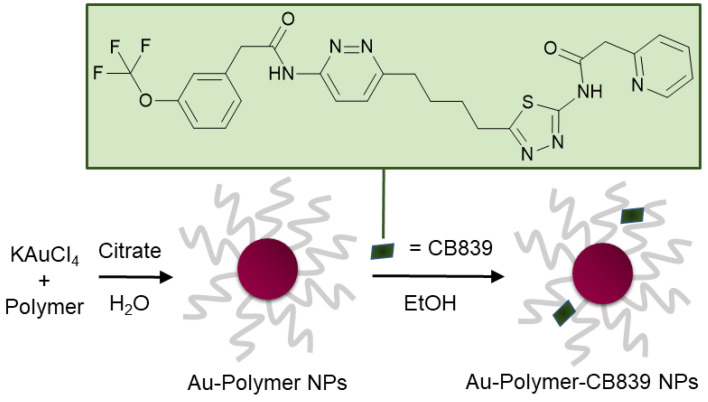
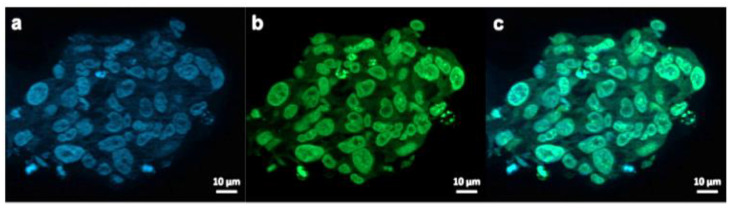
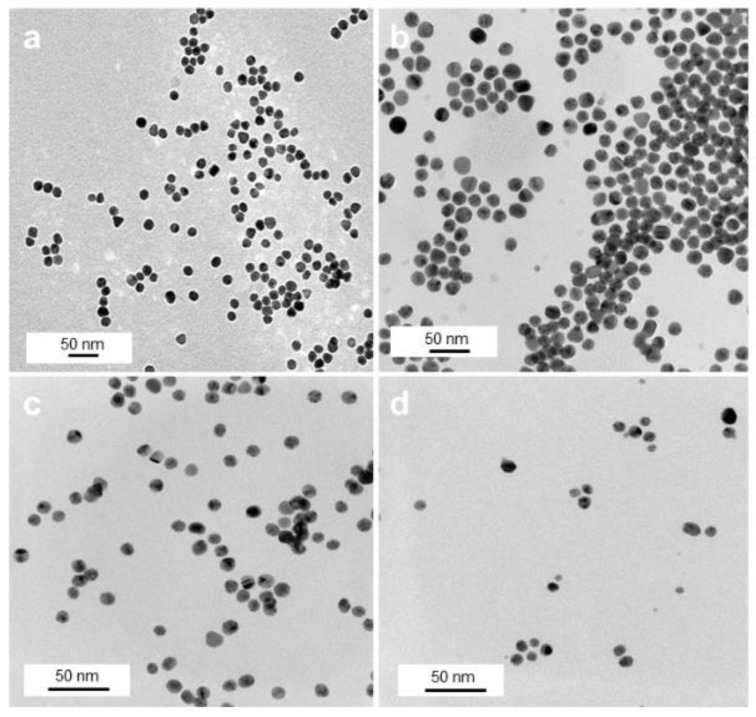
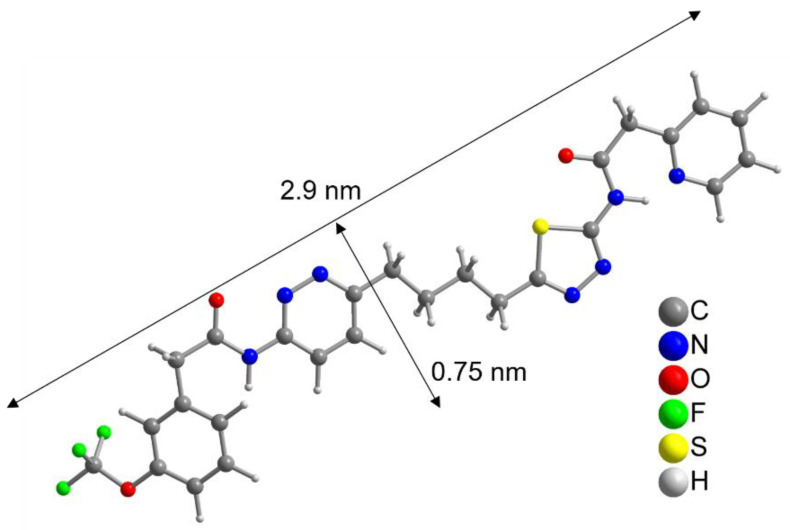
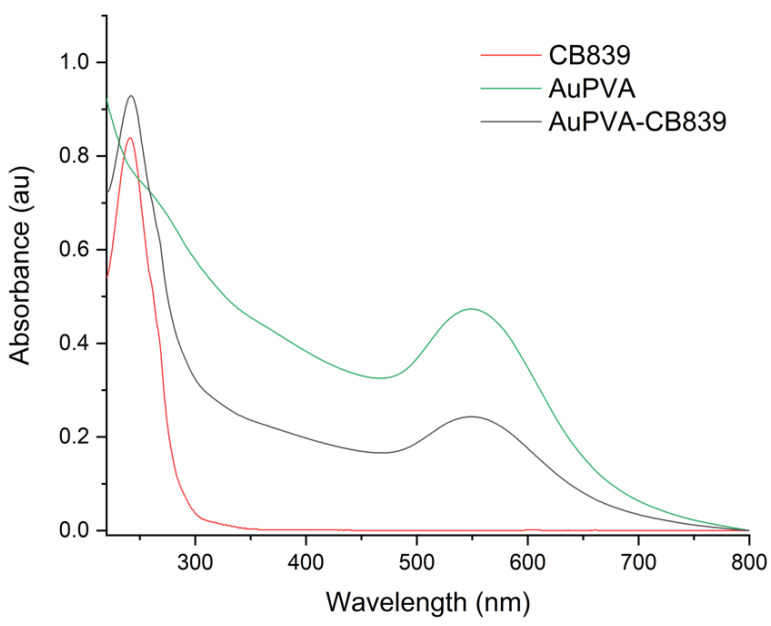
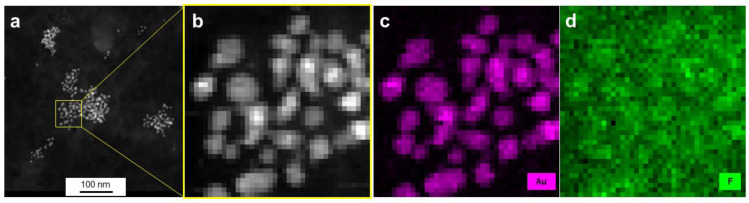
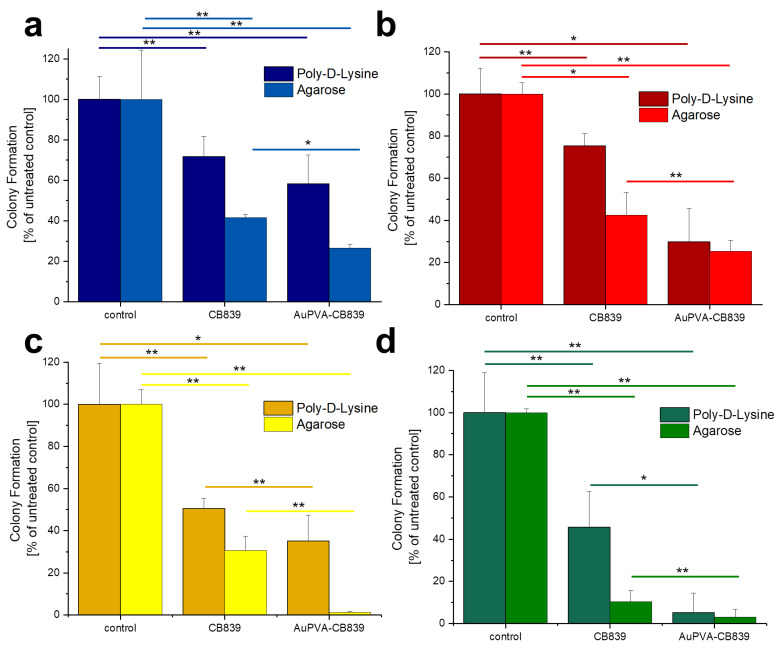
Gold nanoparticles (Au NPs) are studied as delivery systems to enhance the effect of the glutaminase1 inhibitor CB839, a promising drug candidate already in clinical trials for tumor treatments. Au NPs were synthesized using a bottom-up approach and covered with polymers able to bind CB839 as a Au-polymer-CB839 conjugate. The drug loading efficiency (DLE) was determined using high-performance liquid chromatography and characterization of the CB839-loaded NPs was done with various microscopic and spectroscopic methods. Despite the chemical inertness of CB839, Au NPs were efficient carriers with a DLE of up to 12%, depending on the polymer used. The therapeutic effect of CB839 with and without Au was assessed in vitro in 2D and 3D glioblastoma (GBM) cell models using different assays based on the colony formation ability of GBM stem cells (GSCs). To avoid readout disturbances from the Au metal, viability methods which do not require optical detection were hereby optimized. These showed that Au NP delivery increased the efficacy of CB839 in GSCs, compared to CB839 alone. Fluorescent microscopy proved successful NP penetration into the GSCs. With this first attempt to combine CB839 with Au nanotechnology, we hope to overcome delivery hurdles of this pharmacotherapy and increase bioavailability in target sites.
金纳米颗粒(Au NPs)作为递送系统进行了研究,以增强谷氨酰胺酶1抑制剂CB839的效果,CB839是一种很有前景的候选药物,已进入肿瘤治疗的临床试验阶段。采用自下而上的方法合成了Au NPs,并使其覆盖上能够结合CB839的聚合物,形成Au-聚合物-CB839共轭物。使用高效液相色谱法测定药物负载效率(DLE),并通过各种显微镜和光谱方法对负载CB839的纳米颗粒进行表征。尽管CB839具有化学惰性,但根据所使用的聚合物不同,Au NPs是高效的载体,DLE高达12%。在二维和三维胶质母细胞瘤(GBM)细胞模型中,基于GBM干细胞(GSCs)的集落形成能力,使用不同的检测方法在体外评估了有无Au时CB839的治疗效果。为了避免来自Au金属的读数干扰,在此优化了不需要光学检测的活力检测方法。这些结果表明,与单独使用CB839相比,Au NP递送提高了CB839对GSCs的疗效。荧光显微镜证明纳米颗粒成功渗透到GSCs中。通过首次尝试将CB839与Au纳米技术相结合,我们希望克服这种药物治疗的递送障碍,并提高靶位点的生物利用度。