Department of Dermato-Immunology, College of Medicine, Catholic University of Korea, Seoul 06591, Korea.
Int J Mol Sci. 2021 Feb 14;22(4):1895. doi: 10.3390/ijms22041895.
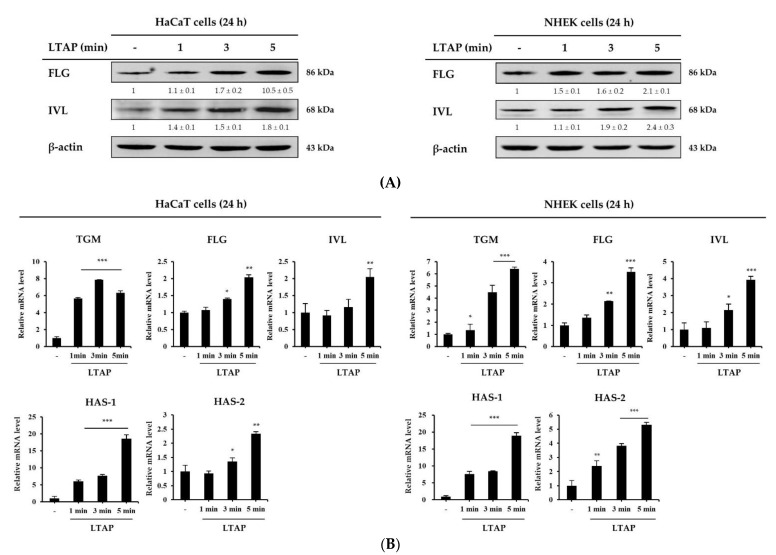
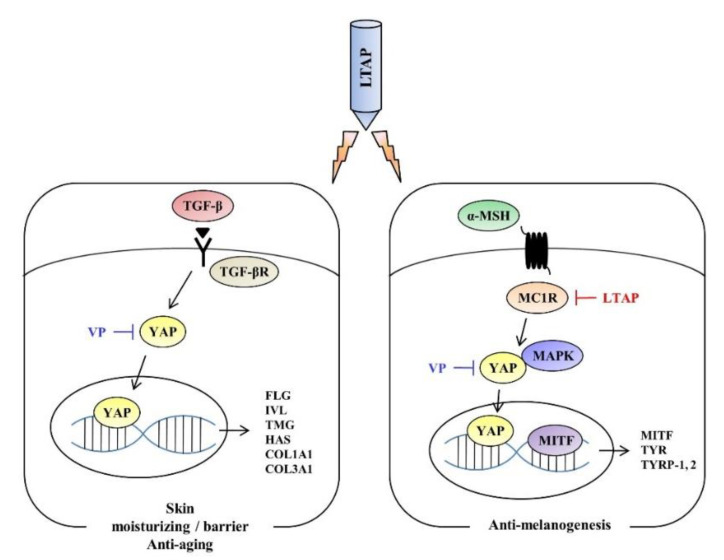
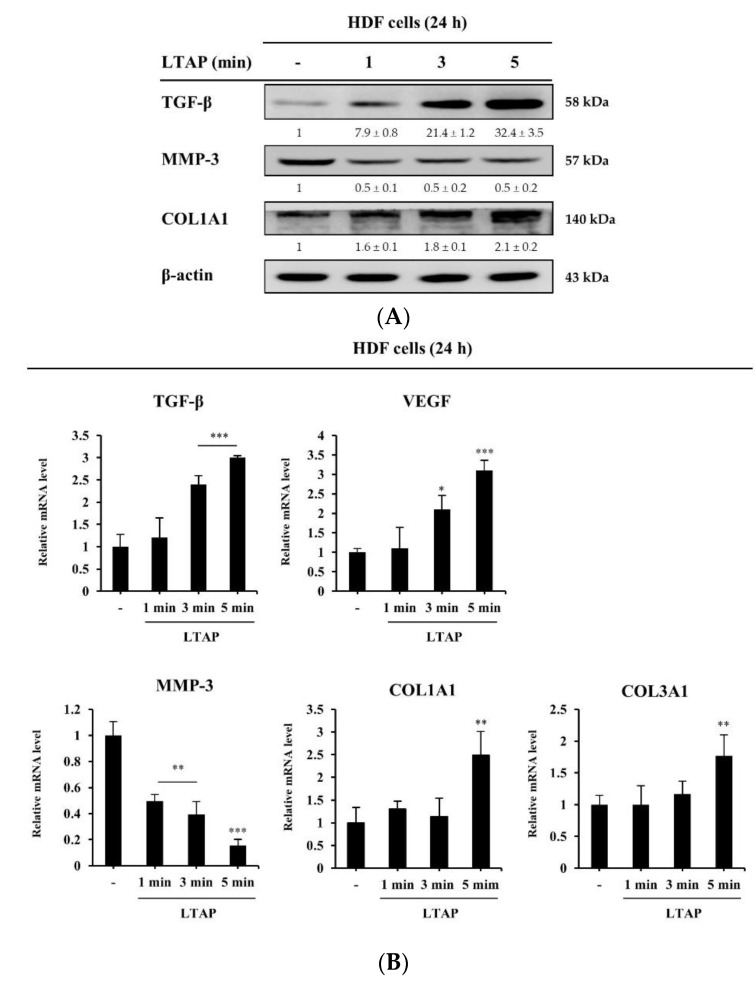
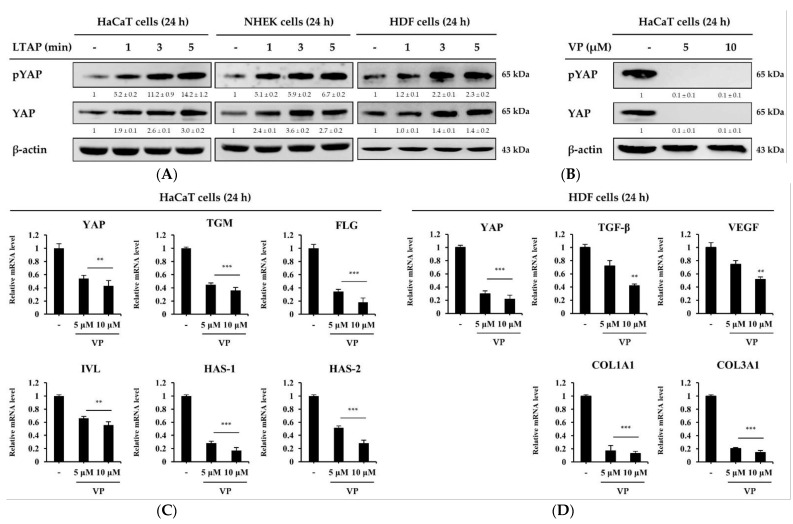
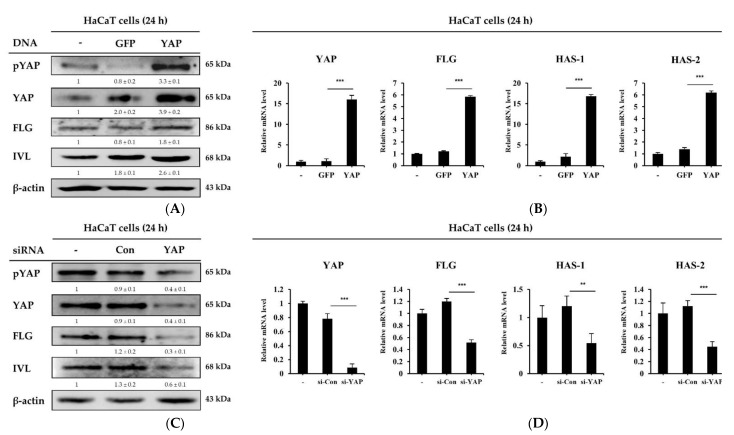
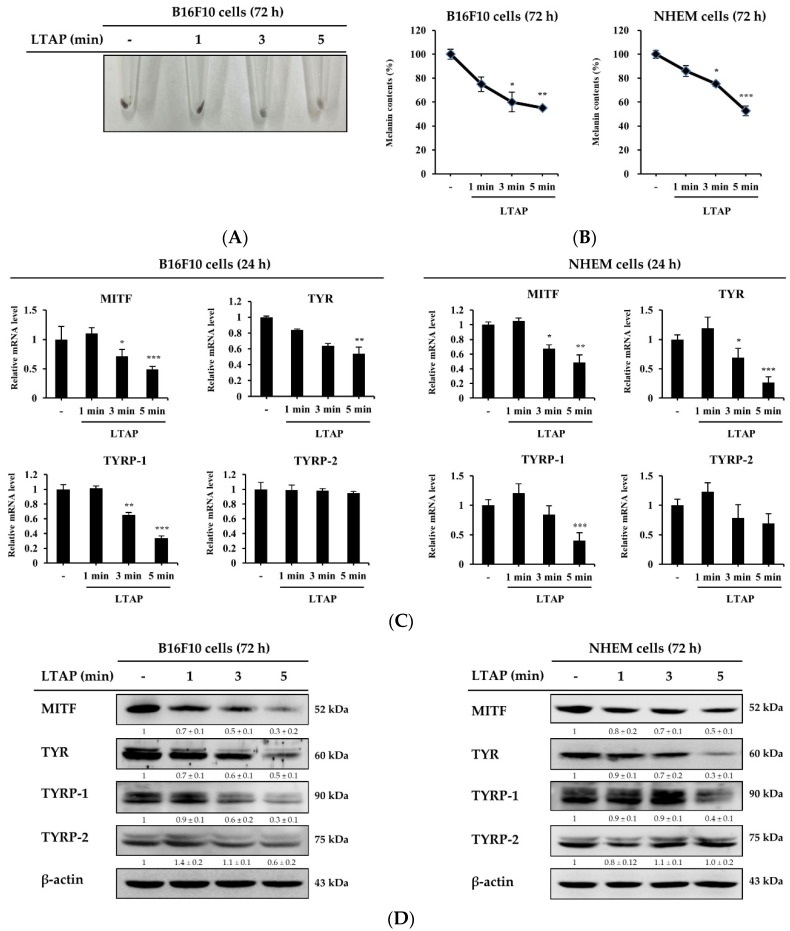
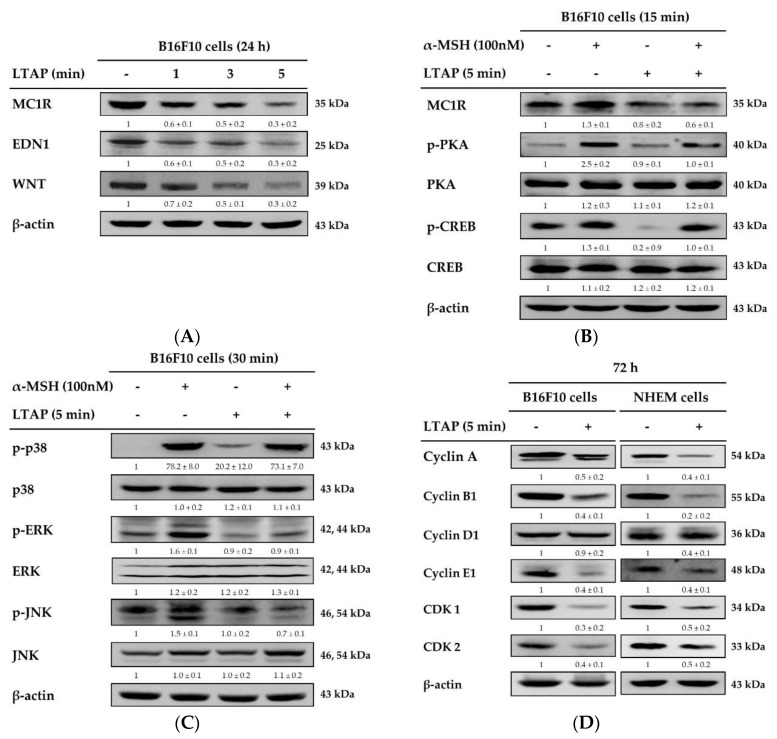
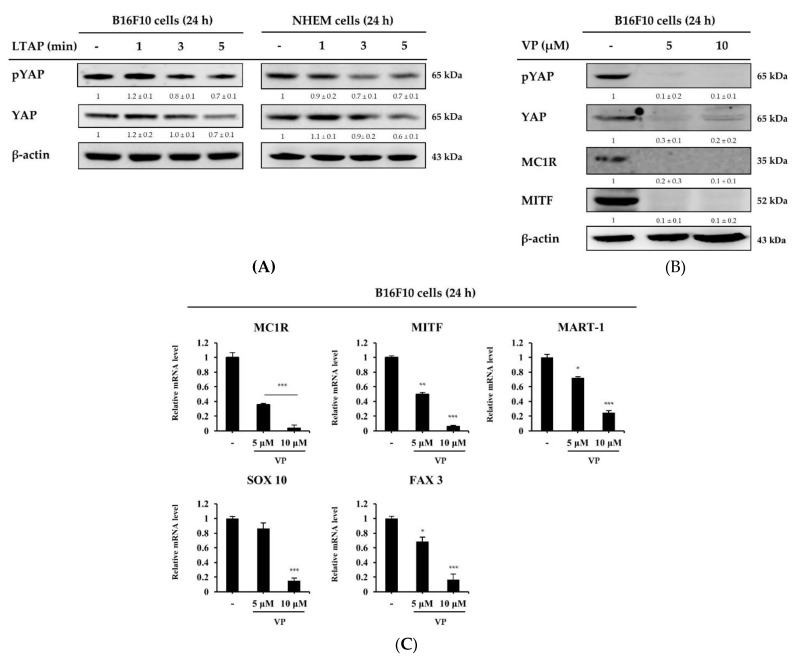
Extensive water loss and melanin hyperproduction can cause various skin disorders. Low-temperature argon plasma (LTAP) has shown the possibility of being used for the treatment of various skin diseases, such as atopic dermatitis and skin cancer. However, the role of LTAP in regulating skin moisturizing and melanogenesis has not been investigated. In this study, we aimed to determine the effect of LTAP on yes-associated protein (YAP), a major transcriptional coactivator in the Hippo signaling pathway that is involved in skin moisturizing and melanogenesis-regulating markers. In normal human epidermal keratinocytes (NHEKs), the human epidermal keratinocyte line HaCaT, and human dermal fibroblasts (HDFs), we found that LTAP exhibited increased expression levels of YAP protein. In addition, the expression levels of filaggrin (FLG), which is involved in natural moisturizing factors (NMFs), and hyaluronic acid synthase (HAS), transglutaminase (TGM), and involucrin (IVL), which regulate skin barrier and moisturizing, were also increased after exposure to LTAP. Furthermore, collagen type I alpha 1 and type III alpha 1 (COL1A1, COL3A1) were increased after LTAP exposure, but the expression level of matrix metalloproteinase-3 (MMP-3) was reduced. Moreover, LTAP was found to suppress alpha-melanocyte stimulating hormone (α-MSH)-induced melanogenesis in murine melanoma B16F10 cells and normal human melanocytes (NHEMs). LTAP regulates melanogenesis of the melanocytes through decreased YAP pathway activation in a melanocortin 1 receptor (MC1R)-dependent manner. Taken together, our data show that LTAP regulates skin moisturizing and melanogenesis through modulation of the YAP pathway, and the effect of LTAP on the expression level of YAP varies from cell to cell. Thus, LTAP might be developed as a treatment method to improve the skin barrier, moisture content, and wrinkle formation, and to reduce melanin generation.
大量水分流失和黑色素过度产生会导致各种皮肤疾病。低温氩等离子体(LTAP)已显示出可用于治疗各种皮肤疾病的可能性,例如特应性皮炎和皮肤癌。然而,LTAP 在调节皮肤保湿和黑色素生成中的作用尚未得到研究。在这项研究中,我们旨在确定 LTAP 对 YAP 的作用,YAP 是 Hippo 信号通路中的主要转录共激活因子,参与皮肤保湿和黑色素生成调节标记物。在正常人类表皮角质形成细胞(NHEK)、人表皮角质形成细胞系 HaCaT 和人真皮成纤维细胞(HDF)中,我们发现 LTAP 表现出 YAP 蛋白表达水平增加。此外,暴露于 LTAP 后,还增加了天然保湿因子(NMFs)中的丝聚合蛋白(FLG)和透明质酸合酶(HAS)、转谷氨酰胺酶(TGM)和内披蛋白(IVL)的表达水平,这些蛋白质调节皮肤屏障和保湿作用。此外,LTAP 暴露后还增加了胶原蛋白 I 型 alpha 1 和 III 型 alpha 1(COL1A1,COL3A1)的表达,但基质金属蛋白酶-3(MMP-3)的表达水平降低。此外,发现 LTAP 抑制了黑色素刺激激素-α(α-MSH)诱导的黑素细胞 B16F10 细胞和正常人黑素细胞(NHEMs)中的黑色素生成。LTAP 通过依赖于黑皮质素 1 受体(MC1R)的 YAP 通路活性降低来调节黑素细胞的黑色素生成。总之,我们的数据表明,LTAP 通过调节 YAP 通路来调节皮肤保湿和黑色素生成,并且 LTAP 对 YAP 表达水平的影响因细胞而异。因此,LTAP 可能被开发为一种改善皮肤屏障、水分含量和皱纹形成以及减少黑色素生成的治疗方法。